Wednesday, June 09, 2010

Paris and Amsterdam


Two cities that have enriched my life are Amsterdam and Paris. My first visit to both was exactly 40 years ago, the summer of '70. 

Amsterdam
Photo by Jack

Amsterdam


Darryl and I enjoyed this city of canals and cafes, bridges and bicycles, in the summer of 1993. Steve and David Killian joined us on our trip there, riding the scenic boats, walking the pedestrian streets, drinking Belgian beer in the cafes and taking in the unique night life. We returned in 1998 when Darryl played tennis and starred onstage in the Gay Games-- Amsterdam's biggest public event ever according to the Mayor. Our most recent visit was for Thanksgiving '99 when Mom joined us for a pleasant stay at the Ambassade. 

Paris


Notre Dame
Photo by Jack


  We love Paris in the Springtime, having enjoyed two merry months of May here in 1993 and 1995. We also spent a hot August, 1998 visiting Amy between stays in Amsterdam and Belgium. We visited Paris again with Mom for Thanksgiving, 1999,  having dinner with Amy at Les Bookinistes; and visiting the Louvre.
On our first visit we stayed on the Right Bank with the Killian brothers, took in the haunts of cemeteries where Chopin, Balzac, Oscar Wilde, and Jim Morrison are buried, and experienced the leisure of afternoon and evening cafe life. We also attended the French Open at Roland Garros once as guests of Lindsay Lee, who played three rounds of tennis qualifiers before losing to rising sensation Amelie Mauresmo. In 1995 we stayed first at the Boileau near the Bois de B. When Darryl returned to the U.S., Jack moved to the Hotel Unic on Rue du Montparnasse to enjoy all the pleasures of the Left Bank, including strolls through the Luxembourg Gardens, followed by a trip to Annecy and the French Alps.

Some of our favorite places:

Les Deux Magots


Where: 170 blvd, St Germain, 6th
Métro stop: St-Germain-des-Prés.
Open: 8h - 02h Daily; closed second week of January. Named after the two wooden statues (the two magots) which still dominate the room, Les Deux Magots is one the most famous cafés in Paris. Jean-Paul Sartre, and Hemingway were both patrons in an earlier era. Its rival - Café de Flore - is just next door.

 Musée d'Orsay

   Place Des Vosges

  http://www.paris.org/Monuments/Vosges/


Monday, May 31, 2010

Jurassic Puke

GrandIsle bead bird
An oil-coated dead seabird lies in the sand on the shore of Elmer's Island Friday, May 21, 2010.

When the Tea Baggers started their "Mad as Hell and I'm not going to take it anymore..." tirade, evoking the 1976 prophetic film  Network, they had no idea what they were tapping into, no idea the origin or meaning of their spew. Their venom has spread, and now that the decayed blood of the extinct dinosaurs is rising up from beneath the sea like doom itself, the words of  Network come back with more meaning than ever. I've quoted it before, and now here it is again. Mr. Beale, the newsman who got all those people to yell, "I'm mad as Hell," confronts reality:


Arthur Jensen: [bellowing] You have meddled with the primal forces of nature, Mr. Beale, and I won't have it! Is that clear? You think you've merely stopped a business deal. That is not the case! The Arabs have taken billions of dollars out of this country, and now they must put it back! It is ebb and flow, tidal gravity! It is ecological balance! You are an old man who thinks in terms of nations and peoples. There are no nations. There are no peoples. There are no Russians. There are no Arabs. There are no third worlds. There is no West. There is only one holistic system of systems, one vast and immane, interwoven, interacting, multivariate, multinational dominion of dollars. Petro-dollars, electro-dollars, multi-dollars, reichmarks, rins, rubles, pounds, and shekels. It is the international system of currency which determines the totality of life on this planet. That is the natural order of things today. That is the atomic and subatomic and galactic structure of things today! And YOU have meddled with the primal forces of nature, and YOU... WILL... ATONE!  

Arthur Jensen: [calmly] Am I getting through to you, Mr. Beale? You get up on your little twenty-one inch screen and howl about America and democracy. There is no America. There is no democracy. There is only IBM, and ITT, and AT&T, and DuPont, Dow, Union Carbide, and Exxon. Those *are* the nations of the world today. What do you think the Russians talk about in their councils of state, Karl Marx? They get out their linear programming charts, statistical decision theories, minimax solutions, and compute the price-cost probabilities of their transactions and investments, just like we do. We no longer live in a world of nations and ideologies, Mr. Beale. The world is a college of corporations, inexorably determined by the immutable bylaws of business. The world is a business, Mr. Beale. It has been since man crawled out of the slime. And our children will live, Mr. Beale, to see that . . . perfect world . . . in which there's no war or famine, oppression or brutality. One vast and ecumenical holding company, for whom all men will work to serve a common profit, in which all men will hold a share of stock. All necessities provided, all anxieties tranquilized, all boredom amused. And I have chosen you, Mr. Beale, to preach this evangel.
Howard Beale: Why me?
Arthur Jensen: Because you're on television, dummy. Sixty million people watch you every night of the week, Monday through Friday.
Howard Beale: I have seen the face of God.
Arthur Jensen: You just might be right, Mr. Beale.

What can a U.S. President do, or Congress, or international outrage, or the media, or any of us against the collective Pantheon of

BP, Halliburton, Transocean, Nalco, and Goldman- Sachs?

They are the intimately interlinked entities (persons according to our Supreme Court) that have caused the biggest  ecological disaster ever and continue to make it worse with their poison Corexit....

Jack


Friday, May 28, 2010

Living like Merlin

From Dennis Guion:

MY NEXT LIFE

       I want to live my next life backwards:

       You start out dead and get that out of the way.

       Then you wake up in a nursing home feeling better

       every day.

       Then you get kicked out for being too healthy.

       Enjoy your retirement and collect your pension.

       Then when you start work, you get a gold watch on your

       first day.

       You work 40 years until you're too young to work.

       You get ready for High School: drink alcohol, party,

       and you're generally

       promiscuous.

       Then you go to primary school, you become a kid, you

       play, and you have no

       responsibilities.

       Then you become a baby, and then...

       You spend your last 9 months floating peacefully in

       luxury, in Spa-like

       conditions - central heating, room service on tap, and

       then...

       You finish off as an orgasm.

       I rest my case


Dennis Guion

Saturday, May 08, 2010

Our Two Party System

There is no difference between the Republicans and the Democrats. That is the claim of the far left and the far right. Leftists argue we need more socialist reform and that we must make radical change in our way of living to protect the planet and the environment. The far right, including Libertarians, want as little federal government as is possible-- no social security, virtually no taxes, no universal health care. Those on the right think free enterprise means no government regulation of business.

Democrats and Republicans alike reject these positions. But they are hardly the same. The majority of Democrats do believe the federal government must regulate business, stop abuses, and provide essential services to people who need them, the poor, the elderly, the under-privileged, the sick. Most Democrats favor universal health care, a system freer than the current one just passed, that limits the insurance companies and the pharmaceutical companies. They want a more equitable country regarding taxes, financial freedom, and opportunity. Most Democrats would limit the power of banks, big business, the oil companies, and the insurance companies.

Many Republicans believe in giving big business more power and privilege, less taxes, and less regulation. Under Mr. Bush, the Environmental Protection Agency opened wilderness areas to loggers and other business interests. Had they the chance, they would have opened up the Arctic Wildlife Refuge to oil exploration.
They agree with the libertarians that big business should not be under the control of federal agencies. Our national park system was sorely neglected under Bush. Republicans also believe in huge military budgets, if not outright war. Look at how Cheney and his company, Halliburton, prospered under the rule of the Republicans. Look at how many no-bid government contracts they got. Look at the Blackwater company.

Nothing demonstrates the difference between Republicans and Democrats more than civil rights. Civil Rights heroes such as John Lewis, who marched with MLK and took the blows and injuries of bigots and hate filled mobs, are Democrats for a reason. Most Democrats now support gay rights, if not everything we gays demand. They support civil unions, if not marriage equality. Republicans, for the most part, oppose such social reform. There is great irony in the Republican charge that Democrats are elitist. There is no one on Earth more elitist than the quail hunting Cheney and his rich cronies. Many Republicans really do take the "Let them eat cake," point of view.

Yes, it would be great to see the rise of a Green Party in this country. It would be heartening to see all those who supported Nader come to power and bring about "real change we can believe in."  But after watching how Nader brought us Bush rather than Gore, I believe we leftists need to plan what we do far more carefully. Voting for people who can win is essential. In Vermont, we can elect a socialist U.S. Senator like Bernie Sanders. In Mass. we can get Barney Frank elected to the House. But all our efforts as activists or just as voters, should be to elect the most liberal candidate possible. Nader never had a prayer of a chance, and those who voted for him gave us the most corrupt president ever, one who passively allowed us to go to war and passively allowed Big Oil and big business to fuck us over big time. Tax cuts for the rich and to Hell with the middle class and especially the poor suckers who bought into his election because of religion, guns, or bigotry.

In ancient times, people thought natural disasters revealed the anger of the gods. As a Pantheist, I think our abuse of the planet may well bring on the wrath of Nature. Homo Sapiens may well be condemned already. How we vote may not ultimately stop the onrush of destructive capitalistic industry that is raping the Earth, destroying the rain forests, killing wildlife, and changing the climate. Religious intolerance and superstition continue to foster over-population, poverty, bigotry, and hate. Maybe retreating to a little garden of like spirits in the vein of Epicurus or Edward Carpenter, or my beloved Kalani, is the best way to live. The difference between Republicans and Democrats may not be substantial enough to save us. Yet, I do think the Democrats, very generally, have more compassion for people and for the Earth. For that, I'll continue my support-- for now.

Jack

See also,   Left-Right Politics for an interesting discussion.

Tuesday, April 20, 2010

Friends


Ancient friends
Photo by Dar


After reading the Utne Reader's current article on Faux friends, I've gone back to Aristotle, whose concept of friendship I have always admired. Some of my Facebook "friends" are true friends and some of my true friends are not on Facebook at all. Nonetheless, I do think Facebook offers a productive gathering place for sharing ideas and experiences with people we like or might come to like, as well as offering renewed friendships. So far I find value in the posts and comments of my 170 acquaintances and the various groups I've joined, despite the rather silly shared games and quizzes.


Here is an excellent summary of Aristotole from the Stanford Encyclopedia:


Friendship

The topic of Books VIII and IX of the Ethics is friendship. Although it is difficult to avoid the term “friendship” as a translation of “philia,” and this is an accurate term for the kind of relationship he is most interested in, we should bear in mind that he is discussing a wider range of phenomena than this translation might lead us to expect, for the Greeks use the term, “philia,” to name the relationship that holds among family members, and do not reserve it for voluntary relationships. Although Aristotle is interested in classifying the different forms that friendship takes, his main theme in Books VIII and IX is to show the close relationship between virtuous activity and friendship. He is vindicating his conception of happiness as virtuous activity by showing how satisfying are the relationships that a virtuous person can normally expect to have.
His taxonomy begins with the premise that there are three main reasons why one person might like someone else. (The verb, “philein,” which is cognate to the noun “philia,” can sometimes be translated “like” or even “love”—though in other cases philia involves very little in the way of feeling.) One might like someone because he is good, or because he is useful, or because he is pleasant. And so there are three bases for friendships, depending on which of these qualities binds friends together. When two individuals recognize that the other person is someone of good character, and they spend time with each other, engaged in activities that exercise their virtues, then they form one kind of friendship. If they are equally virtuous, their friendship is perfect. If, however, there is a large gap in their moral development (as between a parent and a small child, or between a husband and a wife), then although their relationship may be based on the other person's good character, it will be imperfect precisely because of their inequality.
The imperfect friendships that Aristotle focuses on, however, are not unequal relationships based on good character. Rather, they are relationships held together because each individual regards the other as the source of some advantage to himself or some pleasure he receives. When Aristotle calls these relationships “imperfect,” he is tacitly relying on widely accepted assumptions about what makes a relationship satisfying. These friendships are defective, and have a smaller claim to be called “friendships,” because the individuals involved have little trust in each other, quarrel frequently, and are ready to break off their association abruptly. Aristotle does not mean to suggest that unequal relations based on the mutual recognition of good character are defective in these same ways. Rather, when he says that unequal relationships based on character are imperfect, his point is that people are friends in the fullest sense when they gladly spend their days together in shared activities, and this close and constant interaction is less available to those who are not equal in their moral development.
When Aristotle begins his discussion of friendship, he introduces a notion that is central to his understanding of this phenomenon: a genuine friend is someone who loves or likes another person for the sake of that other person. Wanting what is good for the sake of another he calls “good will” (eunoia), and friendship is reciprocal good will, provided that each recognizes the presence of this attitude in the other. Does such good will exist in all three kinds of friendship, or is it confined to relationships based on virtue? At first, Aristotle leaves open the first of these two possibilities. He says: “it is necessary that friends bear good will to each other and wish good things for each other, without this escaping their notice, because of one of the reasons mentioned” (1156a4-5). The reasons mentioned are goodness, pleasure, and advantage; and so it seems that Aristotle is leaving room for the idea that in all three kinds of friendships, even those based on advantage and pleasure alone, the individuals wish each other well for the sake of the other.
But in fact, as Aristotle continues to develop his taxonomy, he does not choose to exploit this possibility. He speaks as though it is only in friendships based on character that one finds a desire to benefit the other person for the sake of the other person. “Those who wish good things to their friends for the sake of the latter are friends most of all, because they do so because of their friends themselves, and not coincidentally” (1156b9-11). When one benefits someone not because of the kind of person he is, but only because of the advantages to oneself, then, Aristotle says, one is not a friend towards the other person, but only towards the profit that comes one's way (1157a15-16).
In such statements as these, Aristotle comes rather close to saying that relationships based on profit or pleasure should not be called friendships at all. But he decides to stay close to common parlance and to use the term “friend” loosely. Friendships based on character are the ones in which each person benefits the other for the sake of other; and these are friendships most of all. Because each party benefits the other, it is advantageous to form such friendships. And since each enjoys the trust and companionship of the other, there is considerable pleasure in these relationships as well. Because these perfect friendships produce advantages and pleasures for each of the parties, there is some basis for going along with common usage and calling any relationship entered into for the sake of just one of these goods a friendship. Friendships based on advantage alone or pleasure alone deserve to be called friendships because in full-fledged friendships these two properties, advantage and pleasure, are present. It is striking that in the Ethics Aristotle never thinks of saying that the uniting factor in all friendships is the desire each friend has for the good of the other.
Aristotle does not raise questions about what it is to desire good for the sake of another person. He treats this as an easily understood phenomenon, and has no doubts about its existence. But it is also clear that he takes this motive to be compatible with a love of one's own good and a desire for one's own happiness. Someone who has practical wisdom will recognize that he needs friends and other resources in order to exercise his virtues over a long period of time. When he makes friends, and benefits friends he has made, he will be aware of the fact that such a relationship is good for him. And yet to have a friend is to want to benefit someone for that other person's sake; it is not a merely self-interested strategy. Aristotle sees no difficulty here, and rightly so. For there is no reason why acts of friendship should not be undertaken partly for the good of one's friend and partly for one's own good. Acting for the sake of another does not in itself demand self-sacrifice. It requires caring about someone other than oneself, but does not demand some loss of care for oneself. For when we know how to benefit a friend for his sake, we exercise the ethical virtues, and this is precisely what our happiness consists in.
Aristotle makes it clear that the number of people with whom one can sustain the kind of relationship he calls a perfect friendship is quite small (IX.10). Even if one lived in a city populated entirely by perfectly virtuous citizens, the number with whom one could carry on a friendship of the perfect type would be at most a handful. For he thinks that this kind of friendship can exist only when one spends a great deal of time with the other person, participating in joint activities and engaging in mutually beneficial behavior; and one cannot cooperate on these close terms with every member of the political community. One may well ask why this kind of close friendship is necessary for happiness. If one lived in a community filled with good people, and cooperated on an occasional basis with each of them, in a spirit of good will and admiration, would that not provide sufficient scope for virtuous activity and a well-lived life? Admittedly, close friends are often in a better position to benefit each other than are fellow citizens, who generally have little knowledge of one's individual circumstances. But this only shows that it is advantageous to be on the receiving end of a friend's help. The more important question for Aristotle is why one needs to be on the giving end of this relationship. And obviously the answer cannot be that one needs to give in order to receive; that would turn active love for one's friend into a mere means to the benefits received.
Aristotle attempts to answer this question in IX.11, but his treatment is disappointing. His fullest argument depends crucially on the notion that a friend is “another self,” someone, in other words, with whom one has a relationship very similar to the relationship one has with oneself. A virtuous person loves the recognition of himself as virtuous; to have a close friend is to possess yet another person, besides oneself, whose virtue one can recognize at extremely close quarters; and so, it must be desirable to have someone very much like oneself whose virtuous activity one can perceive. The argument is unconvincing because it does not explain why the perception of virtuous activity in fellow citizens would not be an adequate substitute for the perception of virtue in one's friends.
Aristotle would be on stronger grounds if he could show that in the absence of close friends one would be severely restricted in the kinds of virtuous activities one could undertake. But he cannot present such an argument, because he does not believe it. He says that it is “finer and more godlike” to bring about the well being of a whole city than to sustain the happiness of just one person (1094b7-10). He refuses to regard private life—the realm of the household and the small circle of one's friends—as the best or most favorable location for the exercise of virtue. He is convinced that the loss of this private sphere would greatly detract from a well-lived life, but he is hard put to explain why. He might have done better to focus on the benefits of being the object of a close friend's solicitude. Just as property is ill cared for when it owned by all, and just as a child would be poorly nurtured were he to receive no special parental care—points Aristotle makes in Politics II.2-5—so in the absence of friendship we would lose a benefit that could not be replaced by the care of the larger community. But Aristotle is not looking for a defense of this sort, because he conceives of friendship as lying primarily in activity rather than receptivity. It is difficult, within his framework, to show that virtuous activity towards a friend is a uniquely important good.
Since Aristotle thinks that the pursuit of one's own happiness, properly understood, requires ethically virtuous activity and will therefore be of great value not only to one's friends but to the larger political community as well, he argues that self-love is an entirely proper emotion—provided it is expressed in the love of virtue (IX.8). Self-love is rightly condemned when it consists in the pursuit of as large a share of external goods—particularly wealth and power—as one can acquire, because such self-love inevitably brings one into conflict with others and undermines the stability of the political community. It may be tempting to cast Aristotle's defense of self-love into modern terms by calling him an egoist, and “egoism” is a broad enough term so that, properly defined, it can be made to fit Aristotle's ethical outlook. If egoism is the thesis that one will always act rightly if one consults one's self-interest, properly understood, then nothing would be amiss in identifying him as an egoist.
But egoism is sometimes understood in a stronger sense. Just as consequentialism is the thesis that one should maximize the general good, whatever the good turns out to be, so egoism can be defined as the parallel thesis that one should maximize one's own good, whatever the good turns out to be. Egoism, in other words, can be treated as a purely formal thesis: it holds that whether the good is pleasure, or virtue, or the satisfaction of desires, one should not attempt to maximize the total amount of good in the world, but only one's own. When egoism takes this abstract form, it is an expression of the idea that the claims of others are never worth attending to, unless in some way or other their good can be shown to serve one's own. The only underived reason for action is self-interest; that an act helps another does not by itself provide a reason for performing it, unless some connection can be made between the good of that other and one's own.
There is no reason to attribute this extreme form of egoism to Aristotle. On the contrary, his defense of self-love makes it clear that he is not willing to defend the bare idea that one ought to love oneself alone or above others; he defends self-love only when this emotion is tied to the correct theory of where one's good lies, for it is only in this way that he can show that self-love need not be a destructive passion. He takes it for granted that self-love is properly condemned whenever it can be shown to be harmful to the community. It is praiseworthy only if it can be shown that a self-lover will be an admirable citizen. In making this assumption, Aristotle reveals that he thinks that the claims of other members of the community to proper treatment are intrinsically valid. This is precisely what a strong form of egoism cannot accept.
We should also keep in mind Aristotle's statement in the Politics that the political community is prior to the individual citizen—just as the whole body is prior to any of its parts (1253a18-29). Aristotle makes use of this claim when he proposes that in the ideal community each child should receive the same education, and that the responsibility for providing such an education should be taken out of the hands of private individuals and made a matter of common concern (1337a21-7). No citizen, he says, belongs to himself; all belong to the city (1337a28-9). What he means is that when it comes to such matters as education, which affect the good of all, each individual should be guided by the collective decisions of the whole community. An individual citizen does not belong to himself, in the sense that it is not up to him alone to determine how he should act; he should subordinate his individual decision-making powers to those of the whole. The strong form of egoism we have been discussing cannot accept Aristotle's doctrine of the priority of the city to the individual. It tells the individual that the good of others has, in itself, no valid claim on him, but that he should serve other members of the community only to the extent that he can connect their interests to his own. Such a doctrine leaves no room for the thought that the individual citizen does not belong to himself but to the whole.

 http://plato.stanford.edu/entries/aristotle-ethics/

Monday, April 12, 2010

Springtime in Savannah

Savannah 2010
Springtime in Savannah was a delight:


--Jack

Sunday, April 04, 2010

Easter

Easter

easter bunny


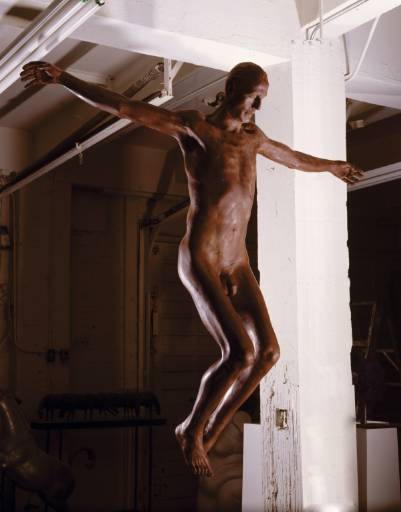
Jesus killed and resurrected. Bunnies. Eggs. Chocolate. What sort of religious celebration is this? Easy. It's the Pagan celebration of the Vernal Equinox. After all, Easter falls on the first Sunday after the full moon, after the Vernal Equinox. It is about the rebirth of everything after the long Winter. Jesus was born right after the Winter Solstice. He arises from Death right after the full moon of the Vernal Equinox, the first day of spring. It's all just bastardized Pantheism. Lets just worship Nature and stop all the zombie nonsense, all the torture images, and cannibalistic cuisine, eating Jesus's body and drinking blood. Lets just eat eggs and chocolate, instead. And enjoy all the newly bloomed lilies.

choco-crusifix1

Chocolate Jesus

Amen


Tuesday, March 23, 2010

Democratic Socialism

 File:Karl Marx.jpg
 Marx, photo from Wikipedia

Ever wonder about all those socialists in Europe and South America? Democratic socialism is a philosophy that  evolved from Marx, who wrote in the 19th Century about the gross indecency of capitalist excesses at the time, of dire conditions for workers and the lack of worker protections. Today, it has become a political and humanistic philosophy that supports the peaceful, non-revolutionary move to a more perfect world of equality, diversity, and liberty.
In my view, the Soviet Union was never  socialist in any humanistic sense. The film "Reds"  (http://en.wikipedia.org/wiki/Reds_%28film%29)  shows how things went horribly wrong in Russia. So much idealism smashed to pieces by the warring factions and the string of dictatorships. It's good old English Socialism I like. Just keep the greedy capitalists on a leash. A short one.
Here is the Ethical Charter of the Socialist International. It is a noble document.


http://www.socialistinternational.org/viewArticle.cfm?ArticleID=24


About Us
ETHICAL CHARTER of the SOCIALIST INTERNATIONAL

Adopted at the XXII Congress of the Socialist International, São Paulo


We, member parties of the Socialist International, reaffirm our total commitment to the values of equality, freedom, justice, solidarity and peace which are the foundation of democratic socialism. We solemnly undertake to respect, defend and promote those values in the spirit of the fundamental declarations and campaigns of the Socialist International.

Our support to these values implies that we apply in the strictest way possible, the following code of conduct :

1. To carry through progressive politics that favour well-being of individuals, economic expansion, equitable trade, social justice, the protection of the environment in the spirit of sustainable development.To oppose all social and economic politics to the advantage of privileged groups, and promote the creation of a global economic system which will lead to more equitable and fair North-South relations.
To combat corruption in all its forms and the obstacles to good governance.

2. To defend pluralistic democracy. This implies :

• the freedom of citizens to choose between political options in the framework of free, frequent and transparent elections;

• the possibility of a change of government through peaceful means and the free expression of citizens;

• respect of the rights of minorities and individuals;

• an independent and impartial judicial system based on the law;

• a free and pluralistic press;

• democratic running of political parties.

3. To guarantee, under all circumstances, the respect of human dignity and to act in accordance with the Universal Declaration of Human Rights and the other important conventions adopted by the United Nations and its institutions.

To ban the death penalty.

To respect and reinforce the fundamental human rights, be they individual rights (respect of private life, freedom of thought, belief, education, sexual orientation and right to equal treatment etc.), social rights (freedom of trade unions, right to strike, social protection etc.) or political rights (freedom of association, universal vote).

To foster gender equality in every area of private and public life, including within our parties, in decision-making positions in all fields and at all levels.

To fight against all forms of discrimination based on gender, race, ethnical origin, sexual orientation, language, religion, philosophical or political beliefs.

To fight against all ultra nationalist, fundamentalist, xenophobic and racist trends and to refrain from all forms of political alliance or co-operation, at any level, with any political party inciting or trying to inflame prejudices, ethnic or racial hatred.

To reject and resolutely oppose any drift to authoritarianism as well as any political system which allows or practises the violation of human rights to conquer or impose its power (political assassination, torture, arbitrary detention, press censorship, banning or repression of peaceful demonstrations, etc).


4. To support international action in favour of peace, tolerance, dialogue, understanding and cooperation among peoples.

To abstain from using military force to gain power or to lead a foreign policy, beyond the framework authorised by the relevant international organisations,

To strive to eliminate weapons of mass destruction and to facilitate disarmement.

Strengthen the role of the United Nations and regional institutions which work towards achieving peaceful solutions to conflicts.


5. An ethics committee is in charge of monitoring the respect of the present code of conduct by all the member parties and it is empowered to formulate recommendations or even proposals of sanctions to the leading organs of the Socialist International.


SOCIALIST INTERNATIONAL, MARITIME HOUSE, OLD TOWN, CLAPHAM, LONDON SW4 0JW, UNITED KINGDOM

Socialist International

Thursday, March 18, 2010

Equinox


Jack  (Silenus/ Socrates of the Tropics)
Photo by Dar


As the Vernal Equinox

approaches, there are transformations happening. On the national scene, Health Care reform is finally on the verge of becoming law.  Though it is burdened with compromise and concessions to special interests in the corporate world, insurance companies in particular, and the powers of capitalism, just as Michael Moore tells and shows us, it is nonetheless a crossroads turn to the left. Make no mistake, the new law opens the doors to social reform this nation needs-- desperately.

Personally, my life has been immersed in Hawaiian and pagan culture. With my consort living in an aesthetic A-frame at Kalani Honua, I have had the joy of swimming naked daily in the healing waters of the Olympic size pool, hiking along the lava coast of the Pacific, partaking of the healthy feasts, comingling with the high spirits that inhabit that enchanted garden.
In a world where we all wear our daily masks, Kalani is that rare community where one can just be. No masks necessary. In Kalani's festivals, dance, art parties, we reveal ourselves by wearing physical masks that reveal our true spirits. And at times by wearing nothing at all.

For the happy few who have lived at Kalani, whether for weeks, years, or decades, it has been, as I wrote for the Kalani Blog, Zen nights and Dharma days, from the dazzling full moon through the coconut palms to the sunrise over the molten red lava flowing into the Pacific from Pele.


PHOTOS

 
Full Moon, By Dar

Aloha.

Jack

Friday, March 05, 2010

Men In Love

D.H. Lawrence's Women In Love is as much about men in love as it is about heterosexual love. The latter is a given, and Lawrence's portrayal of the two primary relationships between Birkin and Ursula, Gerald and Gudrun, are the extremes that remind us of Lawrence's own marriage with Frida. Yet the tragedy of the novel, and the sad ending with Birkin and Ursula in disagreement, can only be understood as the inability of Birkin and Gerald to form a lasting, mutually supportive relationship. 

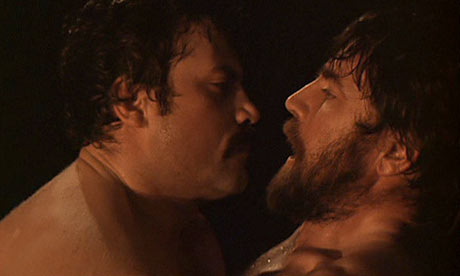
Lawrence wrote about male bonding in all of his novels. In Women In Love, he uses the term "implicit," to describe the sort of love he had in mind. Yet, the nude wrestling scene in the novel, so beautifully rendered in film by Ken Russell and screen writer Larry Kramer, with Alan Bates and Oliver Reed, reveals a physical need that goes to the heart. The description of the embrace of the two men in chapter XX, Gladiatorial, is about penetration, about entering one another's being, about being physically intimate, if not explicitly sexual. Lawrence conjures nothing short of orgasm, however, as the two men fall back, unconscious, in exhaustion after the wrestling match.

What I think Lawrence got right is that we all need both  sexes intimately in our lives. Straights need same sex intimacy and gays need opposite sex intimacy--not just casual friends but something much deeper, a genuine, life-long commitment. In a world where people form couples and are shuttled into box size homes with their ever needy 2.5 children, such intimacy is hard to find. Yet the lack of it may well explain the sad disillusionment of so many divorces.

Jack Miller

BBC plans a new rendition of Lawrence's masterpiece soon:

BBC4 to adapt DH Lawrence's Women in Love

Drama joins TV version of John Braine's Room at the Top in season exploring love and sexuality in 20th century literature

Women in Love: Oliver Reed and Alan Bates
Oliver Reed and Alan Bates wrestle in the 1969 film version of Women in Love. Photograph: MGM
It was responsible for one of the most memorable fight scenes ever committed to celluloid. Now DH Lawrence's Women in Love, turned into a film by Ken Russell starring Oliver Reed and Alan Bates, is to be adapted as a TV drama for BBC4.

Women in Love and John Braine's novel Room at the Top will lead a season of programmes on the BBC digital arts and culture channel exploring love and sexuality in 20th century literature.
Russell's 1969 adaptation, for which Glenda Jackson won a best actress Oscar, made cinema history with the controversial naked wrestling contest between Reed and Bates. It remains to be seen how the BBC4 version will tackle the scene.
The new adaptation will also draw on Lawrence's The Rainbow, to which Women in Love was written as a sequel. Lawrence had originally intended to publish them together as The Sisters.
Richard Klein, the BBC4 controller, said: "Modern adaptations are a new direction for drama on the channel and I'm delighted to bring alive for viewers these iconic, but sometimes overlooked, classic novels. They will form the backbone of a season exploring how relationships between men and women, including sexual relations, were written about and conducted.
"The 20th century has seen an enormous change in the way that men and women behave towards each other and how they conduct relationships between each other. This season aims to explore and contextualise those changes, as well as give viewers an opportunity to see how Lawrence and Braine approached the same subject in different ways."
Women in Love and The Rainbow chart the loves and lives of two sisters, Ursula and Gudrun Brangwen, viewed chiefly through their relationships with friends Rupert Birkin and Gerald Crich. They will be turned into a two-part drama by writer Billy Ivory, whose credits include the BBC's binmen drama Common as Muck.
Mark Pybus, a producer at Company Pictures, which will make the Lawrence adaptation, said the two novels had never been combined for a TV drama before.
"Taking the two books together will allow Billy to tell a larger story, covering not just the relationships between men and women, but also the brutal impact of the first world war in transforming a rural community into 20th century modernity," he said.
"The whole area of sex and sexual relations is at the root of both novels: what we do, with whom, and why ... that was what Lawrence was trying to fathom; questions (and answers) which are as valid today as ever."
Room at the Top, a triangular love story set in 1940s Yorkshire, is being adapted by Amanda Coe, whose TV credits include episodes of Shameless and BBC4's dramatisation of the life of Mary Whitehouse, Filth: the Mary Whitehouse Story. The BBC said it would be the first screen version of the book since 1959.
Ben Stephenson, the BBC controller of drama commissioning, said: "I am thrilled that two of our most exciting screenwriters, Billy Ivory and Amanda Coe, are reinterpreting the works of two of the 20th century's most daring and honest voices – DH Lawrence and John Braine – and bringing them back into the spotlight."

http://www.guardian.co.uk/media/2009/dec/02/women-in-love-bbc4 


BBC

Tuesday, February 16, 2010

End or limit the use of the Filibuster

Today I started the Facebook Group:

Reform the filibuster

 There is an excellent discussion of this in a clip from The Rachel Maddow Show:

 The Rachel Maddow Show:

www.msnbc.msn.com
Feb. 15: Chris Hayes, Washington editor for The Nation, talks with Rachel Maddow about the growing opposition to the filibuster rule and the likelihood that it will be removed, even separate from the effort to pass specific legislation.


Friday, February 12, 2010

A Little Night Music, Kalani Style

Scott Huckaby performs in Maui. Dar heard and saw him last night at Kalani:


Scott Huckabay's performance on Maui; Sam Small Dirctor, Editor from samsmall on Vimeo.

Scott Huckabay is a brilliant guitarist whose groundbreaking style incorporates elements of Rock, Blues, Jazz and Fusion. To watch Huckabay play the guitar today, you are struck by his overall mastery of the fretboard and the way in which his fingers fly up and down the neck of his acoustic guitar. Including using a meteorite for a guitar pick, Scott utilizes every known guitar trick and then adds a few of his own just for fun. Behind the explosive dynamics and pulsating rhythm of Scott Huckabay's alchemical guitar work lies an inspiring story of healing and recovery that is perhaps, more powerful than the music itself.
Sam Small Director, Editor, Writer, Camera, Producer

http://vimeo.com/2660657

 
Darryl's account of the evening:


Scott Huckaby's performance last night was simply amazing. It was incredible, in the strictest sense of the word.

His first song lasted almost 20 minutes, which sounds like a lengthy piece, until you consider that in that amount of time he used a violin bow on his guitar, he twirled around a speaker with it to produce feedback noises, he french-kissed it, he karate-chopped it, he kicked it with shaman bells wrapped around his ankles, he plucked, picked, and strummed it, he banged the back of it with his closed fist and open palm, he played it over his head and behind it, he held it over an electronic crystal that rotated through a spectrum of colors and emitted some sort of energy that changed the frequency of the sound depending on its proximity to the guitar -- I fully expected to see him lube it up and use it as a dildo. What an encore *that* would have been!

Even with all the manhandling of his instrument, his music was still remarkably ... musical, and furthermore it was danceable. Lots of people danced throughout, in fact, including one young girl with long blond hair who wore a shawl but no panties -- an incongruent fashion choice to my mind. It would be the same if be as if a fellow took to the dance floor wearing gloves but no boxers, tighty-whities, or jock. But even that wouldn't be as apparent to everyone assembled as was this girl's, especially given her propensity to twirl en pointe like a music-box ballerina (albeit one blessed with the body of a Rubens model).

The only dancer who commanded as much of my attention was a squat middle-aged woman with curly reddish hair cut short above her ears but left to explode violently upward as she danced, as if she has been electrocuted shortly before she took to the dance floor. She also twirled as she danced and took it even further than the blond by keeping her eyes closed throughout. This decision -- or side-effect of electrocution? -- gave her an errant dancing style strongly reminiscent of a child's top at the point when its rotation has slowed down so much that the stabilizing effects of centrifugal force have been completely nullified, leaving her with only a herky-jerky inertia to propel her around the dance floor in an orbit so erratic that it was impossible to predict -- while simultaneously impossible not to *try* to predict -- if, or when, the top would suddenly swerve toward them, or collide with a potted plant, or topple over a microphone stand, or crash into
a filtered water dispenser, or bounce off a mirrored wall. To music.

Exciting stuff!


 Postscript: 


I would be remiss not to say this, even if no one believes me, but at no time did twin twirlers Muffy and Puffy (nor, for that matter, the juggler, the firespinner, or the woman who sang in tongues) manage to ever upstage Huckaby, not his persona and certainly not his music. All credit goes to the man's enormously combustible performance that such potential distractions remained solidly peripheral and, at the same time, peripherally solid. Like the Pips, or the Staggering Harlettes, you couldn't imagine the show without them but, nonetheless, no one would ever suffer under the illusion that they *were* the show.

Dar


Wednesday, February 10, 2010

A Cold Day in Washington


Photo: Time
http://www.time.com/time/photogallery/0,29307,1960714_2044189,00.html

Paralysis has stricken Washington, D.C. The deep freeze and the blinding snow are living metaphors for the standstill that grips Congress. Now one of two futures opens before us, either progressives bury themselves in the snow and let the ice men cometh and take over, the icy Republicans ready to shovel progressives out of power, or the Democrats replace milk-toast Reid with a fiery leader who can melt the ice-jam, break the filibuster threats, and let reform flow. The Democrats, especially the progressives, need to find fire in the belly. Only then will the thaw come and Health Care, jobs, and all the other sorely needed social improvements happen.

Jack


Sunday, February 07, 2010

Movie Review: Love Songs (Les Chansons D'amour)

photo from
Wikipedia

At first glance and hearing, Love Songs (Les Chansons D'amour) seems to be a light-hearted musical about a menage-a-trois. Set with existential loveliness in the rain washed streets of Paris, this film is much more. Early in the film tragedy strikes and the characters suddenly change from playful to anguished. What is amazing is that the songs go on. This is French film at its best. The fourteen songs of the film, the creation of songwriter Alex Beaupain,  express every imaginable emotion. Director Christophe Honoré blends the performances of gorgeous lead, Louis Garrel, who plays the enigmatic Ishmael, and his lovers into a passionate harmony with the songs. The cast also includes Chiara Mastroianni, the daughter of actors Catherine Deneuve and Marcello Mastroianni. The voices in the songs are those of the actors. 


photo from
Wikipedia


The music, which was written before the film and independent of the plot, is nonetheless moving and creates a fascinating dialog between the characters. It is Honoré who works story and song into such a convincing blend.  The story of love, loss, and love rediscovered is one that Simone De Beauvoir would have loved as it explores her themes of commitment, death, bisexuality, and existential authenticity. The revelations of the characters, their coping with the death of a loved one, and the brilliant dialogue in and out of song, not unlike that of the best Stephen Sondheim plays, make this film a classic. That the story and the songs are also a tribute to the joy of same-sex love place the film high on any list of great gay films. Sadly, it may be the gay relationships that have kept this film from its rightful place alongside the films of Truffaut, Chabrol, and Demy. Chosen by John Waters as his pick at the 2009 Maryland film festival, and an official selection for The Cannes Film Festival,  Love Songs is a masterpiece that all serious film enthusiasts ought to savor.

Jack Miller
aut


Saturday, February 06, 2010

The Tea Party


If you want to know what tea bagging is all about, watch John Waters' film "Pecker."

“It would be absurd to not consider what it is that I can potentially do to help our country,”
Sarah Palin, splitting infinitives but not the GOP.

This movement of Republican zealots ought to stir progressives to form a counter movement. Make no mistake-- the tea baggers are Republican to the core and any attempt by Democrats, blue dog or otherwise, to join them will just mean more defeat for the Dems. Libertarians who do have the tea bag point of view will be duped once more into supporting big business and corporate puppet representatives in Congress. The tea for them is going to prove bitter indeed.

What progressives share with the file and rank tea baggers is pure frustration at the inability of Congress, especially the outmoded, tradition-steeped Senate to do anything at all. Month after month we have  heard pundits on TV predict whether the "super majority" will please this senator or that senator and pass some overly compromised bill. Harry Reid may mean well, but he has made muck of his majority. Imagine what Republicans would pass if they had 60- or even 59- senate seats. The term "blue dogs" ought to mean the progressive Democrats who won't put up with the delay and the coddling of the Republicans. The Democrats need some bite.

The news programs are already controlled and run with brilliant subtlety with a corporate slant. They are, after all, owned by big corporations that have a vested interest in keeping Republicans in power and preventing the reform progressives want. The recent 5-4 decision of the Supreme Court means even more direct corporate control of Congress. Progressives will have to "shake the windows and rattle the walls," to paraphrase Dylan, if they want to be heard. I say it's time to Shake, Rattle and Roll with reform before it is too late.

Jack Miller

 
Photo: 
http://www.nytimes.com/slideshow/2010/02/07/us/politics/0207-TEAPARTY_index.html