Friday, February 05, 2010

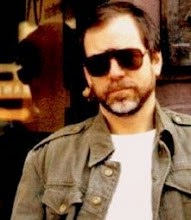
Merwin in Seattle


W.S.Merwin
New Orleans, 1971
Photo Copyright
Jack Miller


Last night, W.S.Merwin and poets honoring him gave readings in Seattle. Here is friend Brenda Skinner's account of the evening, followed by the announcement of the event from the Seattle P-I.

Dear Jack,
 
A little recap of the evening. 
 
Four ‘younger poets’ (how Copper Canyon Press had written of the event) along with W.S. Merwin shared the stage.  The other poets typically read only 2-3 poems, they were:  Erin Belieu, Ben Lerner, Valzhyna Mort, and Matthew Zapruder  I was anticipating hearing from Erin B. in which she read two very short poems, sort of disappointing for me as I wanted to hear more.  Each poet opened with declaring or summarizing Merwin’s influence on them.  This seemed a bit awkward to me, as their declarations seemed placed or tucked in for the event, since the event was for Merwin.  Two of the poets poked and punned with Merwin’s name, not knowing how to address him:  they wrangled with Bill, William, and Mr. Merwin.  Hope he took that in fun, I would have thought they might have worked that out spending the course of the day and lunch with him.
 
Next up was Ben Lerner, a poet I have not heard of.  Very articulate in his opening to William, and he ran laps with long sentences and wordiness.  And Ms. Mort’s dedication seemed to have some authenticity.  She spoke of finding Merwin through the translations of a Russian poet, Osip Mandelshtam.  When Merwin took the stage, he turned and thanked her for mentioning O. Mandelshtam, and the struggle Osip had gone through to smuggle the poetry out of Russia, also he mentioned Clarence Brown as inspiration. And lastly, Matthew Z. said he thought and thought for several weeks of what he would say…  He began with, um.  I’m sure the honor of reading with him was overwhelming and some weren’t sure how to handle that. 
 
Merwin took the stage.  He made mention of Blake’s “Tyger…”  He brought that up as he was stating how poetry is not often understood, when we first begin reading poetry, it’s terrifying.  Thus, the terrifying effect of the tiger.  The poetry he read went back 25 years ago, to his current book, ‘Shadow of Sirius’ and newer poems.  (I wrote them down as well; if you want them just give me a shout.)  He took a moment to preface a poem with stating how there is depression, and lack of hope in the world.  He said there has never been an unmutilated world, only one that is mutilated and that is the one that needs us.  Not to turn our backs to it.  (This must have been something I needed to hear, it lifted my thoughts.)  He read many recent poems, and in them I heard a man of acceptance, humbleness, gratitude, a man of places, people, bodies, love, words: poetry, a deep homage to all he has been given. 
 
A very humble, insightful man.  His words are resonating with me today.  I wouldn’t call him a political poet, but I feel he is deeply moved with the conditions and writes of them too.  He seems to be a man of peace.  A great man indeed.
 
He received a standing ovation.  Long applause. 
 
Jack, I had every intention of going to him with your words, though the event was full, I think there were at least 500-600 ppl, and I could be underestimating.  The event’s organizers gave instructions on how signing was going to work.  Indicating there would be no time for dedications or talking with the poets, only a signature.  We were to move along briskly, blah, blah, blah.  She also pointed out how the line would form and wrap around the room.
 
Though carrying your message was foremost in my thoughts. 
 
Also, it was pointed out many Copper Canyon poets were in the audience and had come from near and far.
 
Warmly,
Brenda


W.S. Merwin & Friends: Four Poets Share the Stage and Their Thoughts

The pressmark of Copper Canyon Press.
The Chinese character for poetry. Comprised of two parts: word and temple.

One of the edicts of Copper Canyon Press is to publish books "by both revered and emerging American poets."

On February 4, this commitment comes to life when two time Pulitzer Prize winning poet W.S. Merwin will read with four younger poets from the Copper Canyon stable in a benefit for the press. Joining Merwin at Seattle's Town Hall will be Ben Lerner, Erin Belieu, Matthew Zapruder and Valzhyna Mort.

To celebrate the event Book Patrol has asked each of the younger poets to share a Merwin experience; whether it be his influence, a favorite poem or a first encounter, we left it pretty open.

For the next four days we will feature one of their responses.

If your in the region: Tickets are $15, $10 for students. For $100 donation you get to hang out with everybody before the reading. They will all be signing books after the reading and Cooper Canyon has produced a letterpress broadside printed by Urban Editions in honor of the event which will also be available.

Must listen: KUOW's Weekday will have Merwin on for an hour-long interview with call-ins on the morning of the 4th.

For now, we leave you with 'Far Along in the Story,' a poem by W.S. Merwin


Far Along in the Story


The boy walked on with a flock of cranes
following him calling as they came
from the horizon behind him
sometimes he thought he could recognize
a voice in all that calling but he
could not hear what they were calling
and when he looked back he could not tell
one of them from another in their
rising and falling but he went on
trying to remember something in
their calls until he stumbled and came
to himself with the day before him
wide open and the stones of the path
lying still and each tree in its own leaves
the cranes were gone from the sky and at
that moment he remembered who he was
only he had forgotten his name

W.S. Merwin books
at Copper Canyon.

Jay Parini's piece in the Guardian, Why W.S. Merwin deserves his second Pulitzer prize, April, 2009.

http://www.bookpatrol.net/2010/01/ws-merwin-friends-four-poets-share.html 

Sunday, January 31, 2010

The Last Picture Show, Encore.

http://media3.washingtonpost.com/wp-srv/photo/gallery/090326/GAL-09Mar26-1789/media/PHO-09Mar26-155816.jpg 
Photo from:  The Washington Post--
http://media3.washingtonpost.com/wp-srv/photo/gallery/090326/GAL-09Mar26-1789/media/PHO-09Mar26-155816.jpg

Small Texas town, 1951. The film opens in black and white with Hank Williams singing, "Why don't you love me like you used to do... Why do you treat me like a worn out shoe?" The loneliness, emptiness, and desolation of this town, as revealed to us in scene after scene, is as American as high school football. There are endless reviews that praise the cast and the director. There are so many early dazzling performances of the greatest of actors that I could do nothing other than repeat the words of rapture. 
In 1971, I was fresh out of college, just back from summer in Europe, and about to move from a desolate teaching job in Savannah to New Orleans. The real, powerful, heart-rending relationship of Ruth and Sonny, in contrast to all the false, foolish, failed and broken embraces of all the other characters moved me and influenced my thinking as much as any film I had seen, which is saying a lot since that includes Women in Love, Sunday, Bloody Sunday, and Midnight Cowboy, among so many great films from 1969-1971. 
If you want to understand what love is, was, and will always be, as well as all the delusions to avoid, this is the film for you. See it before the movie house closes.

Jack Miller 

Watch the clip:  http://www.starz.com/movie/the-last-picture-show/

Here is the original, marvelous NY Times Movie Review  from 1971:

THE LAST PICTURE SHOW
By Vincent Canby

Published: October 4, 1971
Peter Bogdanovich's fine second film, The Last Picture Show, adapted from Larry McMurtry's novel by McMurtry and Bogdanovich, has the effect of a lovely, leisurely, horizontal pan-shot across the life of Anarene, Texas, a small, shabby town on a plain so flat that to raise the eye even ten degrees would be to see only an endless sky.
In an unbroken arc of narrative, beautifully photographed (by Robert Surtees) in the blunt, black-and-white tones I associate with pictures in a high school yearbook, the film tells a series of interlocking stories of love and loss that are on the sentimental edge of Winesburg, Ohio, but that illuminate a good deal more of one segment of the American experience than any other American film in recent memory.
It is 1951, the time of Truman, of Korea, of Jo Stafford, of I, the Jury as a best-selling paperback, when tank-town movie houses like the Royal Theater had to close because the citizens of Anarene, like most other Americans, were discovering, in television, a more convenient dream machine that brought with it further isolation from community—a phenomenon analyzed by Philip Slater, the sociologist, as America's pursuit of loneliness.
The Last Picture Show is not sociology, even though it is sociologically true, nor is it another exercise in romantic nostalgia on the order of Robert Mulligan's Summer of '42. It is filled with carefully researched details of time and place, but although these details are the essential decor of the film, they are not the essence. It is a movie that doesn't look back; rather, it starts off and ends in its own time, as much as does such a completely dissimilar, contemporary story as that of Sunday, Bloody Sunday.
The Last Picture Show is about both Anarene and Sonny Crawford, the high school senior and football cocaptain (with his best friend, Duane Jackson, of the always defeated Anarene team), through whose sensibilities the film is felt. As Bogdanovich seldom takes his story very far from Anarene, he sees The Last Picture Show entirely in terms of the maturation of Sonny, in the course of the emotional crises and confrontations that have become the staples of all sorts of American coming-of-age literature, from Penrod to Peyton Place and Portnoy's Complaint.
They are familiar staples, but they are treated with such humor, such sympathy, and, with the exception of a few overwrought scenes, reticence that The Last Picture Show becomes an adventure in rediscovery—of a very decent, straightforward kind of movie, as well as of—and I rather hesitate to use such a square phrase—human values.
Timothy Bottoms, who gave most of his performance in Johnny Got His Gun as a voice on the soundtrack for the mummy-wrapped, quadruple-amputee hero, is fine as Sonny Crawford, but then I liked just about everyone in the huge cast.
This includes Jeff Bridges (son to Lloyd, younger brother to Beau), as Duane; Cybill Shepherd, as the prettiest, richest girl in town, who is almost too bad to be true; Cloris Leachman, as the coach's wife, who gives Sonny some idea of what love might be; Ellen Burstyn (who was so good in Alex in Wonderland), as a tough, Dorothy Malone type of middle-aged beauty (middle-aged? she's all of forty!) who is one of the few people in Anarene to have recognized what life is and come to terms with it; and Ben Johnson, as the old man who most influences Sonny's life.
I do have some small quibbles about the film. Bogdanovich and McMurtry have done everything possible to get the entire novel on screen, yet they have mysteriously omitted certain elements, such as Sonny's family life—if any—and the reasons why the coach's wife is such a pushover for a teenage lover. The movie is, perhaps, too horizontal, too objective.
I didn't see Bogdanovich's first film, Targets, but The Last Picture Show indicates that Bogdanovich, the movie critic, had already taken Jack Valenti's advice when, last winter, the film industry spokesman described critics as physicians who should heal themselves—by making movies—if they wanted to be taken seriously as critics. Bogdanovich has.
The Last Picture Show was screened at the New York Film Festival Saturday and opened yesterday at the new Columbia I Theater. My only fear is that some unfortunates are going to confuse it with Dennis Hopper's The Last Movie, to which The Last Picture Show is kin only by title.

THE LAST PICTURE SHOW (MOVIE)
Directed by Peter Bogdanovich; written by Mr. Bogdanovich and Larry McMurtry, based on the novel by Mr. McMurtry; director of photography, Robert Surtees; edited by Donn Cambern; production designer, Polly Platt; produced by Stephen J. Friedman; released by Columbia Pictures. Black and white. Running time: 118 minutes.

http://movies.nytimes.com/movie/review?_r=2&res=EE05E7DF1739E76FBC4C53DFB667838A669EDE


Friday, January 22, 2010

Leadership Lunacy


Lunacy, The Moon. Photo by Darryl

This is the winter of progressive discontent. The Senate race in Massachusetts ought to be a warning to progressives that compromise with Republicans, with the corporate world of insurance companies and pharmaceuticals, not only doesn't work, but actually undermines the confidence of the electorate. Like the mules they are, however, the leaders of the Democratic party have dug their heals in and refused to move. The republicans with a mere minority of 41 senators are running the country-- into the ground. Maybe it is time for a third party after all, the Green party, to put up congressional candidates (rather than an egomaniac for the presidency).

The Supreme Court ruling that corporations may now have unlimited support for particular candidates, that they may run endless ads for their puppet candidates, is especially distressing. Ralph Nader must be turning over in his grave. Oh, wait. The Bush appointees have handed down what may be the most devastating ruling on who runs for office in the future, pets of the most powerful CEOs, their yapping dogs. Remember the film Network, "Im mad as Hell, and I'm not going to take it anymore."  (click).  Tea baggers carry the same words on their signs as their Republican reps, with Shakespearean irony, give more power than ever to the corporate giants in the name of "free speech."  Network, indeed; be sure to watch the  corporate owned T V Channel of your choice for further updates.

Meanwhile read Plato's Republic, Book VIII ,  for an accounting of how democracy sooner or later degenerates into tyranny.

Jack Miller

And from Network (1976)
Arthur Jensen: [calmly] Am I getting through to you, Mr. Beale? You get up on your little twenty-one inch screen and howl about America and democracy. There is no America. There is no democracy. There is only IBM, and ITT, and AT&T, and DuPont, Dow, Union Carbide, and Exxon. Those *are* the nations of the world today. What do you think the Russians talk about in their councils of state, Karl Marx? They get out their linear programming charts, statistical decision theories, minimax solutions, and compute the price-cost probabilities of their transactions and investments, just like we do. We no longer live in a world of nations and ideologies, Mr. Beale. The world is a college of corporations, inexorably determined by the immutable bylaws of business. The world is a business, Mr. Beale. It has been since man crawled out of the slime. And our children will live, Mr. Beale, to see that . . . perfect world . . . in which there's no war or famine, oppression or brutality. One vast and ecumenical holding company, for whom all men will work to serve a common profit, in which all men will hold a share of stock. All necessities provided, all anxieties tranquilized, all boredom amused. And I have chosen you, Mr. Beale, to preach this evangel.
Howard Beale: Why me?
Arthur Jensen: Because you're on television, dummy. Sixty million people watch you every night of the week, Monday through Friday.
Howard Beale: I have seen the face of God.
Arthur Jensen: You just might be right, Mr. Beale.

http://www.imdb.com/title/tt0074958/quotes

Wednesday, January 20, 2010

A Picture Worth Thousands of Votes


Why did voters in Mass. put a centerfold Republican in the U.S.Senate?

photo:
http://www.kansascity.com/stargazing/story/1693812.html

However pretty the new senator, the answer is ugly. Selfishness motivated the voters. Charisma and a strong message, however stupid, won over the crucial 5% that determines most elections. Asked what he thinks made his win, Scott Brown replied, "Terror and Taxes." The Cheney message is alive and well. And our democracy is sick.

Obama credited anger and frustration, the same feelings that put him in office, as the cause. What does that mean? Simple; it means that people vote for change without even understanding what the change proposed is. Did not Obama promise us universal health care? Then why do those who voted for him no longer want it?

Remember, Mass. has universal health care already. Scott Brown, a state senator in 2006, voted FOR it. This is part of the selfishness of this vote. Many seniors over 65 have medicare and are opposed to universal health care for the same reason. It is the miserly elitism of the populace, holding on to slight advantages over others, that motivates the electorate, not any supposed elitism of Congress.

To a degree, these sorts of mass swings of political position are a type of insanity, the mass insanity of tea baggers, for instance,  that will elect Republicans who are nothing more than the pets, the barking dogs, of special interests-- the insurance industry, the oil companies, big pharmaceuticals, the rich and powerful who would not lift a finger to feed or give aid to the impoverished right wingers who support them. Plato said it long ago, in a democracy any ass can walk the streets proclaiming his position as the best. Popularity and charisma win people over, while selfishness, often misguided,  trumps knowledge, goodness, and wisdom.

Jack Miller
1/20/10

Saturday, January 09, 2010

Darryl's Day


Nothing like a day at Kalani. Here's a glimpse of life on the Big Island of Hawaii while the rest of us are avoiding slipping on the ice:

Photo By Karen Miriam
 
I've been missing you all day today too -- was even worrying that you might be slipping on the ice, believe it or not!

I worked 2nd shift in the kitchen today -- 1:30-8:00, so, effectively, all day long. I got up early for no reason today -- was sitting on the lanai drinking a cup of coffee by 7am, dined on apple fritter french toast at 7:30,  worked in the marketing office til 10:30, showered/shaved/made my bed/checked my email then had a ham and swiss wrap and a bowl of split pea soup for lunch. At work, I made gazpacho for 100 people, checked my mailbox on my break but it was empty, read a little bit more of "Wraethu" then headed back to set up the salad bar. Ended the night by joining in to sing Happy Birthday to Jason (his 33rd), then ate a slice of his chocolate ganache cake and drank a tall cold glass of skim milk. Took the back path to my A-frame -- it's a little longer and a lot darker, pitch black already, a gazillion stars overhead. Was really hot all day today but getting rapidly cooler now that the sun has set. I hope it rains tonight.

I'm off work tomorrow. The guy who set up the hike to Halape has another one set for tomorrow -- a lot shorter, just 1 mile - but the group meets in Hilo at 9am and I don't have an easy way to get there so I guess I'll just hang out here. Too bad, cause I like him and there are supposed to be a lot of local guys showing up for this one (as opposed to the Halape hike, which was mostly Kalani people.)

also, there's a music festival going on this weekend -- called HEMFest (Hawaii Electronic Music Festival). They have a big show in Hilo tomorrow night at the Palace Theater and a bunch of people from here ARE going to that, so I might tag along. I'd like to see the inside of the Palace Theater, it was built in 1925. HEMFest is coming to Kalani on Sunday, though -- they're  going to have a dance party at the pool -- so that might be enough hippieglitter stuff to do me for awhile. I work in the kitchen Sunday night but plan to take the camera to the pool on my break and get some shots.

Well, that about catches you up on my big exciting life! Off to bed soon -- don't want to miss the chocolate muffins at breakfast!

Love
dar


Friday, January 08, 2010

Tonight's Neruda

Gentleman Alone

The young maricones and the horny muchachas,
The big fat widows delirious from insomnia,
The young wives thirty hours' pregnant,
And the hoarse tomcats that cross my garden at night,
Like a collar of palpitating sexual oysters
Surround my solitary home,
Enemies of my soul,
Conspirators in pajamas
Who exchange deep kisses for passwords.
Radiant summer brings out the lovers
In melancholy regiments,
Fat and thin and happy and sad couples;
Under the elegant coconut palms, near the ocean and moon,
There is a continual life of pants and panties,
A hum from the fondling of silk stockings,
And women's breasts that glisten like eyes.
The salary man, after a while,
After the week's tedium, and the novels read in bed at night,
Has decisively fucked his neighbor,
And now takes her to the miserable movies,
Where the heroes are horses or passionate princes,
And he caresses her legs covered with sweet down
With his ardent and sweaty palms that smell like cigarettes.
The night of the hunter and the night of the husband
Come together like bed sheets and bury me,
And the hours after lunch, when the students and priests are masturbating,
And the animals mount each other openly,
And the bees smell of blood, and the flies buzz cholerically,
And cousins play strange games with cousins,
And doctors glower at the husband of the young patient,
And the early morning in which the professor, without a thought,
Pays his conjugal debt and eats breakfast,
And to top it all off, the adulterers, who love each other truly
On beds big and tall as ships:
So, eternally,
This twisted and breathing forest crushes me
With gigantic flowers like mouth and teeth
And black roots like fingernails and shoes.


Translated by Mike Topp
Pablo Neruda

Monday, January 04, 2010

Things

Exactly what I'm feeling these days:

Poetry

The Things

by Donald Hall January 4, 2010 


When I walk in my house I see pictures,
bought long ago, framed and hanging
—de Kooning, Arp, Laurencin, Henry Moore—
that I’ve cherished and stared at for years,
yet my eyes keep returning to the masters
of the trivial: a white stone perfectly round,
tiny lead models of baseball players, a cowbell,
a broken great-grandmother’s rocker,
a dead dog’s toy—valueless, unforgettable
detritus that my children will throw away
as I did my mother’s souvenirs of trips
with my dead father, Kodaks of kittens,
and bundles of cards from her mother Kate.

http://www.newyorker.com/fiction/poetry/2010/01/04/100104po_poem_hall


Thursday, December 31, 2009

W. S. Merwin on Hawaii


 Hawaii
By Jack

Anniversary on the Island


Poem: "Anniversary on the Island," by W.S. Merwin from The Rain in the Trees (Random House).

Anniversary on the Island

The long waves glide in through the afternoon
while we watch from the island
from the cool shadow under the trees where the long ridge
a fold in the skirt of the mountain
runs down to the end of the headland
day after day we wake to the island
the light rises through the drops on the leaves
and we remember like birds where we are
night after night we touch the dark island
that once we set out for
and lie still at last with the island in our arms
hearing the leaves and the breathing shore
there are no years any more
only the one mountain
and on all sides the sea that brought us

Wednesday, December 23, 2009

Zen Nights Dharma Days


Kala
ni Swing 
(photo by Jack)

Zen. Sublimity.  There are few words to conjure the world of Kalani Honua, a place of rhythms and life. Fortunate are the happy souls who come here, intermingle, and experience such contact with earth, air, volcanic fire, and water-- the ocean and the waterfalls, and the pools of clear healing water. People here connect to the land in a holistic way difficult to imagine on the mainland of the U.S. Everything flows in a harmony that resonates in those who live and work here.

It is easy to photograph the flowers, the pristine beaches, the steam from Kiluea, from Pele. It is easy to imagine, to recall, the joy of sitting in the swing pictured here, gazing at the ocean for whales, for the spume as they catch their breath, dolphins, black crabs scurrying over the black lava rocks. Life is exquisite here, like a rare orchid. The lizard on the sunny sill has found enlightenment.

--Jack Miller


Sunday, December 20, 2009

The Spirit of Hawaii

The Spirit of Hawaii


LikeUnlike
Candice on the Shore
Photo by Jack


How do I convey the primeval spirit of this island in the center of the Pacific Ocean? Stereotypical images of the Islands of Hawaii must first vanish. After dispelling the commercial attributes of Honolulu and Waikiki, imagine the birth of a volcanic island complete with swaying coconut palms, billowing nimbus clouds from which lightning bolts from cloud to cloud. Picture flame trees, hibiscus, orchids sprouting in full bloom from shrubs, and the sounds of doves, coqui frogs, and rain on tin roofs. Imagine a sparkling natural water pool with a naked Adam and Eve diving in. Long stretches of black sand and white sand beaches round out the landscape and seascape.
Kalani is a place altogether beyond commercial Hawaii; even the food is spiritual: fresh mango, blueberries, Kona coffee, fresh Ahi Tuna...Everything outdoors in the breeze from the Pacific. 

Is all of this description too idealistic, too  unaware of the realistic down side of existence on the Big Island? Perhaps so. Yet, after this morning, watching the sunrise through towering clouds, the lightning, the cleansing rain, and having breakfast served by Darryl as the sun bathed the lawn and flowers in warm light, how could I be otherwise?

Aloha.

Jack


Sunday, December 13, 2009

Fallen Leaves

So pleased to see W. S. Merwin, among other poets, quoted with reference to one on my favorite themes:


http://stopblowers.blogspot.com/2009/12/in-praise-of-fallen-leaves.html

Saturday, December 05, 2009

Call Me Jack (What's in a name?)


Jack in Hilo
Photo by Dar

Having a name is odd. Our first bit of identity is chosen before or right at the moment of coming into being. Why don't we get to create it later, the way we do our religion-- Oh wait, most of us get immersed in that right away too. Yet, the latter is easily enough altered, not stamped on our birth certificate, forever.

So, call me Jack, the name my parents gave me. Call me a Savannah boy, since I was born there and lived there until I went to college. That's how one starts, right? The colleges certainly are an essential part of my identity-- here's the list: U.Va., Sewanee, Tulane, Emory University are the major ones. Left Va. for Sewanee in order to change majors (math to philosophy) and for reasons of love and sexual identity. Degrees? B.A., M.A., M.Ln., Ph.D. in Philosophy (Tulane). My Doctoral Dissertation was on the Philosophy of Art

(http://zonetotal.blogspot.com/2009/12/my-doctoral-dissertation-cited.html) and My Master's Thesis was on D.H. Lawrence, whose homes I visited in Taos, NM, Hampstead Heath, north of London, Land's End in Cornwall, and Lake Chapala, Mexico.

Suffice it to say that in the areas of literature and philosophy my interests range from Shakespeare to the Beats, and from Plato, Descartes and Berkeley, to the existentialists, especially Sartre and Simone de Beauvoir. Oh, there are others too: the Romantic poets to Michel Foucault. And that doesn't even touch on the art and artists I love...

I've had a long career in teaching and librarianship: Two universities, two art colleges, two high schools, and the High Museum of Art along with other oddities like Law Librarian at the Georgia State University Law School. Teaching for 17 years at the Atlanta College of Art was especially rewarding. During those years I wrote articles and reviews for Art Papers, and other publications. I met wonderful students who are still making art today. Kara Walker took two of my classes. And many students and colleagues are now among my Facebook friends.

It was also during this time that I collected much of the art I now own, the Larry Connatser paintings, for instance, and the photographs of my friend Paula Gately Tillman.

Since the age of 18 I have kept journals. My first trip to Europe in 1970 was as formative as any college course. I spent three months there, writing Journal 5, traveling by Eurail pass, soaking up art and history as never before. This blog is testament to how much I love Europe and have continued to bask in the culture and civilization there.

This is not the place for the history of my relationships and the back and forth I did, like the train trips in Europe from country to country, across the landscapes, bodyscapes of sexuality. Suffice it to say, I was every inch a Hippie in the 70's and thank Dionysus for it. Savannah, New Orleans, Mexico, and San Francisco, with frequent jaunts to New York and New England, were my playgrounds and home during the 70s. Those were the days of meeting Allen Ginsberg, W.S. Merwin, and Lawrence Ferlinghetti-- the time when I met the wonderful actor and my close friend, Joe Mydell.

Today, I am married to a man, my husband  Darryl Gossett. We have a nexus of relationships with others. Our travels and life together fill many of the pages of this Blog. He is a talented editor and writer. we have  lived in our townhouse in Atlanta 18 years. My aim now is to shift from critical writing to more creative writing, such as my "Art Memo" and several reviews in The Gay and Lesbian Review, Worldwide, (another link to the essay is here: click). I plan to continue writing poetry, and to create a photographic vision in sync with my writing, as in my other blog: Apricots.

But enough about me...

Here's to my friends and loved ones: 

To the chief intensity: the crown of these
Is made of love and friendship, and sits high
Upon the forehead of humanity.


Keats-- Endymion.


Jack


note: this was written 4 years ago. Quite a lot has happened since then; but the vector is the same. The photographs of the people in my life (above) reveal much, confirming Sartre's and de Beauvoir's views of the importance of   Le Regard...

Jameson 7/13


Tuesday, December 01, 2009

My Doctoral Dissertation cited

Pleased to see I'm quoted and cited in a recent (2007) Master's Thesis from the University of Victoria by Catherine M. Nutting:
https://dspace.library.uvic.ca:8443/bitstream/1828/214/1/Nutting.pdf

 She writes: " Jack Miller, in “Herbert Read’s Philosophy of Art,” argues that Read’s aesthetic theory is a coherent system because it contains a clear definition of art, provides a basis for criticism, and
explains how art relates to the psyche and to society.19"


Abstract of My Dissertation:

Dissertation Abstracts: Citation
Your Search: ti:(herbert read's philosophy of art)
TITLE: HERBERT READ'S PHILOSOPHY OF ART
AUTHOR:MILLER, JACK EVERETT, JR.
DEGREE:PH.D. | TULANE UNIVERSITY (School code: 0235) | Date: 1980.
NOTES:00182 pages. | UMI order no.: AAI8028501 | Print index reference: DAI 41-06A: 2643
FIELD(S) OF STUDY:(0422) PHILOSOPHY |


ABSTRACT: The central thesis of the dissertation is that a coherent, consistent philosophy of art, which meets specific criteria, informs the work of Herbert Read. The examination of these criteria reveals further the unity and importance of Read's thought upon art.
A philosophy of art requires a clear, adequate definition of art. The dissertation examines Read's meeting of this criterion first by means of an internal definition--an inductive study of each fine art making up the general category. Next, it presents his external definition--a comparative view of art among several cognitive forms. Read claims that art, as a symbolic form, conveys knowledge unattainable by any other form. Further, he sees art as essential to the evolution of other forms of cognition--science, for example. Read goes beyond Ernst Cassirer and Susanne Langer, the latter, whose understanding of art as embodiment of feeling, Read finds inadequate. Read's exploration of the full meaning of feeling leads to a thorough analysis.
This analysis involves the elaboration of the second criterion of a philosophy of art, namely, that it study the relationship between art and the psyche. Read extends his neo-Kantian definition of art as a symbolic form to the understanding of art as an embodiment of archetypes. Read applies theory from Carl Jung directly to art, amending psychology to account for a wide range of traditional and contemporary art. The dissertation presents Read's evaluation of art as essential to self-knowledge.
The third criterion the dissertation sets is that a philosophy of art account for the relationship of art and society. Read fulfills this requirement by an examination of such problems as the shifting source of patronage, the need for art in education, and the role of art in balancing the needs of a civilization. Read consistently extends into the area of society discoveries made in his study of art and the individual.
An examination of the link between art and nature is the fourth requirement of a philosophy of art. This criteron is central to Read's philosophy and completes his study of the meaning of feeling in art. Read argues that art embodies the full range of felt experience, including that of nature. He considers art as a continuation of natural processes and as a means to connection between man and nature.
Fifth, a philosophy of art, to be thorough, must consider the role of art criticism as well as provide a basis for such criticism. The dissertation examines how Read's work meets both needs, presenting a view of the vital part played by the critic and offering a philosophical groundwork for evaluating particular works of art.
Finally, seen critically in the light of these criteria, Read's philosophy emerges as a unified overview of the meaning and value of art. The dissertation concludes with a review of these criteria and an evaluation of Read's place in modern art theory.

Wednesday, November 18, 2009

Bertolucci's film-- The Dreamers


MOVIE REVIEW
'THE DREAMERS'

When Young Was Sexy and Paris Simmered

By A. O. SCOTT

HEAR this is the work of a promising young filmmaker," a fellow critic said to me just before a screening of "The Dreamers." He was joking, of course, since the director of "The Dreamers," which opens today in New York and Los Angeles, is the 63-year-old Bernardo Bertolucci, who has long since fulfilled his youthful promise. But like most jokes, my colleague's remark contained a kernel of insight. Just as the younger Bertolucci, who made "Before the Revolution" while still in his early 20's, often seemed wise beyond his years, so does Bertolucci the old master plunge into his art with a reckless, confident ardor that might easily be taken for precociousness.


Fittingly enough, one of the themes of "The Dreamers," adapted by Gilbert Adair from his novel "The Holy Innocents," is the passion and folly of youth — not just youth as a universal aspect of the human condition, but youth in Paris in the spring of 1968, one of those enchanted historical dawns when, to quote Wordsworth, "to be young was very heaven."


Mr. Adair's story, of an American exchange student who falls under the spell first of the Cinémathèque Française and then of two of the cinephiles he meets there, is well suited to Mr. Bertolucci's chief preoccupations. The director, a devotee of Stendhal's "Charterhouse of Parma" (which inspired "Before the Revolution"), has long been fascinated by the unwitting or reluctant participation of flawed, passive individuals in grand political and social dramas, from Italian Fascism ("The Conformist," "1900") to Chinese Communism ("The Last Emperor"). He has also frequently — sometimes simultaneously — investigated the unsettling consequences of sexual intimacy, most famously in "Last Tango in Paris," and also in "Luna," "Stealing Beauty" and "Besieged."


"The Dreamers," which is disarmingly sweet and completely enchanting, fuses sexual discovery with political tumult by means of a heady, heedless romanticism that nearly obscures the film's patient, skeptical intelligence. The three main characters, 20-year-olds besotted by sex, movies, ideas and each other, express themselves with an unguarded sincerity that would be easy to patronize or to mock.


In his voice-over narration, Matthew (Michael Pitt), a sweet-faced American who reads Susan Sontag and writes letters home to his mother, describes how the true aficionados in the cinematheque sit in the front row, so they can be the first to receive the images coming off the screen. This is a silly notion, of course — especially given that the cinematheque was devoted to showing old movies — but it is also a beguiling one.


Many of the other ideas expressed and enacted in "The Dreamers," like the Situationist graffiti on the walls of Paris proclaiming the existence of a beach underneath the sidewalk, have a similar naïve beauty. This makes the film vulnerable to the derision of those for whom sophistication consists in pointing out that there is no such beach, and who will object that Mr. Bertolucci refuses to scold or to satirize the idealism of an earlier generation or to wax pompous about its legacy.


Matthew and his new friends, Theo (Louis Garrel) and Isabelle (Eva Green), the twin children of a French father and an English mother, exhibit a sometimes awkward seriousness that Mr. Bertolucci treats with tender solicitude. (They also exhibit a great deal more, but we'll get to that in a moment.)


In the course of their long sojourn in the decadent bourgeois squalor of Theo and Isabelle's vast apartment, Matthew and Theo argue furiously about subjects from Jimi Hendrix to Buster Keaton to Chairman Mao, and Mr. Bertolucci revels in their unself-conscious intensity, gazing affectionately at these children who speak solemnly of "cinema," who quote André Bazin with reverence and for whom the movies, far from being an escape from the world, are a means of entry into it.


This idea that living in and through movies is not a solitary neurosis but a mode of communion is made gloriously literal by Mr. Bertolucci's use of archival clips — of Marlene Dietrich and Greta Garbo, of Robert Bresson's "Mouchette" and Samuel Fuller's "Shock Corridor," among many others. These silvery images, along with well-chosen songs by the likes of Hendrix, the Doors and Françoise Hardy, pop into the story like dreams and punctuate the hothouse claustrophobia of that apartment, where most of "The Dreamers" takes place.


Theo and Isabelle, whose relationship is incestuous in all but the most technical sense, also use movie references as the basis for a sex game whose psychological sadism makes Matthew uncomfortable, though after a while he is seduced into playing along. The ensuing triangle is like a soft-core updating of Henry James, with Matthew representing an open-minded, skeptical sensibility exposed to the dark shadows and gothic mysteries of Old Europe. Even as he is fascinated by Theo and Isabelle's kinky fairy-tale world, he wants to free them from it, and from each other, and his liberal spirit balks at the extremity of Theo's political radicalism.


The sex in this movie is, as measured by the display of body parts and the amount of time the actors spend out of their clothes, more explicit than even the most notorious scenes in "Last Tango." (Since Fox Searchlight admirably declined to force Mr. Bertolucci to cut it, "The Dreamers" is being released in the United States with the rarely applied NC-17 rating, the present-day equivalent of "Last Tango's" X.) But the cruelty and despair that haunted the couplings in that Paris apartment 30 years ago are for the most part banished from this one.


There is an almost Edenic quality to the nakedness, which is not to say that the film's treatment of sexuality is altogether innocent. "I read in Cahiers du Cinéma," says Theo, "that a filmmaker is like a peeping Tom." That he delivers this line while soaking in the bathtub with his sister and their American guest only emphasizes the point.


But it is hard to imagine a voyeur more benevolent than Mr. Bertolucci, whose eager scrutiny of the eros of the young is, like Jeremy Irons's in "Stealing Beauty," less a matter of prurience than of an honest, nostalgic appreciation of natural human vitality. And the director, unfailingly generous in his refusal to embarrass his characters, is equally generous in sharing his sensual enthusiasm with the audience.


I don't only mean that the unadorned loveliness of Ms. Green's limbs and Mr. Pitt's torso are pleasing to look at — though I would hardly deny such a thing. Their beauty is enhanced — is discovered — by Mr. Bertolucci's visual technique, which gives his frames the poise and vibrancy of paintings by Ingres or Caravaggio. (Their shadowy, melancholy luster comes from the cinematography of Fabio Cianchetti.) Except, of course, that these pictures move. There is perhaps no living filmmaker who moves his camera with such exquisite, expressive grace. Movie love is not only the subject of "The Dreamers," but also its method.


But there is more to life than sex and movies, much as we might wish it otherwise. There is, for one thing, "the street," where the events of May 1968 are unfolding. The disturbances began, legend has it, with protests against the government's firing of Henri Langlois, the founder and director of the Cinémathèque Française, but their rapid escalation takes place off screen, while Theo, Isabelle and Matthew are lost in their reverie of carnal exploration and emotional sadomasochism.


The reality principle asserts itself in the end, first with the arrival of Theo and Isabelle's distracted parents and then with a cobblestone that crashes through the window, leading the dazed dreamers out in search of the beach they had been promised.


"The Dreamers" is rated NC-17 (No one under 17 admitted) for nudity and explicit sexuality.


THE DREAMERS


Directed by Bernardo Bertolucci; written (in English, with some subtitled French) by Gilbert Adair, based on his novel; director of photography, Fabio Cianchetti; edited by Jacopo Quadri; production designer, Jean Rabasse; produced by Jeremy Thomas; released by Fox Searchlight Pictures. Running time: 115 minutes. This film is rated NC-17.


WITH: Michael Pitt (Matthew), Eva Green (Isabelle), Louis Garrel (Theo), Robin Renucci (Father) and Anna Chancellor (Mother).

http://movies.nytimes.com/2004/02/06/movies/06DREA.html?ex=1258693200&en=2a7caf24c5905bc9&ei=5070


Sunday, November 08, 2009

Simone De Beauvoir

"In itself, homosexuality is as limiting as heterosexuality: the ideal should be to be capable of loving a woman or a man; either, a human being, without feeling fear, restraint, or obligation."
Simone De Beauvoir

Simone de Beauvoir
 
Simone de Beauvoir is among the greatest of the existentialists and writings about her and Jean Paul Sartre often overlook the philosophy that shaped her life and her values. The play, Transatlantic Liaison, (click for a fine review of this play) based on Beauvoir's relationship with Nelson Algren makes clear her belief that affairs can actually enhance a relationship. Similarly, she argued with Algren that her love for Sartre was such an important part of who she was that were she to break it off she would cease to be the person Algren loved. It is a sophisticated and profound statement, key to the ethics of existentialism.

In my view, the last line of the following article is wrong. My understanding of Beauvoir is that she was superior in many ways to Sartre, that she needed her other relationships even more than he needed his. her other relationships were more holistic, stimulating the mind as well as the body. Many of his seem purely sexual. When Sartre claims he is incapable of loving an ugly woman, Beauvoir proves her superiority by loving an ugly man-- Sartre, himself. But she loves beauty as well, and experienced it fully in her affairs with both men and women.

Still, this article makes enjoyable reading and gives plenty of thought for speculation about 51 amazing years of love and devotion.

Stand By Your Man

The strange liaison of Sartre and Beauvoir.

by Louis Menand September 26, 2005


Jean-Paul Sartre preferred the company of women. As one would expect of the great advocate of transparency, he discussed his reasons frankly. “First of all, there is the physical element. There are of course ugly women, but I prefer those who are pretty,” he explained in an interview for the documentary “Sartre by Himself.” “Then, there is the fact that they’re oppressed, so they seldom bore you with shop talk. . . . I enjoy being with a woman because I’m bored out of my mind when I have to converse in the realm of ideas.” “Sartre by Himself” was filmed in 1972, when Sartre was sixty-six; his interviewers were loyal associates from the journal he founded after the war, Les Temps Modernes. None of them encouraged him to expand on the topic, since Simone de Beauvoir was present, and everyone in the room understood that the legend of their relationship was in her keeping. But everyone in the room also knew that Sartre liked the company of women because he devoted much of his time to the business of seducing them.
The nature of Sartre and Beauvoir’s partnership was never a secret to their friends, and it was not a secret to the public, either, after they were abruptly launched into celebrity, in 1945. They were famous as a couple with independent lives, who met in cafés, where they wrote their books and saw their friends at separate tables, and were free to enjoy other relationships, but who maintained a kind of soul marriage. Their liaison was part of the mystique of existentialism, and it was extensively documented and coolly defended in Beauvoir’s four volumes of memoirs, all of them extremely popular in France: “Memoirs of a Dutiful Daughter” (1958), “The Prime of Life” (1960), “Force of Circumstance” (1963), and “All Said and Done” (1972). Beauvoir and Sartre had no interest in varnishing the facts out of respect for bourgeois notions of decency. Disrespect for bourgeois notions of decency was precisely the point.
Sartre and Beauvoir had met in Paris in 1929, when he was twenty-four, she was twenty-one, and both were studying for the agrégation, the competitive examination for a career in the French school system. Beauvoir was a handsome and stylish woman, and she had a boyfriend, René Maheu. (It was Maheu who gave her her permanent nickname, le Castor—the Beaver.) But she fell in love with Sartre, once she got over the physical impression he made. Sartre was about five feet tall, and he had lost almost all the sight in his right eye when he was three; he dressed in oversized clothes, with no sense of fashion; his skin and teeth suggested an indifference to hygiene. He had the kind of aggressive male ugliness that can be charismatic, and he wisely refrained from disguising it. He simply ignored his body. He was also smart, generous, agreeable, ambitious, ardent, and very funny. He liked to drink and talk all night, and so did she.
Sartre had been engaged, though the engagement was broken off after he failed his first attempt at the agrégation; but he and Beauvoir decided that their love did not require marriage for its consummation. “The comradeship that welded our lives together made a superfluous mockery of any other bond we might have forged for ourselves,” Beauvoir explained in “The Prime of Life”:


One single aim fired us, the urge to embrace all experience, and to bear witness concerning it. At times this meant that we had to follow diverse paths—though without concealing even the least of our discoveries from one another. When we were together we bent our wills so firmly to the requirements of this common task that even at the moment of parting we still thought as one. That which bound us freed us; and in this freedom we found ourselves bound as closely as possible.

Sartre proposed a “pact”: they could have affairs, but they were required to tell each other everything. As he put it to Beauvoir: “What we have is an essential love; but it is a good idea for us also to experience contingent love affairs.” Beauvoir’s whole life to that point had been an effort to escape from the culture of her family. Her mother had been educated in a convent; her father was a conservative Paris lawyer of diminished means who, though he was proud of his daughter’s mind, discouraged her interest in philosophy, and would probably have discouraged her pursuit of any career if he had been able to provide her with a dowry. So she was excited by the affront to conventional standards of domesticity that Sartre’s arrangement posed. She also had a high opinion of Sartre’s brilliance as a philosopher. An argument based on terms like “essence” and “contingency” worked as well on her as a diamond ring. She saw (before he did, but in some ways she was cannier than he was) that the pact bound to her for life a man whom she knew would never be faithful. It closed the normal exit.
As matters worked out, the pact meant that Beauvoir not only discussed with Sartre his interest in other women; she often formed intimate friendships with the women herself. At first, she was distressed to discover that she sometimes felt jealous. Sartre advised her that jealousy, like all passions, is an enemy of freedom: it controls you, and you should be controlling it. Sartre soon stopped sleeping with her, and she had her own serious affairs, notably with Nelson Algren, a transatlantic relationship that lasted from 1947 to 1951, and Claude Lanzmann, with whom she lived from 1952 to 1959; she wrote openly about her relations with both men in “Force of Circumstance.” But she remained committed to Sartre and to the pact; and the relationship, with its carrousel of changing partners and café tables, lasted fifty-one years.
Beauvoir never pretended that her memoirs told the whole story. “There are many things which I firmly intend to leave in obscurity,” she warned in “The Prime of Life.” Though she strategically employed pseudonyms in the memoirs, enough was revealed, and enough suggested in her romans à clef “She Came to Stay” (1943) and “The Mandarins” (1954), to satisfy most curiosities. Sartre died, after a prolonged debilitation, in 1980. A year later, in a book called “Adieux: A Farewell to Sartre,” Beauvoir published a series of “conversations” with Sartre that she had conducted in 1974, in which she guided him through philosophically tinged musings on his affairs. Even for existentialists, it was painful reading:


DE BEAUVOIR: Were you ever attracted by an ugly woman?
SARTRE: Truly and wholly ugly, no, never.
DE BEAUVOIR: It could even be said that all the women you were fond of were either distinctly pretty or at least very attractive and full of charm.
SARTRE: Yes, in our relations I liked a woman to be pretty because it was a way of developing my sensibility. These were irrational values—beauty, charm, and so on. Or rational, if you like, since you can provide an interpretation, a rational explanation. But when you love a person’s charm you love something that is irrational, even though ideas and concepts do explain charm at a more intense degree.
DE BEAUVOIR : Were there not women you found attractive for reasons other than strictly feminine qualities—strength of character, something intellectual and mental, rather than something wholly to do with charm and femininity? There are two I’m thinking about.

And so on. It was hard to say whether the conversation was more humiliating for her or for him, with his boorishness so plainly on display. Still, it was possible to stick to the no-fault view: these were consenting adults. Their erotic lives were no one’s concern but their own.
That view soon lost tenability. Three years after Sartre’s death, Beauvoir published a collection of his letters to her, in which he described in detail his activities in bed, but she edited them to conceal identities. She died in 1986; in 1990, her executrix, Sylvie Le Bon de Beauvoir, published Beauvoir’s “Letters to Sartre.” These were unedited—“Is it not, by now, preferable to tell all in order to tell the truth?” Le Bon de Beauvoir wrote in the preface—and they shocked many people. The revelation was not the promiscuity; it was the hypocrisy. In interviews, Beauvoir had flatly denied having had sexual relations with women; in the letters, she regularly described, for Sartre, her nights in bed with women. The most appalling discovery, for many readers, was what “telling each other everything” really meant. The correspondence was filled with catty and disparaging remarks about the people Beauvoir and Sartre were either sleeping with or trying to sleep with, even though, when they were with those people, they radiated interest and affection. Sartre, in particular, was always speaking to women of his love and devotion, his inability to live without them—every banality of popular romance. Words constituted his principal means of seduction: his physical approaches were on the order of groping in restaurants and grabbing kisses in taxis. With the publication of “Letters to Sartre,” it was clear that, privately, he and Beauvoir held most of the people in their lives in varying degrees of contempt. They enjoyed, especially, recounting to each other the lies they were telling.
Some of those whose names appeared in “Letters to Sartre” were alive in 1990, and the book opened mouths that, for various reasons, had remained shut while Sartre and Beauvoir were alive. The chatter has not stopped, which means that Hazel Rowley’s new book, “Tête-à-Tête: Simone de Beauvoir and Jean-Paul Sartre” (HarperCollins; $26.95), is basically an update on a breaking story. Sartre and Beauvoir were prolific letter writers, and most of their correspondence remains under the control of their estates. Le Bon de Beauvoir allowed Rowley to see many of the unpublished letters in her possession; one of Sartre’s longtime mistresses, Michelle Vian, let her leaf through her collection. But Sartre’s executrix, Arlette Elkaïm, did not respond to inquiries. Rowley interviewed Lanzmann, but he did not show her his letters from Beauvoir. She read the letters Sartre wrote to his Russian lover Lena Zonina between 1962 and 1967, though Elkaïm will not permit them to be published. Rowley is able to tell a fuller version of a story that has been written many times, but it is probably still some distance short of complete. (She also includes in the book—it sounds like a Woody Allen joke—a photograph of Beauvoir in the nude.) It seems fair to say that, in a manner consistent with an open-minded lack of prudery, Rowley is horrified by the behavior she describes. Readers looking for a friendlier spin can consult the pages on Sartre’s love life in Bernard-Henri Lévy’s gigantic “Sartre: The Philosopher of the Twentieth Century” (2000), but even Lévy, a delightfully unabashed heroworshipper and special pleader par excellence, is reduced to complaining that what’s really disgusting is everyone’s obsession with the subject. That may be true, but it is not much of an argument.
Sartre and Beauvoir liked to refer to their entourage as “the Family,” and the recurring feature of their affairs is a kind of play incest. Their customary method was to adopt a very young woman as a protégée—to take her to movies and cafés, travel with her, help her with her education and career, support her financially. (Sartre wrote most of his plays in part to give women he was sleeping with something to do: they could be actresses.) For Sartre and Beauvoir, the feeling that they were, in effect, sleeping with their own children must, as with most taboos, have juiced up the erotic fun.
In 1933, when she was teaching in Rouen, Beauvoir had a seventeen-year-old student named Olga Kosakiewicz, a daughter of a Russian émigré who had been dispossessed by the Revolution. Olga was attractive, dreamy, unhappy; Beauvoir struck up a friendship, and they began to see each other outside of school. In the summer of 1935, Beauvoir proposed that Olga should put herself under the protection of her and Sartre, who would pay her way and be responsible for her education, and a few months later Olga moved into a room in the Hôtel du Petit Mouton, where Beauvoir was living, and they began an affair. Sartre became infatuated with Olga and spent two years attempting to seduce her. He failed, but in 1937 he met her sister, Wanda, also beautiful, and even more at sea, and he managed, after two more years, to sleep with her. The day of his triumph, he left her lying in bed, “all pure and tragic, declaring herself tired and having hated me for a good forty-five minutes,” in order to rush out to a café and write Beauvoir with the news. (“She Came to Stay” is an account of the Sartre-Beauvoir-Olga affair that, from all the evidence, is only lightly fictionalized—except that at the end of the novel the Beauvoir character murders the Olga character. Beauvoir dedicated the book to Olga.)
Bianca Bienenfeld was the daughter of Jewish refugees from Poland. She became Beauvoir’s student in 1938, when she was sixteen. The two went on a hiking trip at the end of the school year and began an affair. Beauvoir introduced Bianca to Sartre, and he began wooing her. “I was very attracted by his charm, spirit, kindness, and intelligence,” Bienenfeld wrote in her memoir, “A Disgraceful Affair,” which was published in France in 1993. (The French title, “Mémoires d’une Jeune Fille Dérangée,” is a takeoff on the title of the first volume of Beauvoir’s memoirs, “Mémoires d’une Jeune Fille Rangée.”) “Just as a waiter plays the role of a waiter,” she wrote, “Sartre played to perfection the role of a man in love.” (This, too, is an allusion with a sting: it refers to a famous passage in Sartre’s “Being and Nothingness,” which he began working on around the time he was courting Bienenfeld, about the bad faith of the waiter, who lets himself be defined by the role society has given him.) Sartre eventually persuaded Bienenfeld, who had never slept with a man, to accompany him to a hotel, where, he suavely confided to her, he had taken another girl’s virginity the day before. The first encounter was unpleasant: Sartre had a mildly sadistic attitude toward sex. He took enormous satisfaction in the conquest but little pleasure in the sex (and so he usually terminated the physical part of his affairs coldly and quickly). Still, he and Bianca became lovers, and Sartre and Beauvoir kept up the pretense that they were both in love with her until they had had enough, and then, prompted by Beauvoir, Sartre wrote a letter announcing the end of the affair.
Three months later, the Germans arrived in Paris. Bienenfeld barely escaped capture during the Occupation; her grandfather and an aunt died in the camps. She says that Sartre and Beauvoir never inquired about her or tried to find her during the war. She reunited with Beauvoir in 1945, and saw her once a month until Beauvoir’s death. She had no idea that Beauvoir had connived with Sartre to drop her, or that both of them regarded her as a shallow nuisance, until she read about herself in “Letters to Sartre.” “Their perversity was carefully concealed beneath Sartre’s meek and mild exterior and the Beaver’s serious and austere appearance,” she wrote in “A Disgraceful Affair.” “In fact, they were acting out a commonplace version of ‘Dangerous Liaisons.’ ”
Nathalie Sorokine, another student of Beauvoir’s, was also the child of Russian émigrés. She and Beauvoir became sexually involved while Beauvoir was still having her affair with Bienenfeld. (“I’ve a very keen taste for her body,” Beauvoir wrote to Sartre.) Sorokine, too, slept with Sartre and, with Beauvoir’s encouragement, with another lover of Beauvoir’s, Jacques-Laurent Bost. (This is where you start to need a scorecard: Bost was Olga Kosakiewicz’s boyfriend when Beauvoir seduced him; he later married Olga, but continued, in secret, his affair with Beauvoir, who remained Olga’s intimate friend.)
The ideal form for a Sartre and Beauvoir ménage was the triangle. If they couldn’t fashion one, they contrived a simulation: when Sartre couldn’t get Olga to sleep with him, he seduced her sister. Later on, their affairs followed a copycat pattern. In 1945, Sartre went, alone, to the United States, where he met and began an affair with Dolores Vanetti, a Frenchwoman who had moved to the United States during the war and was married to an American doctor. Sartre proposed marriage (a detail he neglected to share with Beauvoir), and, since Vanetti was emphatically not interested in à-trois arrangements, Beauvoir felt threatened. In 1947, Beauvoir went, alone, to the United States, where she met and began an affair with Nelson Algren. (She never told Algren about Sartre’s affair with Vanetti; he learned about it by reading “Force of Circumstance.”) In 1952, when she was forty-four, Beauvoir began her affair with Lanzmann, who was twenty-seven. In 1953, Sartre began an affair with Lanzmann’s sister, Evelyne. She was twenty-three.
Biographers have trouble getting the complete story because there is contentiousness between the estates, and this, too, is a consequence of the pact. Sartre met Arlette Elkaïm in 1956. She was a French Algerian, nineteen years old, who had fled to Paris after her mother committed suicide. Sartre took her in, and they had a brief affair. In 1965, he adopted her as his daughter. Since Beauvoir had no legal relationship to Sartre, and since Sartre did not make a will, Elkaïm was his sole heir. Beauvoir, though, was not far behind. In 1960, she met Sylvie Le Bon, a seventeen-year-old student. Rowley suspects that they were lovers, though she reports that Le Bon “talks about this subject . . . with vagueness and ambiguity.” (Le Bon says that the relationship was “carnal but not sexual,” which sounds a little Clintonesque.) After Sartre died, Beauvoir adopted Le Bon, who now controls access to Beauvoir’s writings, as Elkaïm controls access to Sartre’s.
What makes the Existentialist Family different from other twentieth-century counter-domesticities—Bloomsbury, for example, which had its own quasi-incestuous, partner-swapping patterns of intimacy—is the asymmetry of most of the pairings. Sartre’s novels and plays earned him a great deal of money after the war, but he spent virtually none of it on himself (a lifelong habit). In 1946, at the peak of his celebrity as the philosopher of freedom and authenticity, he moved in with his mother. He used most of his income to support friends and current and former mistresses. He described the women he was attracted to as “drowning women,” women whose lives were damaged or insecure—which, of course, was why they offered the devotion he demanded. They were all a little desperate, and Sartre was the leading intellectual in a culture that treats its intellectuals like pop stars. He set his women up in apartments within ten minutes of his own and, every week, made what he called his “medical rounds.” Each woman had specified hours allotted to spend with him. The women almost never saw each other; in many cases, they never knew about each other. But they all knew about Beauvoir, and Beauvoir was Sartre’s standing excuse: the Beaver wouldn’t like it; he had to spend more time with the Beaver.
And the Beaver is the great mystery at the center of the whole system. What explains her? One theory is plainly wrong. That is the theory that her relationship with Sartre was a post-patriarchal partnership of equals, combining genuine mutuality with genuine autonomy, and rejecting the superstitious equation of sexual fidelity with commitment—in less pretentious terms, an open marriage. But it is clear now that Sartre and Beauvoir did not simply have a long-term relationship supplemented by independent affairs with other people. The affairs with other people formed the very basis of their relationship. The swapping and the sharing and the mimicking, the memoir- and novel-writing, right down to the interviews and the published letters and the duelling estates, was the stuff and substance of their “marriage.” This was how they slept with each other after they stopped sleeping with each other. The third parties were, in effect, prostheses, marital aids, and, when they discovered how they were being used, they reacted, like Bianca Bienenfeld, with the fury of the betrayed. Algren never forgave Beauvoir for concealing Sartre’s affair with Vanetti from him: when her books appeared in English translation, he reviewed them, and they are reviews from hell.
Two theories are left. One, a respectable but minority view among Beauvoir scholars, is that she was the engineer of the whole pact. It was Beauvoir who rejected marriage, not Sartre, who felt lucky to have her on any terms; and it was Beauvoir who was the dominant partner intellectually, not, as she always publicly insisted, the other way around. The view has some evidentiary support. Beauvoir was far more passionate sexually and complex emotionally than Sartre, and she was also, arguably, the stronger, if less creative, mind. Deirdre Bair, in her 1990 biography of Beauvoir, reported that the jury for the agrégation, in 1929, debated whether to award first place in the competition to Sartre or Beauvoir. They gave it to Sartre—he was, after all, a man, and it was his second try—but they agreed that Beauvoir was the real philosopher. She was the youngest agrégée in French history. A close comparison of their books by no means supports the notion that her thought was parasitic on his. But the theory that Beauvoir tolerated the system because it was the system she created founders on “The Second Sex.”
Beauvoir wrote her great book in two years, a fast pace for her. She started it while Sartre was deeply involved with Vanetti, and it was published in 1949. The edge on its analysis still gleams. (The English translation, made in 1952, is badly misleading, as a number of scholars, notably Margaret Simons and Toril Moi, have pointed out—an abridgment filled with mistakes that distort and sometimes invert Beauvoir’s meaning. According to Moi, proposals to produce a new translation have been ignored by Beauvoir’s American and French publishers.) The book’s final chapter, “The Independent Woman,” arguing that only economic self-sufficiency can release women from subordination, was one of the inspirational texts for the women’s movement of the nineteen-sixties and seventies. But you can no longer read it without thinking of Olga and Wanda, Arlette and Michelle—the women Sartre supported, who never had independent careers, and who knew that they were allowed access to Sartre only as long as they were “pretty” and never bored him by talking “in the realm of ideas.” A little intellectual pretension, the flattering kind shown by a young admirer, was titillating, of course. It was necessary to get the attention of the great man, who was not disappointed, because he was not surprised, by its limitations. “If a woman has false ideas,” Beauvoir writes in “The Second Sex,”


if she is not very intelligent, clear-sighted, or courageous, a man does not hold her responsible: she is the victim, he thinks—and often with reason—of her situation. He dreams of what she might have been, of what she perhaps will be: she can be credited with any possibilities, because she is nothing in particular. This vacancy is what makes the lover weary of her quickly; but it is the source of the mystery, the charm, that seduces him and makes him inclined to feel an easy affection in the first place.

There is no more remorseless dissection of the situation of the successful man’s mistress than “The Independent Woman,” and, since Beauvoir always wrote out of her own experience, it is possible to imagine that chapter as a coded letter to Sartre, the evisceration that she could never deliver to his face.
If “The Second Sex” can’t be squared with the life, we are reduced to the final, depressing theory that the pact was just the traditional sexist arrangement—in which the man sleeps around and the woman nobly “accepts” the situation—on philosophical stilts. Sartre was the classic womanizer, and Beauvoir was the classic enabler. In the beginning, the bisexuality was her way of showing the proper spirit. “I’ve a very keen taste for her body”: who is speaking that sentence? The woman who wants it to be heard, or the man who wants to hear it? Later on, she had other men, but finding a man willing to enter a sexual intimacy without strings is not the most difficult thing in the world. (Algren turned out not to be one.) Beauvoir was formidable, but she was not made of ice. Though her affairs, for the most part, were love affairs, it is plain from almost every page she wrote that she would have given them all up if she could have had Sartre for herself alone. ♦


http://www.newyorker.com/archive/2005/09/26/050926crbo_books?printable=true