Monday, June 18, 2018
The Evolution of Same-Sex Love ( Man in an Orange Shirt)
How much has changed in gay love since the end of World War II? This story by Patrick Gale does give us the differences; but it also gives us the ways in which some things have not changed. Michael Berryman and his grandson Adam share important traits. For instance, both men try unsuccessfully to hide their true natures from Flora Berryman, portrayed in her later years with painful depth and sympathy by Vanessa Redgrave. Neither grandfather nor grandson is willing to commit to homosexual love, regardless of the date.
While Michael chooses to abandon his love life for a traditional family, one involving untold pain for both himself and his wife, Adam has the good fortune of meeting someone who knows how to win his heart and turn him from sex aps to real human contact. The sensitivity, the subtlety, and the patience required to do this is beautifully fulfilled by David Gyasi (who was astounding as Achilles in "Troy, Fall of a City.")
Of course, one of the necessary revelations for Adam is learning of his grandfather's story. I love the way the painting is used as a device for exposing Michael's denial of his own love. It also gives emotional depth to the heart-broken Flora.
Things fall in place in a way that does stretch belief. That Steve is an architect as well as an excellent lover is perhaps too fortuitous. I do love the archetype of the cottage as love nest. That Flora kept it rather than selling it also tells us a good bit about Flora. Even she, once disgusted by the idea of gay sex, ultimately comes down on the side of love.
That the generation in between is missing stirs some curiosity. We never learn about Adam's parents at all. Does that not matter? What happened to Thomas? Did he move to France and find romance? And was the cottage used by Michael for other love affairs Flora did not know about? How are we to take Caspar and his relationship to Steve? (I enjoyed seeing Julian Sands again. Long ago he made a film here where I live). That the story leaves us curious about many other possible relationships makes the story seem incomplete. Life is not quite as simple as Man in an Orange Shirt makes it.
There are a number of humorous witticisms in the story. How many caught the fact that the young lovers who find each other are Adam and Steve? There are other clever and touching details in this film. We should all be so lucky as to meet someone like Steve.
Note: As it turns out, there was once a second part, or middle part, that was left out, a part addressing the questions I have raised. Here is a marvelous interview with the author:
https://www.radiotimes.com/news/2018-06-14/patrick-gale-reveals-the-secrets-of-man-in-an-orange-shirt/
--Jack
Friday, June 01, 2018
Who Are You?
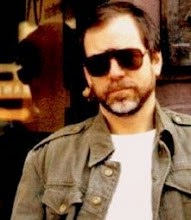
Call me Jack
Jack, Manhattan, Photo by Dar
I am a Savannah boy, since I was born there and lived there until I went to college. That's how one starts, right? The colleges certainly are an essential part of my identity-- U.Va., Sewanee, Tulane, Emory University are the major ones. Left Va. for Sewanee in order to change majors (math to philosophy) and for reasons of love and sexual identity.
Degrees? B.A., M.A., M.Ln.,
Ph.D. in Philosophy (Tulane). My Doctoral Dissertation was on Philosophy of Art--
My Master's Thesis was on D.H. Lawrence and Native Americans. I visited Taos, NM, Hampstead Heath, Land's End in Cornwall, and Lake Chapala, Mexico.
In the areas of literature and philosophy: Shakespeare to the Beats; Plato, Descartes and Whitehead; the existentialists, especially Sartre and Simone de Beauvoir. Novels have shaped who I am: Tolstoy, James Baldwin, Iris Murdoch, Alan Hollinghurst, Edmund White...and works from the Romantic poets to Michel Foucault. And that doesn't even touch on the art and artists I love...
I've had a long career in teaching and librarianship: Two universities, two art colleges, two high schools, and the High Museum of Art along with other oddities like Law Librarian at the Georgia State University Law School. Teaching for 17 years at the Atlanta College of Art was especially rewarding. During those years I wrote articles and reviews for Art Papers and other publications. I met wonderful students who are still making art today. Kara Walker took two of my elective classes. And many students and colleagues are now among my Facebook friends. Teaching is a two-way avenue.
It was also during this time that we collected much of the art we now own, the Larry Connatser paintings, for instance, art from Mexico and South America, and the photographs of my friend Paula Gately Tillman. I also own Hogarth engravings and a work by Aristide Maillol.
Since the age of 18 I have kept journals. My first trip to Europe in 1970 was as formative as any college course. I spent three months there, writing Journal 5, traveling by Eurail pass, soaking up art and history as never before. Seeing the world and other cultures has always been an inspiration vital to me.
My relationships, like my train trips in Europe from country to country, crossed the landscapes, the bodyscapes of intimacy and sexuality. I was a Hippie in the 70's and thank Dionysus for it. It was then I found lifelong friends Jim and Julian, now deceased, who added so much to my life and are the subject of a novella I wrote. Savannah, New Orleans, Mexico, and San Francisco (where I lived on Russian Hill), with frequent jaunts to New York and New England, were my fertile crescent and home during the 70s. Those were the days of meeting Allen Ginsberg, W.S. Merwin, and Lawrence Ferlinghetti-- A time of art, music, theater, and philosophy. It was the time when I met the wonderful actor and my close friend, Joseph Mydell.
Today, I am married to my darling, Darryl Gossett. We have a nexus of relationships with others. Our travels and life together fill many of the pages of this Blog. He is a talented editor and award winning writer (His article on Alzheimer's) (Edith Honeycutt --with whom we had a delightful dinner). My aim now is to shift from critical writing to more creative writing, such as my "Art Memo" and several reviews in The Gay and Lesbian Review, Worldwide, (another link to the essay is Art Memo; and to my most recent review, Alfred Corn's Miranda's Book). I continue to teach, continue writing essays, poetry, short stories; and creating a photographic vision in sync with my writing, Poems and Short stories: Apricocks and 4 Way.
But enough about me...
Here's to my friends, loved ones, and artists I've encountered: These portraits are among the best of my accomplishments, not to mention the relationships we have nurtured that made them possible.
To the chief intensity: the crown of these
Is made of love and friendship, and sits high
Upon the forehead of humanity.
Keats-- Endymion.
Jack
Monday, May 28, 2018
Morgan Freeman and MeToo
https://www.independent.co.uk/voices/morgan-freeman-sexual-harassment-allegations-metoo-hollywood-women-of-colour-a8368691.html
Thoughtful article. I have no idea what MF did or didn't do, but the comment about wanting to return to the womb doesn't strike me as quite enough to destroy his career. It doesn't seem to me even remotely sexual. The attack on old people, especially celebrities who have said inappropriate comments over the years, I fear loses focus and takes MeToo from a meaningful exposure of rape, assault and abuse, from fighting the Trumps of the world who brag about sexual assault, to a questionable complaint about unwanted comments. Who has not made an inappropriate comment in their lives, women included? In my twenties I was approached by many women some of whom groped me in the discos. I did not want those touchings, but neither did it bother me much; I was even flattered by the lust intoxicated women showed for me. There are actions that need to be exposed and prosecuted, and thank MeToo for doing that. Coercive prodding from a boss to an employee should be called out. There are also stupid flirtations that should get the response, "That is insulting and offensive." Personally I do not understand the urge for non-consensual sex. For me and many of my male friends lack of desire or consent from another is a turn-off. We need more empathy, distinguishing between something that is not appropriate and something that is a crime. Otherwise, MeToo will cease to be effective, even reviled, rather than accomplishing the higher purpose of changing a culture which treats sex as one more acquisition, as something materialistic, rather than a way to express love for another human being.
Jameson
Sunday, May 20, 2018
Philosophy and Social Media
Cogito, ergo sum.
Social Media are used for many purposes. They are used to keep in touch with friends and family. By corporations they are used as a Capitalist tool to advertise and woo customers. News services use them as print versions become less desirable. Politicians use them for propaganda. To paraphrase Plato, as in a democracy, any ass may troll social media and bray any opinion or empty sound it likes. As a form of genuine communication or thoughtful commentary most social media fail.
The social network most under scrutiny today is Facebook. In the 10 years I have used it, it has provided me most importantly with re-establishing contact with dear friends. It has also helped create or sustain new friendships. In those respects alone I think FB has been of great value. My life became richer as I think those of my friends have as well.
Yet there is also a dark side and a mediocre side to FB. At its worst, it allows dogma and misunderstanding to dominate many threads of conversation. It is as likely to create fights or anger as to bring a higher harmony, learning, or a better perspective. False information also makes things worse since many people do not examine their sources, or look for reliable sources, looking instead for confirmation of what they already believe. We get suckered into points of view that lead to hate or prejudice rather than understanding or empathy.
As a lifelong philosopher and lover of all the arts, I find thoughtless posts and cute pictures rather monotonous. Photographs of travel are fine for friends or family, and may teach us about other places. Yet, the way many people push the "Don't worry, Be Happy" attitude is to me mindless at best, and immoral when it ignores the suffering and needless destruction going on globally. It is the selfish, privileged attitude of those with money who live in comfort. It is a cruel response to environmental damage killing humans and wildlife alike. When FB perpetuates this response and self absorption it moves toward evil. That does not make me angry; it makes me sad, and more pessimistic about our future-- ecologically, politically, and morally.
This blog service offers a place for shared introspection and reflection on how we use the internet. It allows us to do more than make a brief comment or reaction to a comment. It gives the opportunity to look at the values we hold, to ask what we hold dear, what matters most to us, rather than how we can impress others with our trips, our animals, our possessions, and our appearance. Obsession with how we appear to others may be the most despicable and absurd aspect of social media, yet it is almost impossible not to give into it at times.
Descartes and his Cogito, "I think therefore I am," take on another level of meaning in the wired/wireless world of the 21st Century. Serious thinking may also be an endangered species.
Jameson
Sunday, May 13, 2018
The MeToo Inquisition
Another thought-provoking thread:
After hitting Hollywood with a high profile takedown (Harvey Weinstein, Kevin Spacey, etc.), nailing the newsmen (Matt Lauer, Charlie Rose, Tom Brokaw, etc.), popping the pop stars (Seal, R. Kelly, Nick Carter, etc.), and picking on the politicians (Al Franken, Roy Moore, John Conyers, etc.), MeToo is taking aim at literary luminaries.
The latest is Junot Diaz, an M.I T. professor, MacArthur fellow, and author of successful novels, including "The Brief Wondrous Life of Oscar Wao," which snapped up a Pulitzer Prize in 2008. It wouldn't be an exaggeration to say he's one of the leading novelists writing in America at the moment.
But now a raft of accusations over forceful advances and misogynist verbal abuse toward his grad students and fellow writers has caused a firestorm. His enemies have called the Dominican Republic, Diaz's Caribbean homeland, an "island of toxic masculinity."
Writer Roger Morgan called Diaz "a survivor of abuse and a purveyor of it" and declared: "Men are coming to terms with their own boorishness and brutality, the monster within and the monster next door." Penalties are starting to pour in for Diaz: withdrawals from writing festivals, books pulled off bookstore shelves, the soaring career you just know has been hit with a damaging, perhaps fatal missile.
Sometimes the penalties include being dropped by one's literary agents, as was the case with children's author James Dashner, whose dystopian "Maze Runner" series was made into three feature films that made a billion dollars in box office worldwide. Native American literary hero Sherman Alexie, author of "Smoke Signals" and "Reservation Blues," has been disgraced, accused of trading on his literary celebrity to forcefully kiss and undress unwilling women. One of Young Adult literature's biggest stars, Lemony Snicket, aka Daniel Handler, has a reputation for inappropriate sexual and racial remarks. For unwanted touching and libidinous emails directed at another employee, NPR canceled writer and radio personality Garrison Keillor's contract, drained Lake Wobegon, and ended "Prairie Home Companion" after nearly a half century on the air.
One of the brightest literary lights of the last half-century, David Foster Wallace, went far past these men in the area of misbehavior. Writer E. Price calls him an "abusive, explosive man who cashed in writing about his own misdeeds." Mary Karr, the married lover Wallace met in rehab and a talented writer in her own right, claims: "He tried to buy a gun, kicked me, climbed the side of my house at night, followed my son home from school, and (prompted me to) change my phone number twice." Other times he stalked her, punched out her car window, threw her from a speeding vehicle, and threw a coffee table at her.
Certain male authors should be glad they're not at their literary peak in this current climate. These include notorious misogynists like Norman Mailer, Philip Roth, Martin Amis, and John Updike. Imagine the reception Nabokov's brilliant but hebophiliac "Lolita" would get from SJWs if its publication date were 2018!
E. Price lobs this grenade at David Foster Wallace: "I believed he was a complex, hauntingly beautiful soul. Now that I know the truth about him, I find most of his work unimpressive, and I feel grateful that he is dead. If he were still alive, he'd be abusing students, harrassing exes, and tiptoeing around his own capacity for evil in his hand-wringing, exhausting prose."
Yikes! She reminds me of the people who vandalized the books of Ted Hughes over his adultery and tyranny while married to fellow poet Sylvia Plath. After Ted Hughes' crucifixion by feminists, which included attempts to chip his surname from Sylvia's gravestone in a Yorkshire village, a number of contentions are being reassessed: Ted's editing and reordering of the poems in Sylvia's magnum opus "Ariel" looks savvy, Ted's own Sylvia-soaked "Birthday Letters" is now considered a masterpiece, and Hughes' own abilities as a poet seem close behind hers. Like "Brangelina" or "Bennifer," "Tedylvia" was a synergy, a married couple who bounced ideas off each other and finished each other's sonnets and sentences.
Here is where MeToo runs into trouble. Richard Morgan wonders: "What do we want men in to MeToo reckoning to be, besides apologetic, broken, and punished? Do we even know? Don't we want them to be BETTER?" Morgan suggests that Junot Diaz has already changed, his violations now 4-12 years old. He has mended his ways and invited other men to do the same. In a stunning piece for the New Yorker last month, Junot declared:
* "I was raped when I was eight years old by a grown-up that I truly trusted."
* "(There was) no more me, only an abiding sense of wrongness and this unbearable recollection of being violently penetrated."
* "The rape excluded me from manhood, from love, from everything...By fourteen, I was holding one of my father's pistols to my head."
Scratch a misogynist, and you often get a man who when he was a boy was mistreated or abandoned by older men. MeToo, a muckraking movement, only goes so far. It exposes the gross, squirming life beneath certain rocks, but it isn't a movement of repair, healing, or change. That isn't its responsibility anyway. Men need a movement of our own.
LET'S TALK ABOUT THE ELEPHANT IN THE ROOM. There's no female Shakespeare, Mozart, Michelangelo, nor anyone with the XX chromosome anywhere near their stature in their respective art forms. One can blame oppression and bigotry, but then one has to recall that Milton wrote poems blind, Beethoven wrote sonatas deaf, Sade wrote novels in his own blood while incarcerated, and James Baldwin wrote as a gay black man before civil rights was achieved for either minority. How's THAT for overcoming obstacles?
Compared to women, men have more "culture babies," i.e., produce more novels, murals, gadgets, bands, businesses, symphonies, and scientific discoveries. Women, who often have ACTUAL babies, feel less motivated to make culture babies, impressive exceptions noted like Mary Barra (CEO of GM), J.K. Rowling, Margaret Atwood, Margaret Mead, Frida Kahlo, Madonna, Elizabeth Warren, etc. It isn't I who is claiming this. It's HISTORY that is proving this.
Camille Paglia sees teen boys as being passed "from control by their mothers to control by their wives" with only a "brief season of exhilarating liberty" in between. Many men learn to resent the way their awakening sexuality makes (the hetero majority of) us need women for another compelling set of reasons long before we're out of the shadow of our mothers, who in this post-patriarchal age of divorce, rule the familial roost ever more utterly, our first witness, first boss, and first love.
The dual power of mother and female lover that so affects and controls men has rarely been better expressed than in the vaginal, uterine imagery of Kurt Cobain's "Heart-shaped Box":
"Meat-eating orchids
forgive no one just yet.
Cut myself on angel's hair
and baby's breath.
Broken hymen of your highness
I'm left back.
Throw down your umbilical noose
so I can climb right back.
forgive no one just yet.
Cut myself on angel's hair
and baby's breath.
Broken hymen of your highness
I'm left back.
Throw down your umbilical noose
so I can climb right back.
Hey! Wait!
I've got a new complaint,
forever in debt to your priceless advice."
I've got a new complaint,
forever in debt to your priceless advice."
Kurt's "new complaint" refers to a humiliating male dependency on women that leads to the kind of resentful misogyny and misbehavior that MeToo is exposing across the board, in the worlds of television, film, pop music, politics, and literature. Now that it is in the open, however, what will we do about it? That's where MeToo runs out of answers and also where iconic minds like Camille Paglia's and Jordan Peterson's come in to offer a fresh perspective.
--C. Schmitz 5/10/18
Subscribe to:
Posts (Atom)