Thursday, August 25, 2011

Holiness and Beatitude

https://blogger.googleusercontent.com/img/b/R29vZ2xl/AVvXsEhXdszfREnBSbNLGmOYD3TgovVdl86lNFZATyJqHlHq0HrGPeyslG-GfiH6JA43qtwcVOIJ19jEZA_v0zh2ZKJSisVMP7aUKaXs0wAtn4cumqkToJws2nIdz5CTcqgNFwc04yH2Eg/s1600/beat-generation.jpg


Holy! Holy! Holy! Holy! Holy! Holy! Holy! Holy! Holy! Holy!
Holy! Holy! Holy! Holy! Holy! Holy! Holy! Holy!
The world is holy! The soul is Holy! The skin is holy! The
nose is holy! The tongue and cock and hand and asshole
holy!
Everything is holy! everybody's holy! everywhere is holy!
Everyday is in eternity! Everyman's an angel!

(from Howl)

ON THE HOLY ROAD:
THE BEAT MOVEMENT AS SPIRITUAL PROTEST
Stephen Prothero
Georgia State University

Although there was a smattering of early critical acclaim for the beat
writers, neither their literature nor their movement fared well with the
critics. One reviewer called William Burroughs's Naked Lunch "a prolonged
scream of hatred and disgust, an effort to keep the reader's nose down in
the mud for 250 pages." Kerouac's On the Road was said to distinguish
itself from true literature by its "poverty of emotional, intellectual, and
aesthetic resources, an ineptitude of expression, and an inability to make
anything dramatically meaningful." What bothered the critics most about
the beats was their negativity. Life claimed they were at war with everything
sacred in Eisenhower's America-"Mom, Dad, Politics, Marriage, the
Savings Bank, Organized Religion, Literary Elegance, Law, the Ivy League
Suit and Higher Education, to say nothing of the Automatic Dishwasher,
the Cellophane-wrapped Soda Cracker, the Split-Level House and the clean,
or peace-provoking H-bomb." The Nation dismissed the beats as "naysayers";
even Playboy called them "nihilists."
The beats responded to this critical chorus with one voice. "Beat,"
Kerouac asserted, stood not for "beat down" but for "beatific." "I want to
speak for things," he explained. "For the crucifix I speak out, for the Star
of Israel I speak out, for the divinest man who ever lived who was German
(Bach) I speak out, for sweet Mohammed I speak out, for Buddha I speak
out, for Lao-tse and Chuang-tse I speak out." To those who called "Howl,"
a "howl against civilization," Ginsberg replied that his signature poem was
a protest in the original sense of "pro-attestation, that is testimony in favor
of Value." He too described his protest in religious terms. "'Howl' is an
'Affirmation' by individual experience of God, sex, drugs, absurdity," he
explained. "The poems are religious and I meant them to be."
My thesis is that the beats were spiritual protesters as well as
literary innovators and ought, therefore, to be viewed at least as minor
characters in the drama of American religion. If, as Miller argues, transcendentalism
represented a religious revolt against "corpse-cold" Unitarian
orthodoxy, the beat movement represented a spiritual protest against what
the beats perceived as the moribund orthodoxies of 1950s America.

A "NEW VISION"
The beat movement began with the meeting of Kerouac, Burroughs, and
Ginsberg in New York in 1944, coursed its way through the San Francisco
poetry renaissance of the 1950s, and spent itself sometime in the early
1960s. It was led by three main figures-a working-class French-Canadian
Catholic from Lowell, Massachusetts (Kerouac), a middle-class Russian-
American Jew from Paterson, New Jersey (Ginsberg), and an upper-class
Anglo-American Protestant from St. Louis (Burroughs)-and included a
large supporting cast of novelists, poets, and hangers-on. What united these
men (and the vast majority of them were men) was a "new consciousness"
or a "new vision."

Like any spiritual innovation, this new vision included a rejection of
dominant spiritual norms and established religious institutions. Neither of the
two most popular spiritual options of the early postwar period-the new
evangelicalism of Billy Graham and the mind cure of Rabbi Joshua Liebman's
Peace of Mind (1946), Monsignor Fulton J. Sheen's Peace of Soul (1949),
and the Rev. Norman Vincent Peale's The Power of Positive Thinking (1952)-
seemed viable to the beats in the light of the long postwar shadow cast by
the Holocaust, the bomb, and the cold war. Thus Burroughs, Kerouac, and
Ginsberg joined neo-orthodox theologians H. Richard and Reinhold Niebuhr
in rejecting any easy return to normalcy and in damning the evangelical and
mind-cure revivals as vacuous at best. For this beat trio, neither positive
thinking nor evangelical Christianity could make sense of God's apparent
exodus from the world. But somehow Oswald Spengler's The Decline of the
West, a book the beats studied and discussed in the late 1940s, could.
Inspired by Spengler's apocalypticism, the beats announced the death of
the tribal god of American materialism and mechanization. ("There is a
God / dying in America," Ginsberg proclaimed.) But in keeping with
Spengler's cyclical view of history, they prophesied that a new deity was
arising from the wreckage. (Ginsberg called it ". . . an inner / anterior
image / of divinity / beckoning me out / to pilgrimage.")
In 1938, two years after his graduation from Harvard, William Burroughs
wrote a humorous yet foreboding short story entitled "Twilight's Last
Gleamings." Loosely based on the sinking of the Titanic, this cynical
satire is a dark allegory on the fall of America and the refusal of Americans
to accept the inevitability of their own deaths and the demise of their
civilization. Burroughs's characters are Neros with urban savvy: con men
conning, robbers robbing, preachers preaching as the ship goes down. The
moral of this story is well expressed in a later poem by Lawrence
Ferlinghetti:

The end has just begun
I want to announce it
Run don't walk
to the nearest exit.

Along with this preoccupation with America's eschaton, the theme of
individual suffering and death looms in beat writing. Unlike Liebman, Sheen,
and Peale, who resolved to will into existence a "placid decade," the beats
devoted their lives and their literature to understanding and explicating the
private hells of those who remained on the margins of postwar prosperity.
Burroughs's first four books-Junkie, Queer, Naked Lunch, and Yage Letters-
document in factualist style the horrors of addiction to "junk" in its
many forms (drugs, sex, power). Much of Ginsberg's work, including "Howl"
and "Kaddish," explores madness and death. Three of Kerouac's novels-
Maggie Cassady, The Subterraneans, and Tristessa-are odes to lost loves;
and his Big Sur depicts his own alcohol-induced breakdown.
If the beats had stopped here, critics' categorization of their work and
thought as morbid or mad might have been accurate. But like the Lutheran
preacher who hits her congregation with sin only to smother them with
grace, the beats sought to move beyond predictions of social apocalypse and
depictions of individual sadness to some transcendental hope. "The Beat
Generation is insulted when linked to doom, thoughts of doom, fear of
doom, anger of doom," Ginsberg, Corso, and Orlovsky protested in 1959.
"It exhibits on every side, and in a bewildering number of facets," John
Clellon Holmes added, "a perfect craving to believe. . . the stirrings of a
quest." Thus the beats' flight from the churches and synagogues of the
suburbs to city streets inhabited by whores and junkies, hobos and jazzmen
never ceased to be a search for something to believe in, something to go by.
From the perspective of Religionswissenschaft, the beats shared much
with pilgrims coursing their way to the world's sacred shrines. Like pilgrims
to Lourdes or Mecca, the beats were liminal figures who expressed
their cultural marginality by living spontaneously, dressing like bums, sharing
their property, celebrating nakedness and sexuality, seeking mystical
awareness through drugs and meditation, acting like "Zen lunatics" or holy
fools, and perhaps above all stressing the chaotic sacrality of human interrelatedness
or communitas over the pragmatic functionality of social structure.
The beats, in short, lived both on the road and on the edge. For them,
as for pilgrims, transition was a semipermanent condition. What distinguished
the beats from other pilgrims, however, was their lack of a "center
out there." The beats shared, in short, not an identifiable geographical
goal but an undefined commitment to a spiritual search. They aimed not to
arrive but to travel and, in the process, to transform into sacred space every
back alley through which they ambled and every tenement in which they
lived. Thus the beats appear in their lives and in their novels not only as
pilgrims but also as heroes (and authors) of quest tales, wandering (and
writing) bhikkhus who scour the earth in a never fully satisfied attempt to
find a place to rest. This commitment to the spiritual quest is expressed by
Burroughs in Naked Lunch:
Since early youth I had been searching for some secret, some key with
which I could gain access to basic knowledge, answer some of the
fundamentaql uestions.J ust what I was looking for, what I meant by
basic knowledgeo r fundamentaql uestions,I foundd ifficultt o define. I
would follow a trail of clues.
On the trail that Kerouac, Ginsberg, and Burroughs followed after the
war, one important clue was provided by Spengler: the suggestion that the
solution to their individual crises of faith (and to America's crisis of spirit)
might lie outside western culture and civilization, in the Orient and in the
"fellaheen" or uprooted of the world.
Inspired by a populism akin to contemporary Latin American theologians'
preferential option for the poor, the beats looked for spiritual insight
not to religious elites but to the racially marginal and the socially inferior,
Recalling Dostoevsky's "underground men," Ginsberg dubbed these characters
"subterraneans." Kerouac, assigning them a place a little closer to
heaven, christened them "desolation angels."
Of all these fallen angels, the beats were especially enamored of Herbert
Huncke, who according to Ginsberg "was to be found in 1945 passing on
subways from Harlem to Broadway scoring for drugs, music, incense, lovers,
Benzedrine Inhalers, second story furniture, coffee, all night vigils in
42nd Street Horn & Hardart and Bickford Cafeterias, encountering curious
& beautiful solitaries of New York dawn." Huncke embodied for the
beats both marginality and spirituality.
In his anonymity & holy Creephood in New York he was the sensitive
vehicle for a veritable new consciousness which spread through him to
others sensitized by their dislocations from History and thence to entire
generations of a nation renewing itself for fear of Apocalyptic Judgement.
So in the grand Karma of robotic Civilizations it may be that
the humblest, most afflicted, most persecuted, most suffering lowly
junkie hustling some change in the all-night movie is the initiate of a
Glory transcendingh is Nation'sc onsciousnesst hat will swiftly draw
that Nation to its knees in tearful self-forgiveness.
Initiated by Huncke into this "holy Creephood," Ginsberg, Kerouac, and
Burroughs now identified with the beat-up and the beat-down. Kerouac
dropped out of Columbia, and the same university expelled Ginsberg.
Burroughs began what would turn into a life of participant-observation of
the netherworlds of gangsters, addicts, and hustlers. Kerouac explored the
jazz clubs and marijuana bars of Harlem. Ginsberg investigated the lives of
the working class in Paterson, New Jersey. All three men attempted to
transform their experiences into literature worthy of Rimbaud or Baudelaire.
By venerating Huncke (who according to beat lore was the first to use the
term "beat") as a saint, the beats risked transforming their "new vision"
into an amoral, nihilistic apocalypticism. What prevented this outcome, at
least for Ginsberg and Kerouac, was the arrival in New York in 1947 of

Neal Cassady.
 
The "secret hero" of Ginsberg's "Howl" and the inspiration for the ecstatic
Dean Moriarty of Kerouac's On the Road,  Cassady was born, quite
literally, on the road (in a rumble seat in Salt Lake City while his mother
and father were making their way to Hollywood). His parents separated
when he was six years old, so he was raised by an alcoholic father in western
pool halls, freight yards, and flophouses. While a teenager, Cassady supposedly
stole over five hundred cars and seduced nearly as many women. He did six
stints in reformatories before landing in San Quentin in the late 1950s.
Kerouac and Ginsberg celebrated and romanticized Cassady as a "holy
goof." Kerouac, who by 1947 had grown tired of the apocalyptic intellectualism
of Burroughs, greeted the lusty Cassady as a "long-lost brother."
Contrasting Cassady to Huncke, Kerouac observed that "his 'criminality'
was not something that sulked and sneered; it was Western, the west wind,
an ode from the Plains, something new, long prophesied, long a-coming (he
only stole cars for joy rides)." Ginsberg also embraced Cassady, who
soon became his lover, in mythic terms-as "cocksman and Adonis of
Denver." Burroughs, however, dissented, dismissing Cassady as a con
man. Thus Cassady's arrival precipitated a split of sorts in the nascent beat
movement. The pro-Huncke Burroughs persisted in a more absurdist and
apocalyptic reading of the "new vision" (beat as beat down) while Ginsberg
and Kerouac attempted to incorporate in their new, pro-Cassady consciousness
some redemptive force or transcendental hope (beat as beatitude).
Cassady redeemed the beatific beats' "new vision" by pointing the way
to what would become two major affirmations of Kerouac's and Ginsberg's
spirituality: the sacralization of everyday life and the sacramentalization of
human relationships. If Dean Moriarty preaches a gospel in On the Road,
it is that every moment is sacred, especially when shared with friends. And
if he incarnates an ethic, it is that since all human beings are of one piece,
every person must share in every other person's sorrow just as surely as all
people will be delivered to heaven together in the end. Thus Cassady personified
for Kerouac and Ginsberg the sacred connections of communitas.
While Huncke symbolized the misery of lonely individuals suffering and
dying in dark Times Square bars, Cassady symbolized the splendor of cosmic
companions digging the open road.
Shortly after their initial encounter in 1947, Ginsberg and Cassady bowed
down together at the edge of an Oklahoma highway and vowed always to
care for one another. Seven years later Ginsberg and Peter Orlovsky agreed
to "explore each other until we reached the mystical 'X' together" and
promised "that neither of us would go into heaven unless we could get the
other one in." Such covenants expressed ritualistically Ginsberg's credo
"that we are all one Self with one being, one consciousness." They represented
an attempt to routinize the group's communitas, to incarnate
Whitman's vision of "fervent comradeship" in a spiritual brotherhood of
beatific monks.
Cassady inspired in this way a shift in the beatific beats' writing from
the pessimistic, Dreiserian realism that would mark Burroughs's work to a
more optimistic, even transcendental realism: literature as "a clear statement
of fact about misery... and splendor [my emphasis]." Like Burroughs,
Ginsberg and Kerouac would continue to depict the suffering of the fellaheen,
but unlike him they would insist that such suffering was both revelatory
and redemptive. And thus Kerouac insisted that while authors must "accept loss forever,"
they should nonetheless "believe in the holy contour of life."
Ginsberg took Burroughs's advice, and by mid-decade the novels and
poems of Kerouac and Ginsberg were filled with references to Buddhism.
In one eighteen-month period between 1954 and 1956 Kerouac meditated
daily and still found the time to write five books with a decidedly Buddhist
bent. Three of these works, Some of the Dharma (a thousand-page personal
meditation), Buddha Tells Us (an American version of the Surangama Sutra),
and Wake Up (a life of the Buddha) have never been published. A book of
Buddhist poems, Mexico City Blues, and a beat sutra entitled The Scripture
of the Golden Eternity appeared in 1959 and 1960 respectively.
In 1955 Ginsberg and Kerouac met Gary Snyder, a mountain poet and
Zen initiate, who contributed greatly to their understanding of Buddhism
and their commitment to it. Just as Neal Cassady appeared as Dean Moriarty,
the hero of On the Road, Snyder was immortalized as Japhy Ryder, the
thinly veiled protagonist of Dharma Bums. Although Kerouac was clearly
intrigued by Snyder and by Zen, he devoted a good portion of Dharma
Bums to arguments between Ray Smith (himself) and Ryder (Snyder) and
to criticisms of Zen. Smith, who presents himself not as a Zen Buddhist but
as "an old fashioned dreamy hinayana coward of later mahayanism," clashed
with Ryder and his Zen on a number of occasions. One of Smith's arguments
was that showing compassion (karuna) was more important than
achieving insight (prajna). Smith was especially critical of the violence that
sometimes attended uncracked Zen koans. "It's mean," he complained to
Ryder, "All those Zen masters throwing young kids in the mud because
they can't answer their silly word questions." "Compassion," Smith contended,
"is the heart of Buddhism." Unlike Ryder who had no use for
Christianity, Smith revered not only Avalokitesvara, the bodhisattva of
compassion, but also Jesus Christ. "After all," he explained, "a lot of people
say he is Maitreya [which] means 'Love' in Sanskrit and that's all Christ
talked about was love."
Despite such disputes, Kerouac, Snyder, and Ginsberg agreed on a few
crucial points that they shared with Buddhism (especially the Mahayana
tradition's Yogacara school). They believed, for example, that life is char-
acterized by suffering (dukkha) and impermanence (anicca). Yet they also
believed that this world, at least as it appears to our senses, is ephemeral
and illusory. "Happiness consists in realizing that it is all a great strange
dream," Kerouac wrote in Lonesome Traveler. And he echoed the sentiment
(albeit in decidedly biblical grammar) in Dharma Bums: "Believe that
the world is an ethereal flower, and ye live."
This shared awareness of what Ginsberg called "the phantom nature of
being" was tremendously liberating for the beatific beats. It enabled them
both to confront suffering and death as major obstacles in this relative
world of appearances and to see their ultimate insignificance from the
absolute perspective of heaven or nirvana. It empowered them, moreover,
to deny the absolute reality of the material world even as they affirmed
enthusiastically our spiritual experiences in it. Out of such paradoxes came
the this-worldly joy of statements like "This is it!," "We're already there
and always were," "We're all in Heaven now," "The world has a beautiful
soul," "The world is drenched in spirit," "everything's all right."
There is a constant tension in beat literature, therefore, between misery
and splendor, between an overwhelming sadness and an overcoming joy.
"The world is beautiful place / to be born into," Lawrence Ferlinghetti
observed, "if you don't mind happiness / not always being / so very much
fun / if you don't mind a touch of hell now and then." In the beat cosmos
God is both absent and everywhere. Dualisms between sacred and profane,
body and soul, matter and spirit, nirvana and samsara do not hold. Thus
Ginsberg's celebrated encounter with the poet William Blake in Harlem in
1948 incorporated both a vision of death ("like hearing the doom of the
whole universe") and a vision of heaven ("a breakthrough from ordinary
habitual quotidian consciousness into consciousness that was really seeing
all of heaven in a flower") And so one of Ginsberg's most profane poems,
"Howl," contains his boldest affirmation of the sacred camouflaged in
the profane:
Holy! Holy! Holy! Holy! Holy! Holy! Holy! Holy! Holy! Holy!
Holy! Holy! Holy! Holy! Holy! Holy! Holy! Holy!
The world is holy! The soul is Holy! The skin is holy! The
nose is holy! The tongue and cock and hand and asshole
holy!
Everything is holy! everybody's holy! everywhere is holy!
Everyday is in eternity! Everyman's an angel!


CONCLUSIONS
After the beat generation graduated from young adulthood to middle age
in the 1960s, beat writers went in different directions. Following an extended
stint at the wheel of the bus of Ken Kesey's Merry Pranksters,
Cassady collapsed along a railroad track and died of exposure in Mexico
in 1968. Kerouac's seemingly endless cycles of exile and return to his
mother's home in Lowell ended in 1969 when he died an alcoholic's death
of cirrhosis of the liver. Burroughs, perhaps the least likely of beats to
make it past middle age, is alive and well and enjoying the acclaim of
European critics. Ginsberg too has survived even his transmigration from
literary rebel to de facto poet laureate of the United States. In this way beat
writers have earned a place in the history of American letters.
What I have argued here is that the beats also deserve a place in American
religious history. More than literary innovators or bohemian rebels, the
beats were wandering monks and mystical seers. They went on the roadfrom
New York to San Francisco to Mexico City to Tangier-because they
could not find God in the churches and synagogues of postwar America.
They venerated the poor, the racially marginal and the socially inferior
because they saw no spiritual vitality in the celebrated postwar religious
revival of mainstream white preachers. And they experimented with drugs,
psychoanalysis, bisexuality, jazz, mantra chanting, Zen meditation, and new
literary forms in an attempt to conjure the gods within.
Like the transcendentalists who inspired them, the beats were critics of
"corpse-cold" orthodoxies; they were champions of spiritual experience over
theological formulations who responded to the challenge of religious pluralism
by conjuring out of inherited and imported materials a wholly new
religious vision. Like Emerson, the beats aimed to make contact with the
sacred on the nonverbal, transconceptual level of intuition and feeling, and
then to transmit at least a part of what they had experienced into words.
Like Thoreau, they insisted on the sanctity of everyday life and the sainthood
of the nonconformist. And like George Ripley and his associates at
Brook Farm, they aimed to create a spiritual brotherhood based on shared
experiences, shared property, shared literature, and an ethic of "continual
conscious compassion." With transcendentalists of all stripes, the beats
gloried in blurring distinctions between matter and spirit, divinity and humanity,
the sacred and the profane.
The beats diverged from their transcendentalist forebears (and toward
their neo-orthodox contemporaries), however, in maintaining a more sanguine
view of the problems of human existence and the possibility of social
progress. In the beat cosmos, society is running toward apocalypse; individuals
are doomed to suffer and die, and perhaps to endure addiction or
madness along the way. But in the beatitudes according to Kerouac and
Ginsberg, those who suffer are blessed, and the sacrament of friendship can
redeem a portion of that suffering. In the last analysis, "The bum's as holy
as the seraphim!" and everyone- junkies and criminals, beats and squares,
Catholics and Buddhists, culture-peoples and fellaheen-  is raised up from
the dreamworld of our quotidian existences and "buried in heaven together."


From:

Wednesday, August 17, 2011

Elegy for Neal Cassady (a poem by Allen Ginsberg)


Elegy for Neal Cassady

by Allen Ginsberg (Feburary 10, 1968, 5 - 5:30 AM)


OK Neal
aethereal Spirit
bright as moving air
blue as city dawn
happy as light released by the Day
over the city's new buildings --

Maya's Giant bricks rise rebuilt
in Lower East Side
windows shine in milky smog.
Appearance unnecessary now.

Peter sleeps alone in next room, sad.
Are you reincarnate? Can ya hear me talkin?
If anyone had strength to hear the invisible,
And drive thru Maya Wall
you had it --
What're you now, Spirit?
That were spirit in body --

The body's cremate
by Railroad track
San Miguel Allende Desert,
outside town,
Spirit become spirit,
or robot reduced to Ashes.

Tender Spirit, thank you for touching me with tender hands
When you were young, in a beautiful body,
Such a pure touch it was Hope beyond Maya-meat,
What you are now,
Impersonal, tender --
you showed me your muscle/warmth/over twenty years ago
when I lay trembling at your breast
put your arm around my neck,
-- we stood together in a bare room on 103d St.
Listening to a wooden Radio,
with our eyes closed
Eternal redness of Shabda
lamped in our brains
at Illinois Jacquet's Saxophone Shuddering,
prophetic Honk of Louis Jordan,
Honeydrippers, Open The Door Richard
To Christ's Apocalypse --
The buildings're insubstantial --
That's my New York Vision
outside eastern apartment offices
where telephone rang last night
and stranger's friendly Denver Voice
asked me, had I heard the news from the West?

Some gathering Bust, Eugene Oregon or Hollywood Impends
I had premonition.
"No" I said --"been away all week,"
"you havent heard the news from the West,
Neal Cassady is dead --"
Peter's dove-voic'd Oh! on the other line, listening.

Your picture stares cheerful, tearful, strain'd,
a candle burns,
green stick incense by household gods.
Military Tyranny overtakes Universities, your Prophecy
approaching its kindest sense brings us
Down
to the Great Year's awakening.
Kesey's in Oregon writing novel language
family farm alone.
Hadja no more to do? Was your work all done?
Had ya seen your first son?
Why'dja leave us all here?
Has the battle been won?

I'm a phantom skeleton with teeth, skull
resting on a pillow
calling your spirit
god echo consciousness, murmuring
sadly to myself.

Lament in dawnlight's not needed,
the world is released,
desire fulfilled, your history over,
story told, Karma resolved,
prayers completed
vision manifest, new consciousness fulfilled,
spirit returned in a circle,
world left standing empty, buses roaring through streets --
garbage scattered on pavements galore --
Grandeur solidified, phantom-familiar fate
returned to Auto-dawn,
your destiny fallen on RR track
My body breathes easy,
I lie alone
living
After friendship fades from flesh forms --
heavy happiness hangs in heart,
I could talk to you forever,
The pleasure inexhaustible,
discourse of spirit to spirit,
O Spirit.

Sir spirit, forgive me my sins,
Sir spirit give me your blessing again,
Sir Spirit forgive my phantom body's demands,
Sir Spirit thanks for your kindness past,
Sir Spirit in Heaven, What difference was yr mortal form,
What further this great show of Space?
Speedy passions generations of
Question? agonic Texas Nightrides?
psychadelic bus hejira-jazz,
Green auto poetries, inspired roads?
Sad, Jack in Lowell saw the phantom most --
lonelier than all, except your noble Self.
Sir Spirit, an' I drift alone:
Oh deep sigh. 


Ginsberg reading the poem in San Francisco two months before we met:

http://media.sas.upenn.edu/pennsound/authors/Ginsberg/Intersection-1971/Ginsberg-Allen_13_Elegy-For-Neal-Cassady_Intersection-For-The-Arts_San-Francisco_08-71.mp3


Thursday, August 11, 2011

Birthdays

File:Hohenschwangau - Schloss Neuschwanstein1.jpg 
Neuschwanstein Castle (Wikipedia)

For a long time, I have thought birthday celebrations ridiculous. That hasn't prevented me from celebrating my own or those of others with great enthusiasm. Darryl certainly made my 50th a huge deal, with 50 long stem red roses and 50 bottles of Veuve Clicquot  Champagne. He invited so many guests I lost count. Starr was here, and virtually everyone I knew then. People came from all over, not just Atlanta. He created a similar if somewhat less extravagant bash for my 60th 4 years ago. And in return, I helped him celebrate his 40th in Vermont with tennis and a civil union, and his 50th in New Orleans, with Starr and Katie.

Because my birthday is in August, I have had many exotic ones overseas, beginning with my 23d birthday in Mad King Ludwig's glorious Neuschwanstein Castle in Bavaria, two fellow travelers buying me a stein of German beer and toasting my day. My 30th is the subject of a poem and a short story I've written. My journals record other such birthday high times. So, while I mock the foolishness of singling out one's birthday as anything special in the course of life, I must have, at least subconsciously, the expectation that the day of my birth will be pleasant and adventurous.

That may be why last Sunday was disappointing. Nothing materialized. Darryl hardly acknowledged the day (I had simply given him a card on his day weeks ago). Will had called Saturday to say he wanted to spend the day with me, possibly even taking a short road trip. But on Sunday he showed up hung over at 4:30 with plans of his own for the evening. I got a number of calls, and might have gotten a dinner invitation, had I not had company. I spent the evening alone, watching True Blood.

Curiously, perhaps, the evening alone made me realize how much I miss the sea. How fine it would have been to take a walk on the beach, listen to the waves, enjoy fresh air, rather than the sultry, polluted air of Atlanta. At 64 I have to make major decisions where to live soon, to get on with living and writing while I still have the prospect of change. I came across another poem by W. S. Merwin today that expresses so well what I desire:

W. S. Merwin
A Birthday

Something continues and     I don't know what to call it
though the language is full of suggestions
in the way of language
                but they are all anonymous
and it's almost your birthday     music next to my bones

these nights we hear the horses     running in the rain
it stops and the moon comes out     and we are still here
the leaks in the roof go on dripping     after the rain has passed
smell of ginger flowers     slips through the dark house
down near the sea     the slow heart of the beacon flashes

the long way to you is still tied to me     but it brought me to you
I keep wanting to give you     what is already yours
it is the morning     of the mornings together
breath of summer     oh my found one
the sleep in the same current     and each waking to you
when I open my eyes     you are what I wanted to see.


Jack


Monday, August 01, 2011

Beyond good and evil?

"Life in itself is neither good nor evil. It is the place of good and evil, according to what you make of it." Montaigne, quoted in The Ethics of Ambiguity.


Simone de Beauvoir. 
Photo by Gisèle Freund

As I reread the copy of Simone De Beauvoir's The Ethics of Ambiguity which I bought on sale today, the dialog of sorts in the New York Times is timely. Are there ethical truths that transcend moral relativism, and if so, what are they? Are there ethical absolutes we can use to examine, say, a menage a trois? Stay tuned for further thoughts.


July 24, 2011

The Maze of Moral Relativism

http://opinionator.blogs.nytimes.com/2011/07/24/the-maze-of-moral-relativism/

Response:
August 1, 2011, 8:30 pm

Does Philosophy Matter?

http://opinionator.blogs.nytimes.com/2011/08/01/does-philosophy-matter/

"There is nothing either good or bad but thinking makes it so."  WS
Given that Hamlet is the speaker, the statement wants thought, itself.


Jack


Simone De Beauvoir
by
Henri Cartier-Bresson

Sunday, July 31, 2011

Monogamy-- Capitalism Personified?

Sex at Dawn- echoes a long discussion we had Friday night until well past midnight...


Is monogamy like vegetarianism?

Just as we're omnivores who can swear off meat, we're a promiscuous species capable of change, an expert argues

Friday, July 29, 2011

August, Riding the Wave

 On Hapuna Beach
Riding the wave that's riding the wave-- lyrics I heard a few nights ago at a near empty cafe off Amsterdam Street. The image conjures so many waves-- past, present and future; waves  personal, in the lives of my friends, and in the country and world, at large. As the tidal wave of the world economy threatens to wipe us all out financially, all of us but those on the oil tankers or basking upon the vast yachts of the bankers, I think instead of all the healing waves that have washed over me and those I love. When I was a child, I delighted in building sand castles and watching the rising tide fill the moat, wash away the walls, inundate the castle. With the ever approaching financial limits of retirement, I see my present sand castle slipping away into the salty water, imagine all the comforts of my years of contented bourgeois life becoming austerity, or at least parsimony. And when actual retirement arrives, I plan to live as close as possible to the sea.

In my view, nothing can take the place of a walk on the beach. For decades I have lived in Atlanta, having to drive at least 250 miles to the ocean. Each year I have lived here I have driven or flown to oceans and seas all over the world. How do I love thee? Let me count the seas, from the Aegean to the Pacific coast of Hawaii, from Glacier Bay in Alaska, to Bergen's coast of Norway, to the Straights of Magellan, to the Straight of Georgia in Canada to the beaches of San Juan, Puerto Vallarta, and Manzanillo, and those long golden sand strands of shore in Australia. Whether the wild beaches of Big Sur or along the Oregon coast, or the tame Gulf of Mexico powder beaches of Santa Rosa Island, there is a sublimity to being beside the ocean, an "ataraxia," that transcends the tensions and anxieties of life in the crowded suburbs of society. 


Jack

Pacific Ocean, Hawaii
Photos from my visits to Hawaii


Sunday, July 17, 2011

Malick's Tree of Life


Two paths intertwine in this film, the way of Grace and the way of Nature. Either way, love is the only way to achieve happiness. Such is the explicit message of Terrence Malick's film, "The Tree of Life." All else impacts us visually, soaking our psyches with visual metaphor and reaching the depths of our emotional selves with memory, gesture, and whispers from a dream-like world. The film has the sweep of Koyaanisqatsi, the struggle for the sacred in Nature vs. the destructive forces of development, money, and the quest for power. The visual beauty of Kubrick is also here along with similar metaphors of birth, death, and the archetypes of human existence in an indifferent world. At times I even sensed David Lynch's nightmarish details, especially in the extended point of view of Jack in pre-adolescence. 

There is a glimpse of the Zone of Totality, as we see the total eclipse of the sun in a series of celestial images that give the film its mysticism. At the gathering on the shore, the characters apparently forgive one another for all their transgressions. As with Kubrick, though, there is no final meaning or happy ending, and we leave the theater with as much a sense of meaninglessness as Sisyphus came to accept. The cosmos and all human existence within in, connected or not,  may have great beauty, and perhaps like Keats, Malick presents the case that this beauty and the love within it are the only truth there is.

The San Francisco Chronicle gives a thorough review of the film, noting the two ways I mentioned above and offering excellent insight into the film's merits:

Jessica Chastain and Brad Pitt, top, are the parents of three boys in "Tree of Life."

The Tree of Life

WILD APPLAUSE Drama. Starring Brad Pitt, Sean Penn and Jessica Chastain. Directed by Terrence Malick. (PG-13. 138 minutes. At Bay Area theaters.)
If someone gave you, as a gift, a bag of diamonds and rocks, you would not see it as "a mixed bag." You would see it as a bag of diamonds with some rocks that can be easily pushed aside, and you would be happy to be rich. In the same way, Terrence Malick's "The Tree of Life" is at times trying and perplexing, but it also contains some of the most psychologically insightful and ecstatic filmmaking imaginable.
Malick shows you the world that you know, but he shows it in such a fever that you see it, not differently, but completely. It's a vision so alive to the mystery in everything that the simple depiction of a man walking into an office building feels like a feast of limitless possibility and geometric variety. To see "The Tree of Life" is to wish you could go through life seeing things in this way. There would be no fear of death because each moment would be so full as to contain lifetimes.
From the first moments, Malick presents his film as a contrast between two ways of understanding human existence. There is the way of nature, which sees only struggle and looks for reasons to be unhappy, and there is the way of grace, which is in touch with love and the broad movements of the universe. The way of nature is embodied by Brad Pitt as a hard-charging husband and father - it's a lovely performance from Pitt, whose control-freak facade never completely hides the vulnerability motivating it. Jessica Chastain, as his wife, embodies the way of grace. They live with their three children in a Texas suburb in the 1950s and are seen through the memory of their eldest son, Jack (Sean Penn), looking back from the present.
As in "The New World," voice-over narration, to the accompaniment of subjective shots of trees and sky, gives us the characters' inner thoughts. These produce a unique effect. It's as if we're seeing a dream of the past and hearing mental vibrations that, either randomly or because of their particular strength, happened to survive time. The feeling is one of privilege, to be picking up on precious currents of consciousness, seemingly lost to the world.
At its most basic, "The Tree of Life" vividly replicates, in cinematic terms, the way we remember. There are general memories, moods and sensations, and then there are incidents and bits of conversation that are recalled with absolute present-tense lucidity. And so the incidents of voice-over are interspersed with straightforward scenes showing this 1950s family. Malick is trying to give us life as it is consciously experienced, the unceasing inner monologue and its interplay with the outside environment, the thoughts of the past mixing with the suspended and yet always available present.
The ambition behind such an attempt is enormous, and Malick's success is complete. But he doesn't stop there. In "The Tree of Life" he doesn't only want to show what life and consciousness feel like. He wants to capture the nature of life - what life is. To this end, he films waterfalls and mountains, gives us long minutes of churning, multi-colored ooze floating in space, and even includes a brief dinosaur interlude. He is trying to give us the mind of God. No, more than that. He is trying to film God.
When he stays within the multiple minds of his various characters, Malick is working here at the level of genius. His handheld camera hovers with a sense of impending revelation. The beauty is beyond description. But when he ventures into explorations of the universe and its origins, the work becomes general and less interesting, liked warmed-over Kubrick.
Still, there is little doubt that "The Tree of Life" will stand as the cinematic achievement of the year.
E-mail Mick LaSalle at mlasalle@sfchronicle.com.
This article appeared on page E - 1 of the San Francisco Chronicle

Read more: http://www.sfgate.com/cgi-bin/article.cgi?f=/c/a/2011/06/02/DDU91JNN0T.DTL#ixzz1SPBXkBv0


Jack

Friday, July 15, 2011

The Blazing Summer of 2011


Will, Jay Brannan, Jack
Club One, Savannah


We celebrated the Summer Solstice with visits to Savannah. First Dar and I drove down for visits with John and with Dad and Kathy, the latter at Johnny Harris. We stayed at the familiar Bed and Breakfast Inn, having breakfasts of shrimp and grits and, second morning, strawberry pancakes. John and I walked the beach with its air of burning cyprus all the way from the Okeefenokee Swamp.


The second jaunt to Savannah came after Dar, Will and I heard Jay Brannan's sold out concert at Eddie's Attic in Decatur. When the show was over, Dar departed, but Will and I stayed long enough for Will to take over the piano and sing such songs as Gnarls Barkley's  "Crazy" accompanied by opening act singer Tristan Clopet. The night was too good to end, so we drove to Savannah, stopping at the Waffle House at 2AM where Will performed some Cee Lo Green covers for the ecstatic staff, one of whom recorded his singing. 
After the meal, we drove on to Savannah, stopping at my brother's house. John then drove us to Tybee in his Cadillac to watch the spectacle of a sliver of crescent moon rising over the ocean, followed by sunrise as we stood on the windy beach, letting the cool waves wash our feet. 
 Sunrise over Savannah Beach

Will, John and I wound up downtown atop the Bohemian Hotel as a tropical storm blew in, walls of rain and lightning dramatizing the Savannah River, the bridge, the cobblestone streets below. Will performed again in the lobby, singing "Crazy" on a wandering musician's guitar, and pleasantly startling the guests running in from the rain. The friendly concierge or whatever he was, having heard us talk about Jay at Club One that evening, arranged to take us to our car by shuttle. He saved the day, we got in a decent nap, and arrived on time, which was too early, for the Encore performance of Jay Brannan in Savannah. Jay and I talked a good while and he mentioned his fans from the Atlanta show onstage. It was a great performance, though Jay seemed a bit depressed and tired. This was his last show of the tour. (see the vid. below from the show)

Starr's Porch, Lookout Mountain

A week later I followed up the trips to Savannah with a week on Lookout Mountain. It was restful and relaxing and cool there, as I house sat for Starr who was in Michigan. She returned late on Friday and we attended a dazzling pool party Saturday, culminating in an intimate swim with Starr, Donna, Katie, Brook, and me which Will happily joined as midnight approached. He serenaded us all poolside after the swim. On Sunday after a leisurely breakfast cooked by Starr and Donna, Will and I hiked to the Waterfall at Cloudland Canyon, concluding my summer trips thus far.
 Here are the two main collections of photos from our trips:


Wednesday, June 01, 2011

Music, New Orleans, and the Creative Process

Treme continues to be a revelation about New Orleans, not simply about the spirit of the place, how it rose Phoenix-like out of the waste of Katrina, and all the other dismal disasters it has encountered, yet also about how music is created, about the struggle to make it as an artist and a musician. This article  from Salon (click) reveals how even the food of New Orleans is connected to its creativity and exemplifies its qualities. The series literally makes me want to live in New Orleans again.


Musicians and cooks talk shop on "Treme"

HBO's drama is about post-Katrina life in New Orleans -- but it also brilliantly captures the creative process 

http://www.salon.com/entertainment/tv/feature/2011/05/31/treme_season_two_episode/index.html

Friday, May 27, 2011

Wilde Love

Oscar Wilde and Lord Alfred Douglas (
Oscar Wilde and Lord Alfred Douglas ("Bosie") in 1893 (William Andrews Clark Memorial Library) 

David Hare's The Judas Kiss provided much food for thought, and like the food Oscar Wilde eats in the British hotel room, it is a bit cold and fishy.  The acting at the Actor's Express last night was powerful and moving, yet it could not overcome the sense that the story isn't believable. Was Bosie a boring snob who used and abused his older friend? No doubt. Yet the story has to show us why or how Wilde came to love the man so much. After all, both Bosie and Wilde had sex with many beautiful boys. What was it about Bosie that seized Oscar's heart and held it? This play doesn't even give us a clue. I don't buy it.

The Judas Kiss turns the Love that dare not speak its name  into an unspeakable obsession. Not only does Bosie betray Wilde, so too does his first male lover, Robbie Ross, who is alternately jealous, guilty, and in cahoots with Oscar's wife Constance. Perhaps the play isn't homophobic, but despite its love of Oscar Wilde, himself, it portrays Oscar's affections as misguided and destructive. 

It  was not Bosie and not Robbie who caused Oscar Wilde's imprisonment and ruin. Wilde clearly loved both of these men. Neither relationship was the cause of his arrest or conviction. Bosie's homophobic father's insults, Wilde's suit, and Queensberry's counter charges brought the trial. Neil McKenna's 2005 biography, The Secret Life of Oscar Wilde, reveals all the interconnected political and social intrigue.  Still, few realize that were Oscar Wilde tried in Atlanta, Georgia today, he would be sentenced to far more years in prison. Having any kind of sex at all with boys under eighteen, as many who testified at his trial were, would lead to up to ten years in prison. Clearly, it was the testimony of these underage rent boys that, after two trials, produced the desired conviction.


What strikes me as oddest of all is that this predicament is not so different from what happens among the so-called straights. Men marry, their wives grow old, often uninterested in sex (at least with them) , and the men go out looking for much younger women. No doubt liberated women have a similar experience. On the purely physical level, the quest often descends into materialistic prostitution and/or dangerous liaisons. The road to sordid decadence is busy with drivers of all persuasions.

All of which brings me back to love. If Wilde was anything, he was wildly romantic. Ultimately, we shall never know why he loved Alfred Lord Douglas so passionately. Love is intimate and private. I dare say no two genuine relationships of love are the same. The very word, love, has become inadequate to describe the  passion existing between those who deeply care for one another. Our world's pressure to conform, to follow the accepted, deluded  path of monogamous marriage, children, work, and religion (or to pretend to do so) has become even more of a straightjacket than the Victorians wore. 

The existentialist Gabriel Marcel points out the vital difference between being and having. Do you want to have a partner or spouse, or to be a partner or spouse. Our passion for others should be about merging our being with theirs, not about possessing them and controlling them. Once again, Simone De Beauvoir wrote about  and exemplified  this passion. I think Oscar Wilde did as well.

Jack 5/26/11


Here is an excerpt from De Profundis, Wilde's letter to Bosie, written at the end of Wilde's prison term:

When first I was put into prison some people advised me to try and forget who I was. It was ruinous advice. It is only by realising what I am that I have found comfort of any kind. Now I am advised by others to try on my release to forget that I have ever been in a prison at all. I know that would be equally fatal. It would mean that I would always be haunted by an intolerable sense of disgrace, and that those things that are meant for me as much as for anybody else – the beauty of the sun and moon, the pageant of the seasons, the music of daybreak and the silence of great nights, the rain falling through the leaves, or the dew creeping over the grass and making it silver – would all be tainted for me, and lose their healing power, and their power of communicating joy. To regret one's own experiences is to arrest one's own development. To deny one's own experiences is to put a lie into the lips of one's own life. It is no less than a denial of the soul.

http://en.wikipedia.org/wiki/Oscar_Wilde

Wednesday, May 18, 2011

Ageism: the New Racism


Simone De Beauvoir


Simone De Beauvoir wrote in Coming of Age about the prejudice against the elderly in Western society. In the decades since, the maltreatment of the aging, especially in the United States, has worsened. The worship of and obsession with youth and the assumption that the old are repulsive, deranged, and damaged are the perpetual themes of the mass media. Only the bravest of artists and most radical  of counter-culture voices decry the "secret shame" of the bigotry against the old. Often that bigotry is subtle and sophisticated.

Take, for instance,  Maureen Dowd in the New York Times. Under cover of attacking the privileged rich, she calls the 62-year-old suspect in the Strauss-Kahn case "a crazed, rutting, wrinkly old satyr charging naked"  into the room. Whether or not this man is a rapist, her statement indicts all old men as repulsive. Yes, there are certainly old rapists. There are young rapists. If you want a portrait of young women child molesters and rapists, read John Irving's Until I find You. The generalization that one member of a class of people is evil, therefore the whole class is bad, is at the heart of most bigotry. Dowd, of all people, should realize this.

Today I read an essay in the Paris Review about Andrew Lytle ** written by a man who took care of him when "Mister Lytle" was 92 and the author 20. It is a tribute to both men. Despite the fascinating twist on sexuality in the story, I loved the author's precise, vivid description of  Lytle after which he writes,  

"I found him exotic; it’s probably accurate to say that I found him beautiful."

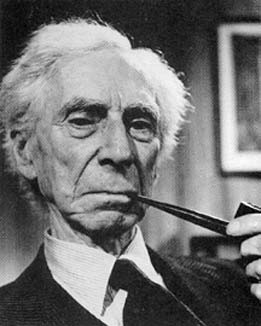
At 63 I am just beginning to be aware of the prejudice against me as an old man. I'm used to decades of experiencing prejudice from those who know I am gay.  This second bigotry is far more insidious, and potentially far more isolating. All I can think to do by way of combat is to post articles like the one above on Lytle and a few portraits of other old human beings I think are beautiful:

louise-bourgeois-2.jpg
Louise Bourgeous and art piece

Bertrand Russell


 Bertrand Russell
With pipe


See also:

‘Frankenfolks’ And The Rise Of Ageism 

Agewise: Fighting The New Ageism In America by Margaret Morganroth Gullette

Chicago (IL): University of Chicago Press, 2011


Jack Miller

(White Male, Age 63. Beautiful)


** Lytle was famous at Sewanee, where I got my undergraduate degree in Philosophy. I knew Allen Tate, of the essay, who was there when I was. We introduced Mr. Tate to our new, blacklight, hippie coffeehouse in 1968.


Wednesday, May 04, 2011

Hallelujah!

Having heard this song many times since hearing Leonard Cohen, himself, sing it in concert, having recorded Will singing it, and talking about it and about the moving Jeff Buckley version of the song, this article Dar forwarded to me yesterday is a revelation.


(The version I love with "Dark" replacing "Dove")

Hallelujah!

One haunting ballad has been the soundtrack to many lives recently. But why? Bryan Appleyard on Leonard Cohen’s uber-song


Songs are everywhere. We buy them and play them, of course, but we are also subjected to them in pubs, cafes, lifts and shops. You see people in cars singing along to the radio, and on trains they nod and rock to their MP3 players. Unthinkingly, we stroll along humming the latest pop pap. A visiting alien might reasonably conclude that we are sustained by songs rather than air, food or water. Songs are thus the dominant expressive form of our time. Yet most of them barely exist in our consciousness at all. Mass-produced drivel, they drift around the charts for a week or two, insinuate themselves into some particularly indiscriminating part of our brain for a while, and then are gone. Some have an afterlife as instant mood music for television shows, films or advertisements. But, by and large, songs are the supremely disposable art form of our time.
The exceptions are obvious. A few songs or performances are good enough to last, and some are just bad but evocative, and are therefore continuously recycled. Abba’s songs aren’t as good as everybody says they are, but they work in a way that makes them eminently usable. Equally, almost any rubbish that struck it big in the late 1960s can now be used to sell stuff to the moist-eyed middle-aged, who have discovered, to their infinite sorrow, that they were not, in the event, born to be wild.
All of which brings me to the story of one particular song that seems, through some mysterious alchemy, to have done everything a modern song can do. Leonard Cohen’s Hallelujah has been papped, drivelled, exploited and massacred. It has also produced some very great performances, and it is, in truth, a very great song. In a fundamental sense, at least partly intended by Cohen, it is a song about the contemporary condition of song.
Even if you think you haven’t heard it, I can guarantee you have. It has been covered by, among many others, Allison Crowe, kd lang, Damien Rice, Bono, Sheryl Crow and Kathryn Williams. Bob Dylan has sung it live, a performance that has, apparently, been bootlegged. It has been used in films and on television. Rufus Wainwright sang it on the soundtrack of Shrek, Jeff Buckley’s version was used on The West Wing and The OC, John Cale sang it on Scrubs, and so on. Cale’s is the best version I have heard — pure, cold and scarcely inflected at all, it sends shivers down the spine.
Other songs may have been covered more — in Cohen’s oeuvre, Suzanne, with 124 versions, and Bird on the Wire, with 78, come out ahead of, at the last count, Hallelujah’s 44. And other songs may have made it onto more soundtracks. But there is something unique about Hallelujah, something that tells us a great deal about who we now are.
Cohen recorded it on his 1985 album Various Positions. It seemed destined, at that point, to remain in the same memory vault as most of his work. Fans would love it, aficionados would acknowledge it as a fine piece of songwriting, but otherwise it would just be an addition to the repertoire of great Cohen songs, a large though highly specialised musical sector.
Then, in 1994, Jeff Buckley released a version on his album Grace. This sold millions worldwide, and Grace’s status was finally and fully elevated to “legendary” when Buckley drowned in the Mississippi in 1997. He was the son of Tim Buckley, an extraordinary singer-songwriter who had also died young in mysterious circumstances. A wild and fatal romanticism seemed to hang over the family, over Grace and over the song that everybody found themselves singing from that album, Hallelujah. It was, unquestionably, Buckley’s version rather than Cohen’s that was to make the song universally recognisable.
This is fair enough. Buckley, like his father, had a phenomenal vocal range, and Cohen, famously, has not. Many of Cohen’s best songs — Alexandra Leaving, Famous Blue Raincoat — are exactly suited to his low groan. But Hallelujah is not. It needs to be sung, and Buckley really sang it, whispering and screaming his way through its bitter verses. His interpretation is a little lush for me, but it was better than Cohen’s, and it was exactly that lush- ness that projected it onto all those soundtracks and caught the attention of all those other singers.
What then became really odd about the song was the utterly contradictory way in which it was used and understood. This was, in part, due to the fact that Cohen seems to have written at least two versions. The first ended on a relatively upbeat note:
“And even though it all went wrong, I’ll stand before the Lord of Song With nothing on my tongue but hallelujah!” It was this ending, curiously, that Dylan especially liked, as he told Cohen over coffee after a concert in Paris. Cohen sang him the last verse, saying it was “a rather joyous song”. (Incidentally, during the same conversation, Cohen told Dylan that Hallelujah had taken a year to write. This startled Dylan. He pointed out that his average writing time was about 15 minutes.) Anyway, for once, Dylan’s taste had led him astray, because the bleaker ending in the Buckley version is much better, in the sense that it is more consistent. There is no redemptive Lord of Song, the only lesson of love is “how to shoot at someone who outdrew you” and the only hallelujah is “cold and broken”.
Encouraged by this apparently official duality, subsequent covers tinkered here and there with the words to the point where the song became protean, a set of possibilities rather than a fixed text. But only two possibilities predominated: either this was a wistful, ultimately feelgood song or it was an icy, bitter commentary on the futility of human relations.
It is easy to justify the first reading. There are the repeated hallelujahs of the soothingly hymn-like chorus, and there is a gently rocking tunefulness about the whole thing. This, if you didn’t listen too closely, was what made it such perfect material for that supremely vacuous show The OC. Young, rich people — especially in California — often feel the need to look soulful and deep on camera, and the sound of doomed, youthful Buckley sighing Hallelujah as they all pondered the state of their relationships must have seemed about right.
But, of course, Cohen doesn’t write songs like that. What he most commonly does is pour highly concentrated acid into very sweet and lyrical containers. Never in his entire career has he done this as well as he did in the second version of Hallelujah. The song begins with a statement about the pointlessness of art. Addressing a woman, Cohen writes of a secret chord discovered by King David. But he knows the woman doesn’t really care for music. Nevertheless, he describes the lost music, as if to Bathsheba, the woman whose beauty overthrew David:
“Well, it goes like this, the fourth, the fifth The minor fall and the major lift The baffled king composing hallelujah.”
The art is futile, because the woman doesn’t care. Instead, she humiliates and destroys the man, though, even as she does so, “from your lips she drew the hallelujah”. Man needs woman more than he needs art. The ejaculated hallelujah — a cry of praise to the Lord — is drawn forth not by David’s secret chord, but by his subjugation to Bathsheba. The remainder of the song brilliantly weaves this theme through a cinematic description of a failed affair, combined with strange but delicate images of a military parade, a “holy dove” and a western shoot-out. The fourth verse comes close to a genuinely optimistic eroticism.
“But remember when I moved in you And the holy dove was moving too And every breath we drew was hallelujah.”
But the lover concludes that there is nothing more to love than a “cold and broken hallelujah”. Sexual love is, sadly, what we need, but is it what we want? It is hard to imagine a more bitterly subversive and countercultural question.
The aesthetic trick at the heart of this is the undermining of the word hallelujah. It means praise to the Lord, but it is, basically, just a musical sound, like lalala or yeah, yeah, yeah. Describing the chord structure in those three lines in the first verse makes the words, sort of literally, into the music. Similarly, the chorus, which consists simply of the repetition of the word, is pure song, in which the words and music are inseparable. And it is a pure pop song or contemporary hymn — a catchy, uplifting tune and a comforting word. It has almost a sing-along quality. The words become the happy tune, the tune gets into your head and, once there, reveals itself as a serpent. For what you will actually be singing along to is arid sex, destroyed imagination, misogyny and emotional violence.
All of these have to be gone through to get to the “hallelujah”: a romantic affirmation, certainly, but only of the pain of our predicament. After that conversation with Dylan, Cohen compared himself to Flaubert, meaning only that he was a slow writer. But he was more right than he knew. Like Flaubert, he sees the erotic as a kind of poison, deadening the artist and dragging him back to earth; and, like Flaubert, he delights in describing this awful insight.
So, the Hallelujah that adorns the flaccid sexual crises in The OC and adds soul to the babbling shenanigans of The West Wing is a brilliant fake. It sounds like a pop song, but it isn’t. Like the Velvet Underground’s Heroin, Bob Dylan’s Leopard-Skin Pill- Box Hat, John Phillips’s Let It Bleed, Genevieve or even Frank Sinatra’s I Get Along Without You Very Well, it is a tuneful but ironic mask worn to conceal bitter, atonal failure.
Of course, this is such an effective aesthetic trick precisely because of the way songs have seeped into our lives. Instrumental versions of Heroin or Let It Bleed, Genevieve — the first advocating the nihilism of addiction, the second about a man who cares nothing for his girlfriend miscarrying in the basement — would go perfectly well in a lift or clothes shop, just as Hallelujah can slot into almost any television show you can imagine.
These works use familiarity, even banality, as a weapon. They remind us that, in spite of all the evidence to the contrary, there is a real world beyond the pap, that perhaps we should try listening rather than just hearing, that words like hallelujah just need a brief touch of genius to be brought back to life, and that Leonard Cohen, who was 70 last year, needs to be with us for a good few years yet. Check out the Cale version: erotic failure never felt so good.

Sunday Times
http://entertainment.timesonline.co.uk/tol/arts_and_entertainment/music/article409551.ece?token=null&offset=0&page=1


http://youtu.be/Pid0nCrsQxM (Jeff Buckley Version)


The John Cale version:  http://youtu.be/vEOZLQ3d1FI


 Jack