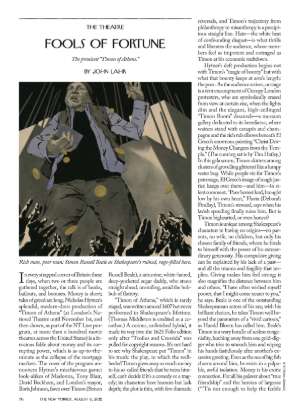
Russell Banks' most recent novel,
Lost Memory of Skin, strikes home the ease with which our present- day society not only dictates what is normal and what not, but also routinely stamps like a red A on people the label of sex offender. The anti-hero of this story is the Kid, his name no longer useable, naive, outcast, living under a causeway in Florida. The strange tale involves his encounter with an obese professor of Sociology, a man far more mysterious and elusive than the Kid, himself. Metaphors abound, taking the reader into the collective conscious and unconscious rather like surfing beneath the surface of the World Wide Web. Most obvious of these metaphors is that of Treasure Island, where pirates bury treasure for future generations. As the connection with porn that this metaphor holds grows obvious, many other events and stereotypes become obscure. The novel exposes how quick we all are to make assumptions and to peg people in this or that hole.
The brilliance, the most moving quality, of the novel is Banks' ability to get inside the heads of his characters. When the non-religious Kid happens upon a
Bible and reads
Genesis, for instance, seeing that book through his eyes and in the context of his life with his pet Iguana is astonishing. So too is the Kid's experience of the swamp that is clearly the Everglades. Likewise, seeing the Kid and his own personal life through the Professor's eyes gives us a perspective that is disarming. Even though the Moon cannot rise in the Southwest, and it is impossible to drive hundreds of miles while in the eye of a hurricane, this tale of alienation will haunt the reader and make her reconsider what is true or not in our computer-generated world.
Jack 3/28/12
Here is a fine review, as we might expect, from Janet Maslin of the
New York Times.
Books of The Times
A Man Entrapped in a Host of Webs
Published: September 25, 2011
“Lost Memory of Skin” is a major new work by
Russell Banks
destined to be a canonical novel of its time. That is not to say it is
without problems. It engages the reader in one long wrestling match. It
is sometimes marred by condescension. But it delivers another of Mr.
Banks’s wrenching, panoramic visions of American moral life, and this
one very particular to the early 21st century. It tells of a plugged-in,
tuned-out Internet culture “lost in the misty zone between reality and
imagery, no longer able to tell the difference.” And it explores the
terrible, dehumanizing consequences of choosing to live this way.
Nancie Battaglia
Russell Banks
Patricia Wall/The New York Times
“This is how a good man loses his goodness.” That was the thought that
made a masterpiece out of Mr. Banks’s “Continental Drift,” and it is one
to which he has frequently been drawn. In “Lost Memory of Skin” it
surfaces at full force in a character who is called the Kid. He is in
some ways as unremarkable as his moniker. “The Kid is one of those
people who have made up the mass of mankind since the species first
appeared on the plains of East Africa two or three million years ago,”
Mr. Banks writes. As a Cro-Magnon or Russian serf or an American Indian
unacquainted with Europeans, he would have faced many dangers. But none
would have been as elusive, unreasonable and devastating as the Web has
been in destroying his past and poisoning his future.
As
“Lost Memory of Skin”
begins, the 22-year-old Kid walks into a library. He wants access to a
computer. He wants to confirm that, yes, his real name appears on the
National Sex Offender Registry. His whereabouts are public knowledge
too, since it is a condition of his parole that he wear an electronic
ankle bracelet and not allow it to run out of battery power. And
although he lives in Calusa, a big city that sounds like Miami, his
place of residence is determined by geography. The places in Calusa
where sex offenders can stay — 2,500 feet from anyone under 18, as the
law stipulates — are the uninhabitable outskirts of the airport and a
makeshift camp under a causeway that they call home.
Early parts of this novel introduce the camp’s other residents. All are
sex offenders except for Iggy, who is an iguana. Iggy is the creature
the Kid loves most in the world, and it is a world that includes his
mother. His mother didn’t know the Kid’s father for long. She had a lot
of boyfriends who found the Kid inconvenient. And she abandoned him once
he committed his crime, although Mr. Banks is slow to reveal exactly
what the Kid did or why he did it. “Lost Memory of Skin” unfolds
suspensefully, deriving an eerie moral tension from the question of just
which laws the Kid actually broke. He knows, in his at first
exaggeratedly innocent way, that Man, God, the Army and Shakespeare are
each responsible for laws of some kind. But he has no idea which is
which.
When Mr. Banks gives the Kid access to a Bible and lets him read Genesis
and imagine Adam as a homeless man and his mother as Eve, this book is
poised to preach. Now and then it does. But it also turns gripping and
stays that way. Along comes a huge, strange character calling himself
the Professor and espousing a strictly sociological interest in the
Kid’s troubles. All we know, from bizarre scenes like the one describing
the Professor standing before a full refrigerator like a conductor
before an orchestra, is that he cannot be as harmless as he seems.
Mr. Banks depicts the Professor as “a man with two bodies, one dancing
inside his brain, a hologram made of electrons and neurons going off
like a field of fireflies on a midsummer night, the other a moist
quarter-ton packet of solid flesh wrapped in pale human skin.” In the
interests of so-called research, he gradually coaxes the Kid to explain
why he was forced to leave the Army and exactly how damaging the Kid’s
addiction to online pornography has been. The title, “Lost Memory of
Skin,” refers to the way real flesh has been supplanted by the virtual
kind. The Kid is still a virgin and knows more about the touch of iguana
skin, and the lousy acting of performers in porn films, than he does
about anything human.
Poor Iggy. He is wrenched away from the Kid early in the book. The scene
in which he disappears is a reminder of how profoundly gut wrenching
Mr. Banks’s writing can be. When catastrophic weather hits the Calusa
camp midway through the novel, he creates a scene of unforgettable
anguish, very reminiscent of such moments in
“Continental Drift,”
in which characters simply reach the end of their capacity for hope and
struggle. The rest of the city can follow FEMA guidelines for emergency
preparation. The lost souls with whom the Kid lives have no such
option. “When you are in fact not a member of the citizenry,” Mr. Banks
writes, you are not equipped for self-preservation.
In a book with strong echoes of “Huckleberry Finn,” with the Kid as the
Professor’s idea of Huck “long after he lit out for the Territory, grown
older and as deep into the Territory as you can go,” the Kid’s growing
capacity for self-knowledge becomes a driving force. Mr. Banks coaxes
the Kid from helpless innocence to enlightened dignity, from
all-consuming shame to glimmering self-knowledge. Mr. Banks also draws
narrative urgency from his vision of a world in which sex offenders
slide downward on the Internet’s continuum. When he charges his monitor
battery, “the Kid feels intimately connected to the millions of other
convicted sex offenders,” as if they were all “trembling leaves on the
branches large and small of a vast electrical tree that casts its shadow
across the whole country.”
This book expresses the conviction that we live in perilous, creepy
times. We toy recklessly with brand-new capacities for ruination. We
bring the most human impulses to the least human means of expressing
them, and we may not see the damage we do until it becomes irrevocable.
Mr. Banks, whose great works resonate with such heart and soul, brings
his full narrative powers to bear on illuminating this still largely
unexplored new terrain.
http://www.nytimes.com/2011/09/26/books/russell-bankss-novel-lost-memory-of-skin-review.html?_r=1