“Three things cannot be long hidden: the sun, the moon, and the truth.” -Buddha***
We mortals are composed of two great schools--Enlightened knaves or else religious fools.
--Abul 'Ala al Ma'arri (973-1057)***
"Life is a banquet, and most poor suckers are starving to death!" -Auntie Mame
*******************
Philosophy, History, Travel, the Arts, Whatever's on my Table...
Melancholy will pass us by... such is the prediction of science in Lars Von Trier's stunner of a film, Melancholia. Following the opening celestial prelude to Melancholia featuring the very music I have been listening to recently and sharing with those close to me, Wagner's wondrousPrelude to Tristan and Isolde, comes what many of us think of as the antidote to sadness, a wedding. Gathered in a grand lodge, complete with eighteen hole golf course, are all the family, friends, and colleagues of the voluptuous bride, Justine. She and her groom arrive late, delayed by the over-sized limo making the ascent to the lodge. Should I write "spoiler alert"? So many things in this film are so foreshadowed that only the dullest of viewers will fail right away to know what is coming. For Von Trier the devil is in the details; and in the details reside his genius and the profound view of life that is his vision.
Suffice it to say that the wedding is not a success. The groom makes a ridiculous, bumbling attempt at a speech, the bride's mother discourses on her contempt for marriage, and the bride herself leaves the bride chamber to fuck a possible future colleague who is voluptuous himself, out on the golf course. The emptiness of money and corporate greed all manage to play their part in the failure of the ceremony.
Meanwhile Melancholia approaches.
We learn early on that Melancholia is so vast, so substantial, that it has taken the form of a planet, once hidden by the Sun, that is headed straight for the Earth, though most of the reasonable scientists assure everyone that the rogue planet will not impact the Earth, but rather be a near miss. Von Trier is not giving us believable astronomy and clever science fiction here; he is giving us the power of metaphor. The amazing thing is how well it works. What we see in the darkness of the multiplex theater is something far different from what the prisoners in Plato's cave saw, not mere images of images from the empirical world, but rather the archetypes themselves, the very Forms of reality Plato thought invisible.
We see the very real archetype of Melancholy and no, it will not pass us by after all. How do we face the collision? The main characters embody the possibilities. Justine's response is cynicism, or at best, irony, even as she constructs a cave (Plato's?)to protect them. Her sister swoons with Romanticism and anxiety, sweeping up her innocent, uncomprehending son with her. Her husband gives us nihilism. And Von Trier gives us one of the most philosophical, psychologically penetrating films I've seen in years. Among an audience quiet and horrified by what they were witnessing, my philosophically-minded friend and I found ourselves laughing aloud, repeatedly, at the raw, dark behavior of the multitude of poignant characters, Justine's capitalistic, fascist boss, the cursing of her mother, the outrageous scene of the bride in full gown riding a golf cart over the grounds, catching her dress on the cart, as Tristan and Isolde swelled on the soundtrack. Romanticism warred with cynical irony, over and over, until the final cataclysm of the two sister planets.
If you think film should be about vision, this is the film to see. If you want to be dazzled by metaphor... well, you get the picture.
The Occupy Wall Street and Beyond actions offer a glimmer of hope for taking control of the country (and World) away from Bankers and Corporations (which are not even remotely people). The Guardian offers a comprehensive overview of the events and the meaning of the protests and the organizations forming:
We asked Occupy protesters in Wall Street, London and around the world to record video messages to each other for our whyoccupy project. Upload your video and join the conversation
Where are the Occupy protests taking place in the world after the camps in Wall Street and Madrid? See the full list of places we have found so far - and help us collect more
The Californian city of Oakland is braced for further violence between protesters and police after an Iraq war veteran was injured by a police projectile
Clare Bayard: Occupy Cif: After what happened to Scott, we have a right to be angry that our tax dollars go on tear gas instead of schools and healthcare
We asked Occupy protesters in Wall Street, London and around the world to record video messages to each other for our whyoccupy project. Upload your video and join the conversation
16 Nov 2011: Some protesters are gathering at Zuccotti Park this morning as planning continues for a 'day of action' on Thursday. Occupy Wall Street has said it will shut down Wall Street and occupy the subway. Follow live updates here
15 Nov 2011: • New York police clear Zuccotti Park in 1am swoop on plaza
• Court denies Occupy bid to restore full encampment
• Police re-open access to plaza but ban 'tents and tarps'
• More than 200 arrested as mayor Bloomberg defends action
• Media fury as seven journalists arrested in aftermath
• Read our earlier live blog here
• All times ET
Letter: It is beyond irony that the most undemocratic institution in UK local government is using its powers to attempt to suppress this flowering of democratic debate within its area
is a revelation of how artists create great music and songs. It is also a profound look into the evolution, first of the Beatles, and then of Harrison, as they all search for meaning beyond material success. Whether it is LSD, Reefer, going to India, learning from Ravi Shankar, meditating with the Maharishi, or bringing the genius of Eric Clapton in to play My Guitar Gently Weeps, we see the progression toward personal enlightenment and achievement as the film presents so many aspects of their lives from many perspectives. And that is just part one.
Part Two follows Harrison into the post-Beatles years-- never idealizing him however much his wife or son might. His ties to Roy Orbison, Tom Petty, Bob Dylan and a host of others from Monty Python to car racers to his ongoing work with Ravi Shankar is viewed with remarkable insight and humanity. The handling of his death, Ringo Starr shedding a tear but keeping his humor, the accounts of others, and an ending in keeping with Harrison himself works well, I thought. Eros and Thanatos again and all the creativity they inspire... I've added another review Dar sent me from Salon. But, Hell, see the film first.
From Rolling Stone:
George Harrison Hits the Big Screen in Scorsese Doc
Epic new film illuminates the inner life of the most enigmatic Beatle
by: Brian Hiatt
George Harrison and his wife, Olivia, in London, circa 1983.
Tom Wargacki/WireImage
As Paul McCartney, Ringo Starr and George Harrison dug through their archives to assemble the Beatles Anthology documentary in the mid-Nineties, Harrison made a private vow to his wife, Olivia: "One day, I'll do my own anthology." The ex-Beatle, who died in 2001, never got the chance, but his wife made sure his wish came true in grand fashion. In October, HBO will debut Martin Scorsese's two-part documentary, George Harrison: Living in the Material World – and Olivia has compiled a lavish companion book packed with unseen photos and letters. "I'm fairly awed by what Marty has put together," says Olivia. "It's a story that truly captures the essence of George."
The project had its start in 2005, when Olivia attended the London premiere of Scorsese's Bob Dylan documentary, No Direction Home. She shared her hope for a similar movie about her husband with the film's producer, Nigel Sinclair. After discussing possible directors for months, the pair "delicately approached" Scorsese. "To our surprise and delight, he said he was very intrigued by George's story," Sinclair recalls.
The center of the film is Harrison's spiritual quest, a search for meaning in life that began with a Beatlemania-era revelation that material success wasn't necessarily accompanied by fulfillment. "He was trying to find a way to simplicity, a way to live truthfully and compassionately," Scorsese says. "It was never a straight line, but that's not the point. I think he found an understanding: that there's no such thing as 'success' – there's just the path."
The documentary includes new interviews with McCartney, Starr, Yoko Ono, George Martin, Tom Petty, Eric Clapton (who recalls watching Harrison write "Here Comes the Sun") and many more. But Scorsese and his team relied heavily on archives kept by Harrison himself: footage of the Beatles on vacation; a recording of Harrison's first sitar lesson with Ravi Shankar; home movies of Harrison fooling around in his recording studio with his son Dhani. "We set up a little production office in our house," says Olivia. "George lived in the house for 30 years, and he would just throw things in this drawer and that drawer. So every cupboard had something in it." The production team set up research offices in New York and London, working for years to find footage and photographs, including every filmed Harrison interview they could track down.
From their sleepless Hamburg days to their Let It Be-era squabbles, the Beatles' story has been told again and again, so Scorsese took great pains to use rare or unseen footage for the first part of the film. "The scenes of them running from hotel rooms and airports and such are just a little bit different than the ones you've seen," says Sinclair. "He approached the Beatles story from George's perspective, so it becomes a more inside, more first-person experience."
The film doesn't shy from Harrison's darker side, showing footage of a ravaged performance from his 1974 solo tour, and hinting at challenges in his marriage. "He never said he was a saint, but he always said he was a sinner," says Olivia. "He wanted to do everything in life. He really did."
The surviving Beatles provide some of the film's most powerful moments: McCartney makes an impassioned argument that anyone who thinks only he and Lennon were important in the group is wildly wrong; Starr begins to weep when he recalls visiting Harrison as the guitarist battled terminal lung cancer.
The post-Beatles section of the film has the most surprises, from intimate footage of Traveling Wilburys jamming to Olivia's harrowing account of a 1999 home invasion by a violent, deranged fan. It also gives equal weight to Harrison's nonmusical ventures: his work as a movie producer; his motor-racing fandom; his loving efforts to restore his country estate. "George thought hard about how to live his life after being a Beatle," says Sinclair, "and what I take away from this film is that he figured it out."
Who is your favorite Beatle? If you prize humility, generosity and gratitude — or if you’re a kid who loves the sound of his funny name –you might answer Ringo Starr. Otherwise it’s probably a two-way race between Paul McCartney, who stands for sentimentality, old-school musical craft and ceaseless productivity, or John Lennon, whose name still epitomizes rebellion, sarcasm, soulfulness and martyrdom. I’ve rarely heard anyone answer “George Harrison,” and Martin Scorsese’s two-part HBO documentary “Living in the Material World” (Oct. 5 and 6, 9 p.m. Eastern, 8 Central) incidentally suggests the reasons why. Harrison was the most studious, elusive and impenetrable Beatle. And as he got older, he became increasingly uninterested in celebrity except as a vehicle that could expose him to new experiences, and bring him into contact with artists and thinkers from whom he could learn something.
George — as I will refer to him from now on in this review, because calling the Beatles by their last names seems too formal — was the youngest of the Beatles, but by consensus he was the most mature. From a shockingly early age, he was a student of life, cultivating the demeanor of an acolyte on an endless pilgrimage to an unknown destination. John Lennon had a questing spirit, too, but his life had a wild, often deliberately comical performance-art aspect that George’s mostly lacked. Where Lennon’s personal evolution was a series of diary entries that he invited the world to read, George’s happened, or seemed to happen, in private. The outward evidence of whatever quest George was on (hair length, wardrobe, sitar lessons, Hare Krishna chanting) seemed mostly unconnected to his life as a public figure. He explained himself in the media only because, as one of the world’s most famous men, he had to — and because he hoped his celebrity might encourage strangers to try whatever he was excited about.
“Living in the Material World” foregrounds these qualities so pointedly that it seems to be channeling the personality of its subject. It’s a problematic, at times off-putting, but ultimately fascinating work, moving through George’s life with its own mysterious internal logic.
Scorsese and his brilliant editor David Tedeschi — who also edited Scorsese’s “No Direction Home,” about Bob Dylan; “Shine a Light,” about the Rolling Stones; and “Public Speaking,” about Fran Lebowitz — disregard many of the conventions of nonfiction films about famous artists. Sometimes the movie identifies interview subjects, other times it doesn’t bother, and there’s no obvious reason why it does or doesn’t. It mixes new interviews and never-before-seen material from George’s personal archive (including off-the-cuff shots of the Beatles cavorting all over the world, and home-movie footage of George’s very first sitar lesson from Ravi Shankar) with expected, familiar stuff, but very little of it is identified by date or location. There are interviews with record producer and convicted murderer Phil Spector, who produced the Beatles’ “Let it Be” and several Beatles solo albums, including “All Things Must Pass”; presumably these were conducted right before he went to prison (he seems awfully peppy and untroubled), but there’s no easy way to tell.
Sometimes the film’s lack of specificity seems artistically justified; for example, the long opening montage of shots of World War II and postwar England are haunting and lovely and require no explication, as any Beatles fan knows that John, Paul, George and Ringo were children of that time and place. But other times the film’s contents seem erratic and disorganized. Near the end of Part 1, for instance, there’s a snippet of a British newscaster announcing the 1970 breakup of the Beatles, but the rest of Part 1 and the start of Part 2 cover events that occurred in the two years before the breakup; because the movie unfolds in a more or less linear way up till then, it feels almost like an editing mistake. Considering Scorsese’s typically obsessive attitude toward history, one has to assume these are deliberate artistic choices. But what’s the thinking behind them — that in this story, journalistic housekeeping isn’t important? Maybe in the greater scheme of things it isn’t, but it matters to history buffs, and to anyone who likes to keep a documentary’s timeline straight.
The film’s choices of what to emphasize, minimize and ignore will surely frustrate some Beatles fans. “Living in the Material World” devotes plenty of screen time to George’s fascination with Eastern religion, the production of his masterful 1970 solo debut “All Things Must Pass,” his founding of the influential independent production company HandMade Films, and the 1971 concert that he and Shankar masterminded to benefit cyclone-and-war-battered Bangladesh. But it tells us little about George’s cultural roots or the impact of his family and community on his personality. And it mostly glosses over his troubled first marriage to Pattie Boyd Harrison, except to note her tempestuous affair with George’s close friend and musical collaborator Eric Clapton — a relationship that inspired Clapton to write “Layla,” a song prominently featured in Scorsese’s gangster epic “GoodFellas” alongside George’s magnificent “What Is Life.” (George’s second wife, Olivia, is credited as a co-producer on “Living in the Material World” and gave Scorsese a lot of of the footage used in the project; maybe this explains the near-absence of Pattie?)
The film’s editing rhythms are distinctive, bordering on peculiar, especially its treatment of George’s music. Sometimes Scorsese and Tedeschi will let a song play out for much longer than most modern documentaries dare, letting us actually listen to the music while the screen shows silent footage of George, the Beatles or other significant figures. The effect is transporting, almost meditative; the approach befits the Beatle who was most dedicated to transcendentalism, and who introduced many fellow Westerners to the transformational power of chanting. But then the song will abruptly cut off instead of slowly fading, and drop us right into an interview with a new historical witness who hasn’t been properly introduced. The effect is like getting lost in a blissful trance, then having some interloper shatter it. It’s a style choice, and not an inherently bad one, because it feels like an attempt to reflect George’s struggle to find inner peace in a world that continually bombarded him with distractions. But it takes some getting used to, and sometimes feels like an affectation.
My viewing notes on “Living in the Material World” are filled with such phrases as, “Why would they do this?” and “Odd choice” and “Doesn’t work — or does it?” But such reactions are appropriate for the subject. George was an experimenter whose whole adult life was defined by a willingness to try new things without worrying whether they were going to pay off in the long run; indeed, phrases like “Pay off in the long run” seem entirely inappropriate to a discussion of George as a musician and a person. By the time that “Living in the Material World” finally draws to a close, we’ve gained some insight into George’s life, work and evolution, yet he remains a question mark. Most of the witnesses admit that although they knew George, they never really knew George. The filmmakers respect this verdict, just as they respected the enigma of Bob Dylan in the “American Masters” documentary “No Direction Home.” Scorsese is obviously more interested in George’s work than his personal life, except in those cases where the personal life is so dramatic, and so intimately connected to his work, that avoiding it would amount to gross negligence.
At the same time, though — and this is the film’s single finest quality — “Living in the Material World” grants George’s spiritual questing a weight that’s equal to, in some ways greater than, what he accomplished as a singer, songwriter, recording engineer and public figure. The film points out that nearly all of Harrison’s greatest songs — not just “Living in the Material World,” “What Is Life,” “My Sweet Lord,” “Beware of Darkness” and other post-Beatles works, but “Here Comes the Sun,” “Something” and “While My Guitar Gently Weeps” as well — were ultimately not about George’s relationships with friends, lovers or spouses, but his attempts to understand God. The section about the creation of George’s epic three-record set “All Things Must Pass” — the greatest of all Beatles solo albums — is the heart of the documentary, a stirring account of a young musician’s evolution to a higher artistic and spiritual plane. The devotion with which this documentary depicts George’s religious impulse — his ceaseless attempt, from adolescence onward, to get outside of himself — is admirable and moving. It’s a necessary corrective to the popular perception of George and so many other ’60s musicians as slaves to fashion, people who were just “into” non-Western religion and culture because it was what people did back then, and who couldn’t possibly have been “serious” about any of it — as if non-Western culture’s effect on the West isn’t a fascinating subject in itself, and as if a gesture toward changing one’s consciousness is only worth making if it sticks.
Glancing through my own obsessive collection of Beatles books, I’m struck by how often biographers diminished the spiritual quests of the Beatles and other 1960s pop culture icons as “experiments” or “flirtations” or “forays” — as if the very idea of a rich and famous artist worrying about his soul, and the possibility of a life beyond the material plane, is laughable, or at least worthy of suspicion. Western civilization resists the idea that life is not about success or failure, but simply experience, and it’s deeply hostile to the concept of a non-material world, a realm beyond the senses that’s illuminated by the title of another George song called “The Inner Light.” “A lot of people are going to hate me because they fear the unknown, you see?” George tells an interviewer. George didn’t fear the unknown; he embraced it.
Oscar Wilde recognized the truth that Life Imitates Art, not the other way around. His example? The Ubiquitous London Fogs brought on by the Impressionists.
The influence of art on life today is most obvious in film. Great directors and great films shape our perceptions of reality and alter our lives forever:
Dar, for instance, owes his personality to Billy Wilder's Sunset Boulevard, to Gloria Swanson and William Holden.
Fanny and Alexander(it's good to be Bourgeois) The Godfather (pure evil, crime world) Harold and Maude (suicide, ageless love) The History Boys (the joys and sorrows of Teaching) Home at the End of the World (love and threesomes)
To celebrate my mother's 88th birthday today, I watched Peter Greenaway's film about Rembrandt, my mother's favorite painter. Twelve years ago we visited Amsterdam, Dar, my mother and I, and saw a show centered around The Nightwatch at the Rijksmuseum. (click).
Rembrandt: The Night Watch (click to enlarge)
Here is a review of the film--
Movie Review
Rembrandt's J'Accuse (2009)
ContentFilm International
Jonathan Holmes and Michael Tiegen in "Rembrandt's J'Accuse."
“One must always apologize for talking about painting,” the French poet Paul Valéry wrote. To which, I suspect, the British filmmaker Peter Greenaway would say, “Nonsense.” In “Rembrandt’s J’Accuse,” his generally absorbing if sometimes fog-inducing feature-length documentary investigation into the mysteries of the Rembrandt painting “The Night Watch,” Mr. Greenaway talks and talks and talks as the image of his head pops on and off the screen in a box, much as Jambi the Genie’s did on “Pee-wee’s Playhouse.”
The movie is an addendum to “Nightwatching,” Mr. Greenaway’s 2007 fictional feature about the painting that was part of a larger project of the same title that he created for the yearlong 2006 celebration of Rembrandt’s 400th birthday in the Netherlands. That project included an opera and a “re-presentation” of the painting. Mr. Greenaway was also the author of a handsome accompanying museum catalog. The “Nightwatching” project was, in turn, the first in an ambitious series Mr. Greenaway has undertaken titled “Nine Classical Paintings Revisited” that has, to date, included inquiries into Leonardo’s “Last Supper” and, as part of this year’s Venice Biennale, Paolo Veronese’s “Wedding at Cana.”
Mr. Greenaway has described the “Nightwatching” installation as “a combination of art and technology designed for an attentive audience that will be intrigued by a world of light and moving images and the single frozen moment.” That pretty much sums up “Rembrandt’s J’Accuse” and, of course, most of cinema. Certainly Mr. Greenaway’s movie will work for, or perhaps on, only the attentive. His filmmaking style, with its accretions of images and text (and words words words), requires focus. In this case some casual knowledge of Dutch and European history probably also helps, as does a level of tolerance for Mr. Greenaway’s snobbism. “Most people,” he announces early, “are visually illiterate.” This, he continues, staring hard into the camera (j’accuse!), helps explain why we have such an “impoverished” cinema.
In brief, the movie functions as an art historical investigation of “The Night Watch,” into which, Mr. Greenaway forcefully argues, “Rembrandt has scrupulously painted an indictment of guilt in paint.” A crime has been committed, the filmmaker asserts, and “it is imperative that we reopen the case.” Completed in 1642, the year that Rembrandt turned 36 (he died in 1669), the painting depicts a large group of guardsmen, along with two women (or girls or dwarfs) and a dog. The painting is said to show the civic guard about to march off to protect Amsterdam, but where others see might and honor, Mr. Greenaway sees a murderous conspiracy and other calumnies. Furthermore, he maintains, Rembrandt lost his commissions, falling into poverty, directly because the painting exposed these crimes.
Mr. Greenaway builds his case on more than 30 mysteries he himself has detected in “The Night Watch.” As he moves through these mysteries, toggling between the painting and scenes from Rembrandt’s life (with Martin Freeman as the great man, and the likes of Jonathan Holmes offering support), Mr. Greenaway trains his eye — and ours — on seemingly every inch of the canvas. Everything is grist for his analytic mill, from the Italian influence to a dead chicken hanging from the waist of one of the female figures. Here a spear isn’t just a spear or even a phallic symbol, but also Rembrandt’s commentary on the prowess and deeds of the militiaman holding the weapon. Mr. Greenaway’s verbal argument is more persuasive than his visual or, more specifically, filmmaking one, which tends to divide the image into intersecting and overlapping squares that greatly resemble software windows, effectively turning the movie screen into a computer monitor.
It’s unfortunate that Film Forum hasn’t put “Rembrandt’s J’Accuse” on a double bill with “Nightwatching.” Both have been packaged together on a recently released American DVD by E1 Entertainment.
REMBRANDT’S J’ACCUSE Opens on Wednesday in Manhattan.
Written and directed by Peter Greenaway; director of photography, Reinier van Brummelen; edited by Elmer Leupen; music by Giovanni Sollima and Marco Robino; produced by Femke Wolting and Bruno Felix; released by ContentFilm International. At Film Forum, 209 West Houston Street, west of Avenue of the Americas, South Village. Running time: 1 hour 26 minutes. This film is not rated.
WITH: Martin Freeman (Rembrandt van Rijn), Eva Birthistle (Saskia Uylenburgh), Jodhi May (Geertje Dirks), Emily Holmes (Hendrickje Stoffels), Jonathan Holmes (Ferdinand Bol), Michael Teigen (Carel Fabritius), Natalie Press (Marieke) and Peter Greenaway (Himself/Public Prosecutor).
As Oscar Wilde saw, Nature imitates Art, not the other way around. Thankfully, Human Nature now has for inspiration great films that offer us brilliant artistic vision:
From the Pulitzer Prize-winning author of "The Hours" comes a story that chronicles a dozen years in the lives of two best friends who couldn't be more different...
“ I saw this movie in the cinema. After the movie ended the people staid on their seats... Stephen Fry is simply fantastic as Wilde, Jude Law is also good as Bosie. ” - Alexstam54
“ Touching movie about the love between two young men. One wants to live the gay life, the other (Hugh Grant) is too scared. The story is by E.M. Forster (I loved the book too!). ” 9) Cabaret
The story of Harvey Milk, and his struggles as an American gay activist who fought for gay rights and became California's first openly gay elected official. (128 mins.)
Two best friends living on the streets of Portland as hustlers embark on a journey of self discovery and find their relationship stumbling along the way. (104 mins.)
“ The first movie I saw with 'normal' gays. The atmosphere is very '80-s, Daniel Day Lewis is very sexy! A true classic by director Stephen Frears. ” 14) Boy Culture


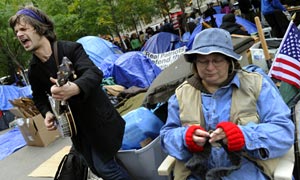





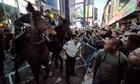
 Amy Goodman: The destruction of Occupy Wall Street's library, as the NYPD evicted protesters by order of the mayor, was grimly symbolic