Saturday, September 21, 2013

Autumn Equinox 2013


Everything you need to know: September equinox

Image Credit: Esparta

The 2013 September equinox comes on September 22, at 4:44 p.m. EDT (20:44 UTC). In the Northern Hemisphere, the sun is rising later now, and nightfall comes sooner. This is our autumn equinox, when the days are getting shorter in the Northern Hemisphere. At this equinox, day and night are approximately equal in length. For us in the Northern Hemisphere, people are enjoying the cooler days of autumn even as preparations for winter are underway. South of the equator, spring begins. Learn more about this equinox by following the links below:
What is an equinox? The earliest humans spent more time outside than we do. They used the sky as both clock and calendar. They could easily see that the sun’s path across the sky, the length of daylight, and the location of the sunrise and sunset all shift in a regular way throughout the year.
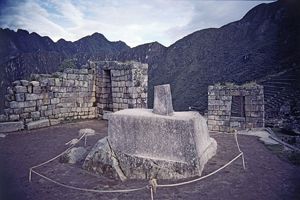
Our ancestors built the first observatories to track the sun’s progress. One example is at Machu Picchu in Peru, where the Intihuatana stone, shown at right, has been shown to be a precise indicator of the date of the two equinoxes and other significant celestial periods. The word Intihuatana, by the way, literally means for tying the sun.
Today, we know each equinox and solstice is an astronomical event, caused by Earth’s tilt on its axis and ceaseless orbit around the sun.
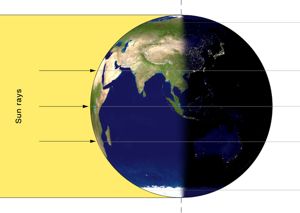
Because Earth doesn’t orbit upright, but is instead tilted on its axis by 23-and-a-half degrees, Earth’s Northern and Southern Hemispheres trade places in receiving the sun’s light and warmth most directly. We have an equinox twice a year – spring and fall – when the tilt of the Earth’s axis and Earth’s orbit around the sun combine in such a way that the axis is inclined neither away from nor toward the sun.
Earth’s two hemispheres are receiving the sun’s rays equally now. Night and day are approximately equal in length. The name ‘equinox’ comes from the Latin aequus (equal) and nox (night). Image credit: Przemyslaw Idzkiewicz.
But, since Earth never stops moving around the sun, these days of equal sunlight and night will change quickly.
Where should I look to see signs of the equinox in nature? The knowledge that summer is gone – and winter is coming – is everywhere now, on the northern half of Earth’s globe.
If you live in the Northern Hemisphere, you can easily notice the later dawns and earlier sunsets.
Also notice the arc of the sun across the sky each day. You’ll find it’s shifting toward the south. Birds and butterflies are migrating southward, too, along with the path of the sun.
The shorter days are bringing cooler weather. A chill is in the air. In New York City and other fashionable places, people have stopped wearing white. Creatures of the wild are putting on their winter coats.
All around us, trees and plants are ending this year’s cycle of growth. Perhaps they are responding with glorious autumn leaves, or a last burst of bloom before winter comes.
In the night sky, Fomalhaut – the Autumn Star – is making its way across the heavens each night.
Does the sun rise due east and set due west at the equinox? Generally speaking, yes, it does. And that’s true no matter where you live on Earth, because we all see the same sky.
No matter where you are on Earth, you have a due east and due west point on your horizon. That point marks the intersection of your horizon with the celestial equator – the imaginary line above the true equator of the Earth.
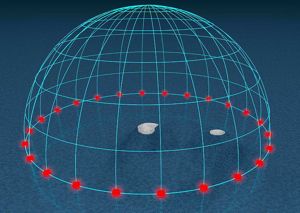
At the equinoxes, the sun appears overhead at noon as seen from Earth’s equator, as the illustration at right shows. This illustration (which is by Tau’olunga) shows the sun’s location on the celestial equator, every hour, on the day of the equinox.
That’s why the sun rises due east and sets due west for all of us. The sun is on the celestial equator, and the celestial equator intersects all of our horizons at points due east and due west.
This fact makes the day of an equinox a good day for finding due east and due west from your yard or other favorite site for watching the sky. Just go outside around sunset or sunrise and notice the location of the sun on the horizon with respect to familiar landmarks.
If you do this, you’ll be able to use those landmarks to find those cardinal directions in the weeks and months ahead, long after Earth has moved on in its orbit around the sun, carrying the sunrise and sunset points southward.
New Albany, Indiana. Photo credit: EarthSky Facebook friend Duke Marsh
So enjoy the 2013 equinox – September 22 or 23 depending on your time zone – a seasonal signpost in Earth’s orbit around the sun!


Monday, September 09, 2013

Another Year at BFA


September settles in. Today I met with Wood Smethurst (whom spell check suggests I call Methuselah), our esteemed headmaster at BFA, in the garden. Cicadas sang along with us as we discussed faculty assignments, mastery learning, and Shakespeare's Sonnet 73 with its implications for our mortality and what we teach our youthful students. Irony was ever present, as even the cicadas must know just weeks before the Autumn Equinox.

Here I am with all my BFA credentials. Professional life goes on a while longer...


Faculty


Dr. Jack Miller, Ben Franklin Academy

Dr. Jack Miller

B.A., M.A., M.S., Ph.D.

DEPARTMENT / POSITION

Director of Media Services
Computer Science
Philosophy
Coach, Tennis

CONTACT INFORMATION


PERSONAL INFORMATION

Biography
Dr. Miller holds a Ph.D. in Philosophy from Tulane University and a Masters Degree in Library and Information Management from Emory University. He has served as Director of the Library and teacher of Philosophy and Computer Science since joining the BFA Faculty in 1992. Dr. Miller also serves on the Board of Directors of the Clifton Corridor Transportation Management Association (CCTMA) of which BFA is a founding member. Miller has worked in numerous libraries in Atlanta and Savannah, including Director of the High Museum Library and Supervisor of the Ola Wyeth Library branch in Savannah. He has served on the faculty of Tulane University, Armstrong Atlantic University,The Savannah College of Art and Design, and the Atlanta College of Art. He has published numerous articles and reviews and served as an editor for the national publication of The Art Library Society of North America.

Sunday, September 08, 2013

Sonnet 73


Thanks once again to friend Alfred Corn for inspiring my thoughts upon Shakespeare's

Sonnet 73

That time of year thou mayst in me behold,
When yellow leaves, or none, or few do hang
Upon those boughs which shake against the cold,
Bare ruined choirs, where late the sweet birds sang.
In me thou seest the twi-light of such day,
As after Sun-set fadeth in the West,
Which by and by black night doth take away,
Death's second self that seals up all the rest.
In me thou seest the glowing of such fire,
That on the ashes of his youth doth lie,
As the death bed, whereon it must expire,
Consumed with that which it was nourished by.
    This thou perceiv'st, which makes thy love more strong,
    To love that well, which thou must leave ere long.


Christopher Isherwood
and Don Bachardy


  • Conclusion to WS, Sonnet 73:

    "To love that well which thou must leave ere long."
    Susan Reilly, Venkatesan Iyengar and 15 others like this. 
    Catherine Metzger. Such a vulnerable place.

    Alfred Corn People, places, things we love become more treasured when we know we don't have long with them. And it's never very long.

    Catherine Metzger You posted this conclusion when I was reading The Wanderer, prompted by one of my daughters who is studying to take the GRE and the specialized English Lit test. His lament of course is that of someone who had too much, too many, taken from him all at one time. "Where is that horse now? Where is that rider?....How that time has passed away,
    dark under the cover of night,
    as if it had never been!


    Doug Anderson Devastating line.


    Venkatesan Iyengar The "me" and "thou" are not one and the same.

    Jack Miller As you know, this sonnet is especially dear to me. After thinking about it yet again, I decided to read some criticism of it from various well-known sources. What a fool John Crowe Ransom proved to be on this sonnet, what misguided prudery in his comments.I used to drink on occasion with his brother Bill, who gave up academia to tend The Napoleon House in New Orleans. I admired John Crowe, but prudery got the best of him on this sonnet. Fortunately, there are literary critics who do understand it and write elegantly about it; not that we need a word more than WS wrote.


    Alfred Corn I don't recall what Ransom said. But it's hard to see anything in the sonnet that could prompt a prudish response. A summary?


    Liz Rosenberg bare ruin'd choirs where late the sweet birds sang.... this one is my favorite sonnet of all. Thanks for reminding me.

    Jack Miller  

    Here is a quote from his analysis. It generated a back and forth over whether the poet is to be pitied or not and about the younger man addressed in the poem and their relationship. I have access to most literary journals, and the range of commentary on the sonnet is notable... "The structure is good, the three quatrains offering distinct yet equivalent figures for the time of life of the unsuccessful and to-be-pitied lover. But the first quatrain is the boldest, and the effect of the whole is slightly anti-climactic. Within this quatrain I think I detect a thing which often characterizes Shakespeare's work within the metaphysical style: he is unwilling to renounce the benefit of his earlier style, which consisted in the breadth of the associations; that is, he will not quite risk the power of a single figure but compounds the figures. I refer to the two images about the boughs. It is one thing to have the boughs shaking against the cold, and in that capacity they carry very well the fact of the old rejected lover; it is another thing to represent them as ruined choirs where the birds no longer sing. The latter is a just representation of the lover too, and indeed a subtler and richer one, but the two images cannot, in logical rigor, co-exist. Therefore I deprecate shake against the cold. And I believe everybody will deprecate sweet. This term is not an objective image at all, but a term to be located at the subjective pole of the experience; it expects to satisfy a feeling by naming it (this is, by just having it) and is a pure sentimentalism."(John Crowe Ransom, Shakespeare at Sonnets).

    Jack Miller His calling the poet an old, rejected lover is absurd. It is just the opposite.

    Alfred Corn Strange misreading. The insistence on objectivity is peculiarly obtuse.

    Bill Tremblay Isn't there also the historical allusion? Henry VIII institutes the Anglican Church. He has the Catholic monasteries and churches sacked for gold monstrances, &c. Churches burned; hence "bare ruined choirs" are not that way from age but from the sword and brand. Which is a figure for a man who's been ravaged. "In me thou seest ..." all these things.

    Jack Miller yes.

    Graham Christian That Ransom! no feeling for poetry at all! Yes, I'm joking.

    Jack Miller Now that I've spent a good part of two days reading articles, essays, and commentary on this and some other of the sonnets, I have to say that I am coming down on the side of silence before such greatness. So much misunderstanding and so many odd interpretations. Still, I just can't resist giving everyone a taste of the commentary. Comment on Sonnets 73 & 74
    Sonnets 73, 74, and 75 are a threesome connected by the ‘but’ of 74 and the ‘so’ of 75. Sonnets 73 and 74 are considered together followed by sonnet 75.
    Because of its lyrical progression of images, sonnet 73 is regarded as one of the great sonnets. Images of late autumn (73.1-4), the twilight of day (73.5-8), and glowing embers (73.9-12) arouse a ‘stronger’ love for life in the youth who realises that, like the aging Poet, he ‘must leave ere long’. But Shakespeare counteracts the idealistic element in sonnet 73 with the greater realism of sonnet 74. Images of autumn, sunset, and fire, give way to images of jail (74.1-4), earth (74.5-8) and worms (74.9-12).
    In sonnet 73, the Poet likens his aging years to autumn with its ‘yellow leaves’ (73.2), the cold wind in the ‘boughs’ (73.3) and evokes the image of choirs of birds now gone from bare branches (73.4). Then he pictures himself in the ‘twilight’ of the day after ‘Sun-set’ (73.6), as ‘black night’ or ‘death’s second self ’ (73. takes away the light.
    The Poet then compares his dying days to the ‘glowing’ fire in which ‘the ashes of his youth doth lie’. He is ‘consumed’ by the fire that once ‘nourished’ his youthful days. Significantly Shakespeare uses a cascade of natural imagery to evoke the relation of aging years to youthful energy. The only hint of ecclesiastical thought occurs in the negative metaphor of ‘ruined choirs’. (Some Christian commentators, beguiled by the artistry of the sonnet, imagine they hear a series of sympathetic religious attributions.)
    In the couplet, as the Poet approaches death, he notes with irony that the youth’s love is made ‘more strong’. The youth, instead, should love the life ‘well’ that he ‘must leave ere long’. The Poet’s quiet acceptance of the idea of death as a natural event should awaken the idealising youth to the natural processes he is inclined to neglect out of fear of death. Throughout sonnet 73 Shakespeare ironically critiques religions that use the psychology of fear.
    Sonnet 74 begins where sonnet 73 left off. The youth is told to be ‘contented’ with the ‘arrest’ that will take the Poet away ‘without all bail’ (74.2). The Poet takes the youth back to the first increase sonnet that set out the logical conditions for contentedness. He adds that his ‘life’ has ‘in this line’ some ‘interest’, which will stay with the youth as a ‘memorial’ (74.4). The reference back to the ‘lines’ of sonnet 18 recalls the logical relation between the lines of descent and the lines of poetry. Without descent there is no poetry.
    So when the youth ‘renews’ his life through increase, which is the interest on the capital of his life, he renews the ‘very part was consecrate to thee’ (74.6). Shakespeare facetiously uses the religious sense of ‘consecrate’ to emphasise that the youth will find true immortality through increase. The ‘earth can have but earth’, which is his ‘due’, because the Poet’s ‘spirit’ is the better part of him (74.. Again the sonnet contextualises religious allusions within the content of the Poet’s natural logic.
    The youth, then, stands to lose only the ‘dregs of life’, or ironically be the ‘prey of worms’ (74.10). The Poet is conquered by time’s ‘knife’ and is too ‘base’ to be ‘remembered’ (74.12). The irony is that religious idealism, which denies the body’s worth during a person’s life, prays to the body like a shrine when it is consigned to the earth.
    In the couplet, the Poet restates the lesson of the increase sonnets and sonnets such as 55. The worth of the Poet’s lines as a ‘memorial’ resides in ‘that which it contains’. The ‘this’ that remains with the youth, recalls the ‘this’ from sonnet 18, where the Poet says ‘so long lives this, and this gives life to thee’ (18.14). The increase sonnets (1 to 14), and the poetry and increase sonnets (15 to 19) insist that, without the lines of increase, the Poet’s lines have no worth. So ‘this’ is the ‘worth’ that Shakespeare Sonnets contain.
    Some commentators interpret ‘this’ as a reference to the sonnet’s ability to confer poetic immortality. But for the Poet, poetic immortality is conditional on the attitude to ‘life’ that the poetry ‘contains’. In sonnet 74, as in sonnet 18, the content of the verse ‘remains’ with the youth only if his lines of descent provide a future audience to read the lines of poetry. The Poet knows this is the only way the ‘spirit’ of any thought will ‘live’ after the body becomes the ‘prey of worms’. The idea is reinforced in sonnet 75, where the Poet says the youth is ‘to my thoughts as food to life’. http://www.quaternaryinstitute.com/sonnetcomment70to81.html


    Sonnet Commentaries 70-81

    www.quaternaryinstitute.com


    Jack Miller This thou perceiv'st, which makes thy love more strong,
    To love that well, which thou must leave ere long... Only the most perceptive writers realize that the lover perceives the aging of the poet as a reason to love him all the more strongly, knowing that his love, the poet himself, must leave ere long.

    Jack Miller The sonnet brings to mind, for me, Christopher Isherwood and Don Bachardy, the latter who loved Isherwood so strongly that he drew his portrait over and over until his death.

    •                                                Chris By Don


      Alfred Corn Ah, Jack. If only.


      Edward Nudelman
      In keeping with Jack Miller's citations, here is Berryman's: "The fundamental emotion [in Sonnet 73] is self-pity. Not an attractive emotion. What renders it pathetic, in the good instead of the bad sense, is the sinister diminution of the time concept, quatrain by quatrain. We have first a year, and the final season of it; then only a day, and the stretch of it; then just a fire, built for part of the day, and the final minutes of it; then -- entirely deprived of life, in prospect, and even now a merely objective "that," like a third-person corpse! -- the poet. The imagery begins and continues as visual -- yellow, sunset, glowing -- and one by one these are destroyed; but also in the first quatrain one heard sound, which disappears there; and from the couplet imagery of every kind is excluded, as if the sense were indeed dead, and only abstract, posthumous statement is possible. A year seems short enough; yet ironically the day, and then the fire, makes it in retrospect seem long, and the final immediate triumph of the poem's imagination is that in the last line about the year, line 4, an immense vista is indeed invoked -- that the desolate monasteries strewn over England, sacked in Henry's reign, where 'late' -- not so long ago! a terrible foreglance into the tiny coming times of the poem -- the choirs of monks lifted their little and brief voices, in ignorance of what was coming -- as the poet would be doing now, except that this poem knows. Instinct is here, after all, a kind of thought. This is one of the best poems in English."(John Berryman, The Sonnets)


      Jack Miller Yes, I read this analysis as well. I just can't get past that first line. I don't see this sonnet as self-pity. Even if the last lines are about the youth's love of life, rather than his love of the poet himself (as I see it), where is the pity? It is about mortality, yes; but facing it heroically, tragically, if you will, but not with self-pity. Again, there are several back and forth articles written about whether the poet is to be pitied. I say no, and cling to my romanticism. And yes, Alfred, if only. I know.


      Alfred Corn The ban against self-pity ignores all the great works incorporating it. Besides, do you recall what Bishop's Crusoe said? (Roughly): "Pity like charity begins at home. So the more I felt pity, the more I felt at home."


      Jack Miller Guess I have some more thinking to do about this, and shall.


      Jack Miller After having read so many respected literary journals thanks to Emory, I decided to go ahead and slum it with Wikipedia. Why not see what they have to say. Every time I go to it, expecting little, I am taken aback by what I find. Judge for yourselves: The subject of Sonnet 73 is under debate among many critics. Agreeing that the obvious interpretation of Sonnet 73 forces the reader to face the fatality of life, John Prince says that the most common conclusion reached is that the speaker is telling his listener about his own life and the certainty of death in his near future. After going through a lengthy description that, on the surface, describes the passage of time and the coming of death, he concludes his dissertation by saying that the reader perceives this eminent death and, because he does, he loves the author even more. However, an alternative understanding of the sonnet presented by Prince asserts that the author does not intend to address death, but rather the passage of youth. With this, the topic of the sonnet moves from the speaker’s life to the listener’s life.[13]

      The key to these two interpretations lies in the very last line, “this thou perceivest, which makes thy love more strong, to love that well which thou must leave ere long”. The question that must be addressed is this: to whom or to what is “that” referring to, the speaker’s life or the reader’s? This alternative interpretation suggests that it refers to the reader’s life and therefore does not concern the death of the author, but rather the loss of youth of the reader. The last clause, which says “which thou must leave ere long”, emphasizes this point, because the reader must eventually leave his youth.[14] Prince explains this by saying:

      “Why, if the speaker is referring to his own life, does he state that the listener must ‘leave’ the speaker's life? If the ‘that’ in the final line does refer to the speaker's life, then why doesn't the last line read ‘To love that well which thou must lose ere long?’ Or why doesn't the action of leaving have as its subject the ‘I,’ the poet, who in death would leave behind his auditor?” [15]

      By understanding the last line to refer to the reader’s life, rather than the speaker, Prince concludes that the sonnet is not referring to death and leaving love, like most would but instead the loss of youth that all must endure.

      Additionally, Frank Bernhard criticizes the metaphors Shakespeare used to describe the passage of time, be it the coming of death or simply the loss of youth. Though lyrical, they are logically off and quite cliché, being the overused themes of seasonal change, sunset, and burn. In fact, the only notably original line is the one concerning leaves, stating that “when yellow leaves, or none, or few do hang, upon those boughs”.[16] Logic would require that few should proceed none; in fact, if the boughs were bare, no leaves would hang. Bernhard argues that Shakespeare did this on purpose, evoking sympathy from the reader as they “wish to nurse and cherish what little is left”, taking him through the logic of pathos – ruefulness, to resignation, to sympathy.[17] This logic, Bernhard asserts, dictates the entire sonnet. Instead of moving from hour, to day, to year with fire, then sunset, then seasons, Shakespeare moves backwards. By making time shorter and shorter, the reader’s fleeting mortality comes into focus, while sympathy for the speaker grows. This logic of pathos can be seen in the images in the sonnet’s three quatrains. Bernhard explains:

      “Think now of the sonnet's three quatrains as a rectangular grid with one row for each of the governing images, and with four vertical columns:
      spring / summer / fall / winter morning / noon / evening / night tree / log / ember / ashes
      These divisions of the images seem perfectly congruous, but they are not. In the year the cold of winter takes up one quarter of the row; in the day, night takes up one half of the row; in the final row, however, death begins the moment the tree is chopped down into logs”.[18]

      This is a gradual progression to hopelessness. The sun goes away in the winter, but returns in the spring; it sets in the evening, but will rise in the morning; but the tree that has been chopped into logs and burned into ashes will never grow again. Bernhard concludes by arguing that the end couplet, compared to the beautifully crafted logic of pathos created prior, is anti-climactic and redundant. The poem’s first three quatrains mean more to the reader than the seemingly important summation of the final couplet.[19]

      Though he agrees with Bernhard in that the poem seems to create two themes, one which argues for devotion from a younger lover to one who will not be around much longer, and another which urges the young lover to enjoy his fleeting youth, James Schiffer asserts that the final couplet, instead of being unneeded and unimportant, brings the two interpretations together. In order to understand this, he explains that the reader must look at the preceding sonnets, 71 and 72, and the subsequent sonnet, 74. He explains:

      “The older poet may desire to ‘love more strong’ from the younger man but feels, as 72 discloses, that he does not deserve it. This psychological conflict explains why the couplet hovers equivocally between the conclusions ‘to love me’, which the persona cannot bring himself to ask for outright, and ‘to love your youth’, the impersonal alternative exacted by his self-contempt”.[20]

      By reading the final couplet in this manner, the reader will realize that the two discordant meanings of the final statement do in fact merge to provide a more complex impression of the author's state of mind. Furthermore, this successfully puts the focus of the reader on the psyche of the “I”, which is the subject of the following sonnet 74.

      Buddhist scholars look to this sonnet to illustrate that the nature of love lies in the awareness of life's impermanence; a lesson often learned too late. Ultimately, the one who must be loved is ourselves as we march past all the warning signs, into the black night. The curious line 'death's second self' strikes at the duality between the objective perception of death in others and the ego's interpretation of that event. In a sense, this sonnet also reaches back into pagan images of pyres and sacrifice, as well as reaching into a future that, instead of exaltations of heaven's glory, urges the reader to take responsibility for their own relationship with reality. - Austin Sirch


      Jack Miller http://en.wikipedia.org/wiki/Sonnet_73

      Sonnet 73 - Wikipedia, the free encyclopediaen.wikipedia.org


Tuesday, August 27, 2013

What to Do

Of all the means which wisdom acquires to insure happiness throughout the whole of life, by far the most important is friendship.- Epicurus
The world is a dangerous place to live; not because of the people who are evil, but because of the people who don't do anything about it. -Albert Einstein 
We must learn to live together as brothers or perish together as fools. -Martin Luther King, Jr. 


(Joseph Mydell as Casca,
eliminating Caesar)


As I sat in my bath today, recalling Marat in his, I asked myself once again what is one to do in a corrupt world awash in war, man-made climate change, starvation, ignorance, and bigotry? In particular, I asked what should I do. After all, I am no Voltaire, able to sway the minds of those who count (whoever they are). Certainly if one is brilliant and talented enough, one should, in the style of Voltaire, Simone de Beauvoir, Bertrand Russell, or a host of other truly great writers, offer up essays and articles and books of such sway as to enlighten people who actually have the power to alter the course of human affairs. 
If one is in a position to effect change through activism, as well as writing, all the better. Thank you, Larry Kramer. Thank You,  Your Holiness the 14th Dalai Lama. Thank you, John Lewis, activist and power broker true to the principles of MLK. Could I follow in their foot steps? 
What should a life-long academic, a lazy philosopher, a dabbler in writing and sometime protest marcher for this or that cause do? 

One of my closest friends has found his answer. He gets upon the stage and stabs dictators of old in an interpretation that has direct relevance to today's tyrants.. His plays and films offer a worldview sorely needed to counter the mush of ubiquitous mass media ( He has had major roles in Angels in America, A Season in the Congo, Julius Caesar...) 

Though I admire such diverse figures as Sartre, Allen Ginsberg, Edward Albee, Larry Kramer, Tony Kushner, Paul Krugman, and Bernie Sanders, who all have made a difference, I repeatedly fall back into the Philosophy of Epicurus. Why not live in a "garden" that stands for civilization, for art, for the exchange of ideas, for acceptance of difference and respect for life? I think of W.S. Merwin whom I met once and talked of the role of the poet in the time of Vietnam. Which of his poems resonate with us now? For me, such poems as Empty Water. I think of him in his garden on Maui. Doesn't living by example help the World? 

For now, in a world where discerning who is good, who is bad, and who is on what level in between, becomes lost in a digital maze of presentations, I have to go like a blind man, feeling my way in the darkness, going on intuition and what reason and intelligence I have, with the goals of having a humanitarian outcome, having a reverence for nature, and finding precious moments of joy and laughter with my friends and lovers. My only contributions, if they are such, are my writing, the teaching I have done, and the life my friends and I actually live, along with the principles we hold.

To the chief intensity: the crown of these
Is made of love and friendship, and sits high
Upon the forehead of humanity.


--Keats, Endymion

Our Garden (click)


Jack


Sunday, August 18, 2013

Collage #4


Life Collage 4


Kurt Schwitters
Das Undbild
1919


Life's Images- wandering alone through gallery after gallery of Matisse paintings all done in Nice, staring through my refracting telescope at Saturn's rings, making love at Mardi Gras simultaneously to my Jewish girlfriend and a student from the University of Maryland, eating Oysters Rockefeller with my Aesthetics professor in New Orleans, teaching math to 13- year-olds as they shot each other with spit wads, downing a stein of Bavarian Beer high up in Mad Ludwig's castle on my 23d birthday, feeding a wild kangaroo on a deserted beach in New South Wales, publishing a critique of two art shows, one in Savannah, another in Atlanta, that raised enjoyable protest, celebrating a show of my photographs in the SCAD gallery in Savannah, drinking cerveza and sleeping with a Zapotec in Oaxaca, being knocked out of breath after falling off a swing in the playground of my elementary school, looking like a snowman naked on a beach in Westerland filled with tan Scandinavians near the border of Denmark and Germany,  seeing Forsyth Park deconstructing into the molecular structure of its azaleas,  boating with my Mom  on the canals of Amsterdam, sitting by the fire near Mt. Pisgah dazzled by the glimmer of the Milky-way overhead, being wheel-chaired into my hotel in Kyoto, ducking with my husband into the Inuit Clan House near Ketchikan, Serving roast beef po-boys at Billy's Home Cooking, mourning the murder of my best friend from a quiet little house in Canton Ohio, sitting in a tavern in Mykonos with my brother watching the men dance to Greek music, gasping for breath as my partner and I nearly drown in the pool below a waterfall in Hawaii, having a beer with Jamie Cullum at Jimmy’s Corner after his break-through performance at the Oak Room of the Algonquin, completing my Master’s Thesis on D.H. Lawrence, chatting with Lawrence Ferlinghetti at a wine reception at City Lights, and writing and writing…

Thursday, August 15, 2013

My Life: Collage #1


"Every man is born as many men and dies as a single one."

Martin Heidegger

Note: this attempt at a collage was inspired by Alfred Corn's quilt...
(see below)


Juan Gris: Sunblind


Life's images: sitting at a long mahogany table in Tilton Hall Cockily (so said the Hegel scholar) defending my dissertation on Sir Herbert Read, playing chess with my father at the YMCA, dripping sand castles at Tybee that the tide washed away, falling through the dilapidated pier at Moon River where I lived for a while, plodding up Lombard Street to my three story house overlooking the Golden Gate Bridge, repeatedly falling in love with briefly questioning heterosexuals and driving across country with them, getting married at last to my husband in a garden in Provincetown on Cape Cod, teaching my first philosophy class of 35 students and thinking "who am I to be teaching philosophy?" giving a lecture on Cubism at SCAD in Savannah, opening my office in the High Museum overlooking the Richard Meir building and Peachtree Street, a space I helped design including furniture from the decorative arts collection and a champagne reception, driving up the one-lane road to Walpi in my friend's '73 Mustang,  teaching for 17 years at the Atlanta College of Art, including such stars of the art world as Kara Walker, making love outdoors on the quad of the University of Virginia in the pre-dawn with the girl of my dreams, working loading trucks for Canada Dry one summer, recently watching Jupiter, then the crescent moon, then the sun rise over the Atlantic Ocean, celebrating my 50th with 50 bottles of Veuve Clicquot and 50 long-stem roses, watching a student of mine play tennis against future #1 player in the world, Amelie Mauresmo in Paris at Roland Garros, exploring Delphi, standing inside the Parthenon, and the Pantheon, and before the glacier in Patagonia, where we "Look'd at each other with a wild surmise," climbing to the top of the Pyramid of the Sun in Teotihuacan, spending a week cruising the French Quarter of New Orleans with Allen Ginsberg and lunching with W.S. Merwin, swimming naked in the pool at Kalani in Hawaii, taking in the holiness of Nara, standing atop the world's largest mountain and watching the sun set, dancing at the Tabernacle to a live performance of Damien Dempsey and Sinead O'Connor, seeing Jupiter and Venus together in the evening sky above the Champs-Élysées, having the Picasso rooms all to myself at the Met in NYC so I can study Picasso's portrait of Gertrude Stein, Watching my life-long friend onstage in Stratford playing Casca in the RSC's production of Julius Caesar, and writing and writing.


Jack 8-15-13


Alfred Corn's Quilt:

Scenes from the crazy quilt life. Playing jacks with my older sisters and doing miserably. Picking blackberries in the open fields under the blistering Georgia sun near our house and selling them at $.25 a quart to my mother. Giving the valedictory speech at secondary school graduation. A summer job in Atlanta, after my second year at Emory, loading furniture onto trucks. Hiking along the Rhone near Avignon during a French-language summer program. A Columbia grad student in New York, fall of 1965, when the lights blacked out. Janis Joplin at the Fillmore East. A civil ceremony at the Municipal Building, Ann and I toasting each other with Veuve Clicquot afterward at our apartment. A year in Paris, through May 1968, when a million demonstrators rose up to protest government policies. Moving into raw loft space in SoHo with Walter, 1972, with one water tap and a mattress on the floor. A trip we made to Venice, seeing David K. and Edmund W. Hopping from foot to foot after a telephone call told me my first book would appear. A dinner party in New Haven where guests included Robert Penn Warren and Harold Bloom. My first poetry class, the students including Langdon Hammer and Susan Schultz. Sitting across the table from Robert Lowell at the Signet Club in Cambridge. Attending poetry readings at Yale by Elizabeth Bishop, Derek Walcott, and Seamus Heaney. Half a Guggenheim year spent in London in 1986. A stay at the Mishkenot Shaanim in Jerusalem just two weeks before the first intifada. Years as a migrant worker adjunct, teaching at Columbia, UCLA, the U. of Cincinnati, Ohio State, the U. of Tulsa, and Oklahoma State. Chris coming to live with me in my apartment between Chelsea and the meat-packing district. After the Centrum conference in WA, a cruise up to shore points in Alaska to see the glaciers calve. A painful goodbye to Richard up on Fort Washington Ave. Choosing London as a base of activities, 2005- 2011. Two years in Hudson, NY, with Philip. Clare Hall, Cambridge. Finding my Sabine Hills in Rhode Island. And so forth.

https://www.facebook.com/alfred.corn.1?fref=ts


Tuesday, August 06, 2013

Route 66

At midnight tonight arrives my 66th birthday. Today has been one for finding articles on Candide for BFA and other online research. Meanwhile I have floated through the day listening to the "Faure channel" of Pandora. One piece that has come through in various performances is "The Lark Ascending" by Vaughn Williams which I offer up here to go with my 66th...


Life seems as shaky to me these days as if it were subject to earthquakes. Arthritis has made its debut, going from the supposed bursitis of last year to the knee pain during my travels in Japan to widespread joint pain the last few weeks, settling like a curse into my hands and feet. Mortality seems to lie along Route 66.

The days ahead promise some social relief and change of scenery at least-- Savannah for Labor Day. Parting with August will not be difficult.


Lazaretto Creek from one of many stays in Savannah —
from CoCo's Sunset Grille.


Jack

Tuesday, July 23, 2013

My Son

Photos of me at Sewanee and Harry Potter, both with same glasses, etc. 


Damn, I knew I had a son out there:

Tuesday, July 16, 2013

The Sea, The Sea


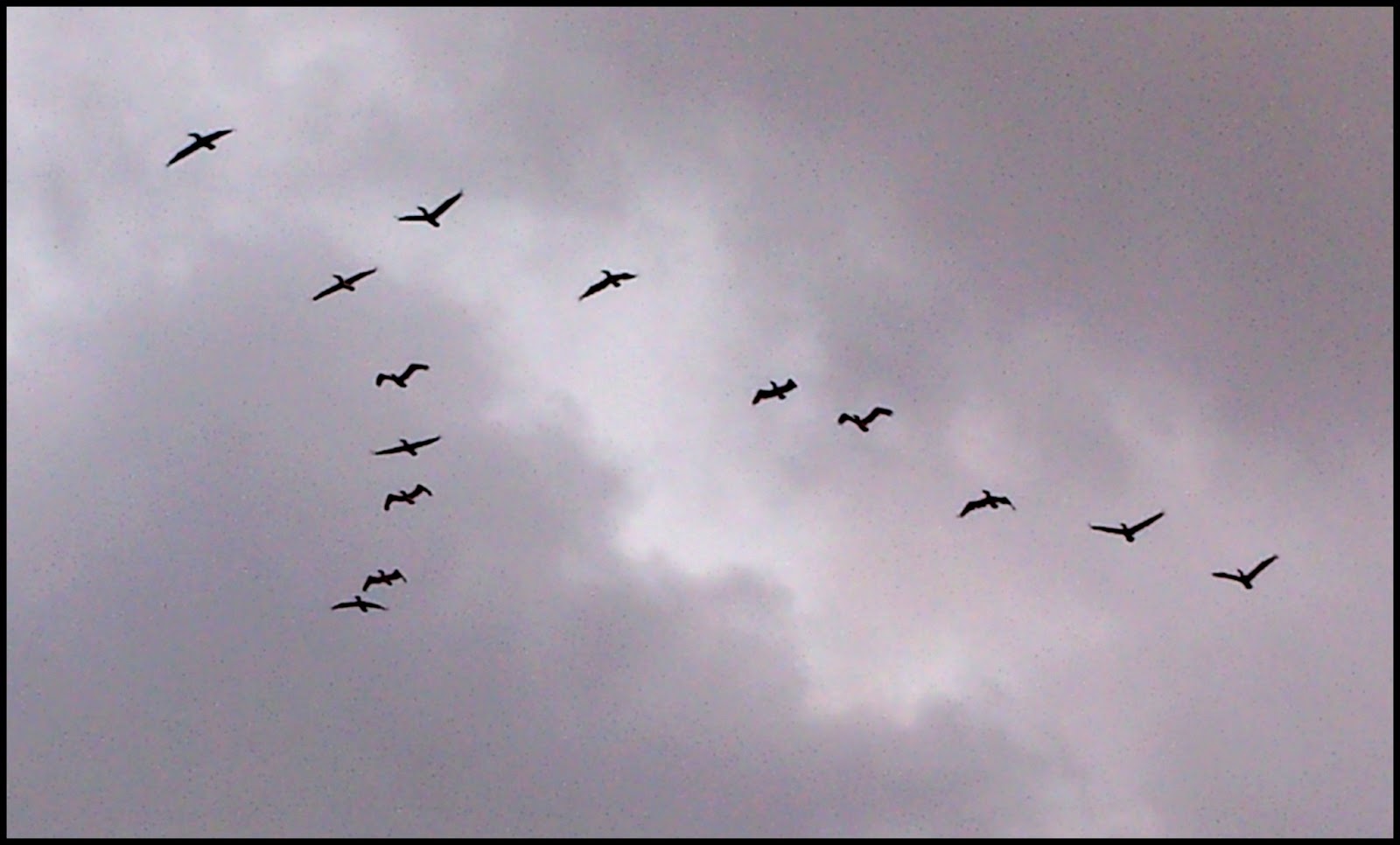
Pelicans in flight over Tybee
photo by Jack from our deck

The Summer Solstice arrived as Venus approached Leo. Hot. Peak. Sex. Love. What more could I want? Basking in the warmth, appreciating the joy in my life, I felt showered with song. Thus did the Solstice arrive. Afterwards, I was eager for the sea and drove alone along the lonely road to Savannah, to Tybee, and to my lifelong friends who took over a grand house on Ninth Street overlooking the dunes and the ocean. There I indulged in single malt and other delights as I bathed in the sea, or in the pool of the condo where I slept, or strolled the strand, or watched the gibbous Moon slide in and out of cumulus clouds and distant lightning from the deck of our house. And I over-indulged in seafood and long walks through Savannah's familiar parks and streets. High with the friendship of old and new friends, I spent several days drifting as if on waves of the sea itself, before my return to Druid Hills.


Photos above by Jack from 6/13

Dusk view
The Moon comes back to join Venus under looming Leo after sunset. (Moon positions are exact for the middle of North America.)

Love...


Wednesday, June 19, 2013

The Merry Month of May and the approach of the Solstice


Since my return from Japan, there have been several soirees and treks of note. As April gave way to May, Will and I took the train to New York to join Joe and see the BAM production of Julius Caesar.
(http://www.bam.org/theater/2013/julius-caesar)


View from our train window

What can one say about AMTRAK? It was an adventure, an ordeal, and an experience. We dined in the Dining Car to over-priced food and we had scotch in the club car. It was almost impossible to sleep, huddled against each other in coach with the overhead lights in our eyes and our heads struggling with blankets and alternating from his shoulder to mine. We emerged from the train into Penn Station and walked out onto the dazzling streets of Manhattan at mid-day, headed to Times Square, and then the A-Train to Brooklyn where Joe met us in the Marriott Hotel. Ads for Julius Caesar filled the subway car.


From that point on we filled the next three days with theater, art, Greenwich Village, a walk across the Brooklyn Bridge, Sunday in Central Park, Seeing Gertrude Stein (in the Metropolitan Museum), and Will's singing upstairs at the Stonewall Bar. Meals with Joe and friends, Julius Caesar, and taking photos of all the Cherry trees in full bloom around Washington Square and in Brooklyn.


Will takes in the view

On our last day in Brooklyn, Joe brought us NY Bagels, cream cheese, and other delicious b'fast fare. Then we made our way by subway to Penn Sta. where Will entertained with song and guitar (so near Madison Sq. Garden) until we boarded the train home. Will's performance continued 'til midnight in the club car...


Will on guitar playing for a Whovian.


Shortly after the trek to New York, our friends Wolfgang and Donald arrived from Frankfurt and it was three days dining out in Atlanta followed by another trip to Asheville, NC with lunch at the Dillard House and a visit to Graveyard Falls on the Blue Ridge Parkway. 


After Asheville came Lookout Mountain and a spectacular June Wedding. No expense was spared for the marriage of Katie and Oliver... 

https://www.facebook.com/media/set/?set=a.10200477982086871.1073741833.1076735274&type=3

Starr and I had a good time attending the dinners, champagne breakfasts, reception, and enjoying the ever-changing, cool early summer weather on Starr's Porch and new deck.


By way of review, here is the New Yorker's Review of Julius Caesar as performed in New York...


APRIL 22, 2013

AN AFRICAN CAESAR

When “Julius Caesar” was performed at the Winter Garden Theatre in New York in 1864, the role of Mark Antony was played by John Wilkes Booth. His brother Edwin Booth played Brutus, and their brother Junius Brutus Booth, Jr., was Cassius. Five months later, John Wilkes Booth shot Abraham Lincoln with the cry “sic semper tyrannis” (“thus always to tyrants,” words traditionally attributed to Brutus at Caesar’s assassination). In the years following, Edwin Booth went on to one of the most distinguished theatrical careers of the nineteenth century. Between December, 1871, and March, 1872, he appeared in another run of “Julius Caesar” in New York City, playing, on different nights, Mark Antony, Brutus, and Cassius.
I saw “Julius Caesar” recently in a production by the Royal Shakespeare Company at the Brooklyn Academy of Music. It happened to be on April 13th, the Ides of April, and a day before the anniversary of Lincoln’s death. The coincidence was theatrical in a literal sense, too: Lincoln died in Ford’s Theatre in Washington, Caesar died in Pompey’s Theatre in Rome, “Julius Caesar” was premièred at the Globe Theatre in London, and I watched it at the Harvey Theatre, in Brooklyn (where the play continues until April 28th). Too much can be made of this sort of thing, but Shakespeare’s love of superstition is rich soil for suggestible minds.
“Julius Caesar” bristles with augury, but hinges on a more terrestrial concern: Was Caesar a tyrant and thus deserving of tyrannicide? The Caesar of the play is imperious and inflexible, happy to compare himself to Mount Olympus and the North Star. But he also has “popularity” in the sixteenth-century sense of that word, as the scholar James Shapiro has written: his rule is a radical democracy that is the very opposite of tyranny. He might have escaped assassination had he read the note proffered him by Artemidorus as he entered the Senate on the Ides of March. That he waved it off with the self-promoting and self-abnegating line “What touches us ourself shall be last serv’d” is evidence of his popularity.
This finely balanced ambiguity is the material for the first half of the play; it is no surprise that Shakespeare’s coinage “misgiving” should make its first appearance in English in this play of doubts. A tight conspiratorial knot leads up to the assassination, which is followed by the funeral orations by Brutus and Mark Antony. Shakespeare then takes us into the less interesting matter of the conspirators’ fates, their various suicides and deaths by misadventure. The R.S.C. players do their best with this later material, though they are hampered somewhat by a minimalist staging in which we get neither the sense of battle nor the tension of a battle camp.
The R.S.C. production has an all-black cast, and is directed by Gregory Doran. It is an African “Julius Caesar,” and the play contains many elements that aid this conceit: the soothsayer is aféticheur in body paint, Brutus has a silly houseboy, there’s a lynching (of a poet who happens to share a name with one of the conspirators). The assassination of Caesar himself feels like a story from one of the newly independent African countries of the nineteen-sixties. Doran highlights the political aspect of the play, and this is to the good, for it is still necessary to insist on Africa as a site of political and ideological contest, and not a static place mired in an unchanging anthropological past. Caesar, played with roguish charm and cold resolve by Jeffery Kissoon, is in the company of such manipulative despots as Idi Amin Dada, Mobutu Sese Seko, and Ibrahim Badamasi Babangida.
The alterations in the text are limited to a few compressions here and there, and to the occasional well-placed “ehen!” (one of the most frequent interjections in West African English, generally used as an affirmative, sometimes as a query). The most familiar lines—“The fault, dear Brutus, is not in our stars, but in ourselves,” “Cowards die many times before their deaths,” “The evil that men do lives after them; the good is oft interred with their bones”—are delivered as smoothly as proverbs. A small musical ensemble is on the stage in some scenes, playing highlife and Manding-influenced music, which adds a beautiful aural texture to the proceedings. Before going, I had thought that a more precise identification of the play with a particular country—South Africa, say, or Nigeria—would be preferable, the better to avoid the pernicious notion that Africa is a country. But the performance persuaded me otherwise: Shakespeare’s play is a gloss on an English translation of Plutarch’s “Lives,” and its force is in the dramatic language. The general African setting unexpectedly illuminates that language. Had the setting been too narrow, it would have distracted the viewer from the delicate amalgam at hand: an ancient Rome in which Renaissance English is spoken by contemporary Africans.
The ensemble is extraordinary. Cyril Nri’s Cassius and Joseph Mydell’s Casca have such clear diction that I found myself wishing for more of Shakespeare’s plays to be done in African-accented English. Kissoon’s Caesar, Paterson Joseph’s Brutus, and Ray Fearon’s Mark Antony are less clear, their use of accents drifting at times into singsong. But their acting is tense and vibrant, and they command the stage. All have the broad shoulders, swagger, and calculated carelessness of African “big men.” One of the pleasures on offer here is the sight of these men strolling about, all coiled energy and purpose, in their dyed buba and sokoto, or in the white or earth-toned safari suits one sees on businessmen in Lagos, Dakar, or Kinshasa. Walking with authority is an art of which the leads in this “Julius Caesar” are virtuosi.
Shakespeare’s rhetorical choices in “Julius Caesar” were intended to echo Roman public speech. He aimed, as W. H. Auden noted in his “Lectures on Shakespeare,” for a bleak, plainspoken style largely dependent on monosyllabic words. There’s an added benefit to this: words written then sound much like they might now. Brutus, taking leave of Cassius in the first act, in the infancy of the conspiracy, says:
For this time I will leave you.
To-morrow, if you please to speak to me,
I will come home to you; or if you will,
Come home to me, and I will wait for you.
Mark Antony, manipulating the crowd during his “friends, Romans, countrymen” oration, is similarly straightforward. His reiteration of the word “honorable” emphasizes its unwieldy shape and ironic intent in what is otherwise a staccato pentameter:
Good friends, sweet friends, let me not stir you up
To such a sudden flood of mutiny.
They that have done this deed are honorable.
What private griefs they have, alas, I know not,
That made them do it. They are wise and honorable,
And will, no doubt, with reason answer you.
Later, Antony, in his arrogant way, tells Octavius “I have seen more days than you”; later still, at the Battle of Philippi, he attempts to pull rank.
ANTONY: Octavius, lead your battle softly on
Upon the left hand of the even field.
OCTAVIUS: Upon the right hand I. Keep thou the left.
ANTONY: Why do you cross me in this exigent?
OCTAVIUS: I do not cross you; but I will do so.
It is an ominous bit of foreshadowing, and the lines are delivered well. But I missed a certain intensity that might have made this young Octavius (Ivanno Jeremiah) more convincing. This, after all, is the man who will transform himself into the Emperor Augustus and will rule the world, and it is to him that Shakespeare gives the very last words of the play. I wished to see more evidence of that potential, in this play that is so much about how a fate guessed at today can become a reality tomorrow.
In the spring or winter of 1865, sometime between the Booth brothers’ “Julius Caesar” performance and Abraham Lincoln’s death, Lincoln had a nightmare. He recounted it to his friend Ward Hill Lamon, who wrote it down. Lincoln had seen in his nightmare a mournful crowd in front of the White House, and on asking who had died, had been told it was the President, “killed by an assassin.” The dream “annoyed” him for quite a while after, and then, presumably, he let the matter be. As in Shakespeare’s play and Caesar’s life, the portent proved exact.
Teju Cole is a photographer and writer. His novel “Open City” was published last year. He contributes frequently to Page-Turner.
Photograph by Richard Termine.