| You are invited to view Jak & Dar's photo album: Savannah Thanksgiving 10
Message from Jak & Dar: a few of the pics from Savannah If you are having problems viewing this email, copy and paste the following into your browser: http://picasaweb.google.com/lh/sredir?uname=dargossett&target=ALBUM&id=5545123522359655441&authkey=Gv1sRgCNyZm-7kvNyc1AE&invite=CL6G6osD&feat=email |
Monday, November 29, 2010
Savannah Revisited


Friday, November 26, 2010
Pilgrims in Savannah
As James Land Jones said, my visits to Savannah are like a Fellini film.
From the drive down the Thanksgiving trip was everything from upheaval to settling down in old Savannah Victorian camp charm.
Dinner at Ben Head's was delicious. My Dad, who seldom eats much, enjoyed a large helping of Molasses pork loin and sweet potatoes. Kathy talked of Michner's Texas, Darryl of Menchen, John of his daughter Maggie, Ben of the history of the Davenport House, and all of us , except silent, contented Dad, of the Catholic Church and Oscar Wilde, Kathy quoting, "Marriage is the triumph of habit over hate."
We settled into the Bed and Breakfast Inn and were upgraded to the Jasper House. Dar, John, Lee and Steve Killian, Joe Mydell and John's friend Connie gathered one afternoon. Ben, Dad and Kathy joined the above for a Saturday get together in the double parlor. Here is a glimpse of our house.
Sgt. Jasper House
Our most ornate, spacious, and discerning of accommodations.
It is a three floor row house next to the inn.
The oversized parlor and dining room of the Jasper House will sweep you back to a bygone time, with turn of the century furnishings, artwork, and decor. The remodeled gourmet kitchen will make you feel pampered. Upstairs are 4 bedrooms and 2 baths. Two bedrooms contain a single queen bed each, and two bedrooms contain two twin beds each. Each room is decorated with a unique style, and the Jasper House can accommodate up to 8 adults. The Jasper House is sold nightly as a choice room with inn amenities or for a weekly vacation rental rate without inn amenities.
|
Monday, November 22, 2010
Thanksgiving

Tennessee in Autumn
photo by Darryl
As we embark upon Thanksgiving week, there is much that I am thankful for. Today is my brother's 58th birthday and I am glad we shall spend the rest of the week together. I am thankful for Darryl's going with me to Savannah and for his new job editing that allows him to go virtually anywhere there is internet access. I am thankful for my good friend Joseph Mydell's visit this past week and the week ahead, for our renewed times together, and for his wonderful success as an award winning actor.
The week ahead offers more contact with our world of friends, with Lee and Steve Killian from North Carolina. Ben Head will host John, Dad, Kathy, Darryl and me for Thanksgiving dinner. And Darryl and I will have the spacious Live Oak Suite at the Bed and Breakfast Inn to enjoy. It is a golden autumn here in Atlanta today, yellow leaves against the gray sky. Several warm days lie ahead here and in Savannah. So, it is a good time to reflect upon blessings: health, friendship, the opportunity to visit Savannah, Asheville, and Chattanooga where Starr is thankfully becoming Tays once more.
Always in my mind, these holidays, is the Epicurean Garden, where gather our kindred spirits. May it ever become more manifest in our lives.
Jack
Saturday, November 06, 2010
Good Bye Boneheads
Shooing the Blue Dogs and other mad dogs.

One more thought about the election of 2010. The win of the Republicans took place mostly in the suburbs that swung from Republican to Democrat in 2006 in disgust over Bush. Tuesday's election's big losers were mostly the so called blue dog Democrats who made everything progressives and Obama did difficult. They often shared with Republicans the ties to corporations and special interests. So I would say one major message from the election is a rejection of tepid, milquetoast caving to the hard nosed positions of Republicans. Commentators have laughed at the absurdity of thinking that independents voted Republican because Democrats were not far Left enough. That may seem like a paradox, but the fact is, the youth vote and the minority vote were seriously lacking in this election and it was their high percentages that swept Obama and Democrats to historic power in 2008. Note too that in many state-wide races the Democratic strongholds held, keeping the West Coast progressive-- in California, Oregon, Washington and even Nevada-- as well as in New York, Connecticut, Maryland, and other Eastern bastions of Liberalism.
In my view, the way to energize those millions of progressive, young, minority voters is to be tough, to fight for progressive reform with more fervor than ever. You cannot compromise with evil- so said Rush Limbaugh in the most damning irony of the campaign. So, let's get on with our quest for equality in this country, with the freedom we can believe in: freedom to marry for all, freedom to serve in the armed forces, if we so choose, freedom to earn a good wage when we work, freedom to have health care when we are ill, freedom from pollution and corruption, freedom for the entire planet to be healthy, clean, and peaceful. Finally, we should stand for the freedom of as many people as possible to find happiness-- the cornerstone of John Locke's and Thomas Jefferson's philosophy.
{ Read: Life Liberty and the pursuit of Happiness (click)}
{ Read: Life Liberty and the pursuit of Happiness (click)}
Jack
11/6/10
Wednesday, November 03, 2010
Blue
Blue

Is there a lesson to learn from the swing of the House of Reps from Democratic to Republican last night? Did Obama fail to "connect" to the voters? Did the Tea Party Patriots sway the voters with good, sound anti-government argument? Had Pelosi and the Dems just been too socialist and ambitious?
Of course not. For one thing, there is no tea party. It doesn't exist. There are only corporation financed capitalists who know how to get the voters stirred up over meaningless terms like socialism and big government. There are so many ignorant, uninformed, easily misled, dare I say, stupid people in the "greatest nation on Earth," that candidates who have no interest in helping the middle class, much less the poor, the old, the sick, or the needy of the country, can win political contests on appearance and advertisement alone. Our Supreme Court has made it easier than ever for corporations, including those in other countries, to finance our elections, presenting false and manipulative ads more sophisticated than any on "Madmen."
Fortunately, the statewide electorates managed to keep the Democrats in power in the Senate. There will be no outrageous, right-wing bills from Congress that Obama must veto. But there is likely to be virtually no cooperation either. The House may even go so far as to "investigate" the Obama administration with impeachment on their minds.
Which brings me back to last night's lesson: Democracy does not work. It is not the best form of government. Besides, what we have is not democracy at all, but oligarchy, with millionaire candidates, and billion dollar campaigns. Even with that setup, where voters choose which oligarchs to elect, an uninformed electorate repeatedly vote for the person least likely to support their interests, or worse, to work for private interests that bring them harm. Given that the sort of Republic for which Plato advocated is virtually impossible, and that malevolent dictatorship may be inevitable, I fall back and urge myself and friends to the fragrance of the Garden of Epicurus- a nice garden without debris blowers and with a fine variety of blooms. Today, I can't help recalling the splendid rose garden in Portland, Oregon, and the uplifting view of snow covered Mount Hood.
Jack
11/3/10

Friday, October 29, 2010
The Tea Party Patriots (Election Approaches)

llustration:
Today's Tea Baggers worship the balls of the Koch Brothers. (click). The baggers are political finger puppets-- mean, cold, selfish, gun carrying fools of Rupert Murdoch, the Corporate CEOs who pay little or no taxes, the oil industry, and the mad hatters like G. Beck, Palin and other screaming loons who support reactionary 18th C. libertarianism. They would allow unlimited corruption, pollution, and abuse by an elite oligarchy that includes the Bushies and the Cheneys, Clarence Thomas and wife, Karl Rove, and the Republican fat cats who hate the poor, the middle class, and anyone not a member of their quail hunting, fast shooting club. How anyone who is not an indifferent, mindless multi-millionaire, living in a fantasy world where there is no global warming, where no one dies in wars, where gays are locked away, where Christmas is always white, could vote libertarian or Republican, when there is such suffering in the country and the world, is beyond me. Greed and ignorance to the point of self-mutilation are the order of the day.
Is there no way to lick the tea baggers? If only the Democrats had some balls...
Jack
Tuesday, October 19, 2010
Oligarchy
Mr. Reich echoes what we've been saying for some time: our nation has become an oligarchy (Plutocracy)
http://readersupportednews.org/opinion2/279-82/3651-the-perfect-storm

Portrait, Robert Reich, 08/16/09. (photo: Perian Flaherty) 
 t's a perfect storm. And I'm not talking about the impending dangers facing Democrats. I'm talking about the dangers facing our democracy.
Robert Reich is Professor of Public Policy at the University of California at Berkeley. He has served in three national administrations, most recently as secretary of labor under President Bill Clinton. He has written twelve books, including "The Work of Nations," "Locked in the Cabinet," "Supercapitalism" and his latest book, "AFTERSHOCK: The Next Economy and America's Future." His 'Marketplace' commentaries can be found on publicradio.com
http://readersupportednews.org/opinion2/279-82/3651-the-perfect-storm
Robert Reich begins: "It's a perfect storm. And I'm not talking about the impending dangers facing Democrats. I'm talking about the dangers facing our democracy."
Portrait, Robert Reich, 08/16/09. (photo: Perian Flaherty)
The Perfect Storm
18 October 10
t's a perfect storm. And I'm not talking about the impending dangers facing Democrats. I'm talking about the dangers facing our democracy.First, income in America is now more concentrated in fewer hands than it's been in 80 years. Almost a quarter of total income generated in the United States is going to the top 1 percent of Americans.
The top one-tenth of one percent of Americans now earn as much as the bottom 120 million of us.
Who are these people? With the exception of a few entrepreneurs like Bill Gates, they're top executives of big corporations and Wall Street, hedge-fund managers, and private equity managers. They include the Koch brothers, whose wealth increased by billions last year, and who are now funding tea party candidates across the nation.
Which gets us to the second part of the perfect storm. A relatively few Americans are buying our democracy as never before. And they're doing it completely in secret.
Hundreds of millions of dollars are pouring into advertisements for and against candidates - without a trace of where the dollars are coming from. They're laundered through a handful of groups. Fred Maleck, whom you may remember as deputy director of Richard Nixon's notorious Committee to Reelect the President (dubbed Creep in the Watergate scandal), is running one of them. Republican operative Karl Rove runs another. The U.S. Chamber of Commerce, a third.
The Supreme Court's Citizens United vs. the Federal Election Commission made it possible. The Federal Election Commission says only 32 percent of groups paying for election ads are disclosing the names of their donors. By comparison, in the 2006 midterm, 97 percent disclosed; in 2008, almost half disclosed.
We're back to the late 19th century when the lackeys of robber barons literally deposited sacks of cash on the desks of friendly legislators. The public never knew who was bribing whom.
Just before it recessed the House passed a bill that would require that the names of all such donors be publicly disclosed. But it couldn't get through the Senate. Every Republican voted against it. (To see how far the GOP has come, nearly ten years ago campaign disclosure was supported by 48 of 54 Republican senators.)
Here's the third part of the perfect storm. Most Americans are in trouble. Their jobs, incomes, savings, and even homes are on the line. They need a government that's working for them, not for the privileged and the powerful.
Yet their state and local taxes are rising. And their services are being cut. Teachers and firefighters are being laid off. The roads and bridges they count on are crumbling, pipelines are leaking, schools are dilapidated, and public libraries are being shut.
There's no jobs bill to speak of. No WPA to hire those who can't find jobs in the private sector. Unemployment insurance doesn't reach half of the unemployed.
Washington says nothing can be done. There's no money left.
No money? The marginal income tax rate on the very rich is the lowest it's been in more than 80 years. Under President Dwight Eisenhower (who no one would have accused of being a radical) it was 91 percent. Now it's 36 percent. Congress is even fighting over whether to end the temporary Bush tax cut for the rich and return them to the Clinton top tax of 39 percent.
Much of the income of the highest earners is treated as capital gains, anyway - subject to a 15 percent tax. The typical hedge-fund and private-equity manager paid only 17 percent last year. Their earnings were not exactly modest. The top 15 hedge-fund managers earned an average of $1 billion.
Congress won't even return to the estate tax in place during the Clinton administration – which applied only to those in the top 2 percent of incomes.
It won't limit the tax deductions of the very rich, which include interest payments on multi-million dollar mortgages. (Yet Wall Street refuses to allow homeowners who can't meet mortgage payments to include their primary residence in personal bankruptcy.)
There's plenty of money to help stranded Americans, just not the political will to raise it. And at the rate secret money is flooding our political system, even less political will in the future.
The perfect storm: An unprecedented concentration of income and wealth at the top; a record amount of secret money flooding our democracy; and a public becoming increasingly angry and cynical about a government that's raising its taxes, reducing its services, and unable to get it back to work.
We're losing our democracy to a different system. It's called plutocracy.
Robert Reich is Professor of Public Policy at the University of California at Berkeley. He has served in three national administrations, most recently as secretary of labor under President Bill Clinton. He has written twelve books, including "The Work of Nations," "Locked in the Cabinet," "Supercapitalism" and his latest book, "AFTERSHOCK: The Next Economy and America's Future." His 'Marketplace' commentaries can be found on publicradio.com
Tuesday, October 12, 2010
Tea Bag v. Nickel Bag

Allen Ginsberg on Bourbon Street
photo copyright
Jack MillerSunday's New York Times Book Review ended with an absurd comparison of today's Tea Bag movement with that of the Beats. You can read it at:
http://www.nytimes.com/2010/10/10/books/review/Siegel-t.html?ref=books
Besides claiming they both wanted individual freedom and opposed big government, the article just rambled on about the dissimilar, discordant traits of each.
Even to mention TV clown Glenn Beck in the same breath as Allen Ginsberg is to conjure up, as one of my friends put it,
Vomit.
How are they unalike? Let me count the ways:
Beats vs. Baggers The Beats were a group of writers and artists who loved and explored alternate religions to Christianity. They pursued Buddhism and Zen.
Baggers are not writers, but the haters of books and intellectuals who mostly believe in a literal reading of the Bible.
The Beats explored and practiced expanded consciousness, including sexual experimentation with homosexuality, bisexuality, and group sex.
Baggers demonstrate reduced consciousness, conformity, and the denial of sexuality for anything but procreation. They condemn gays, want to outlaw the woman's choice of whether to have a baby, and even want to stop masturbation. They have suggested that single, sexually active women should not be allowed to teach.
Beats reject materialism and brainwashing.
Baggers are funded by right wing billionaires who favor less taxes for the very rich.
Beats are pro-ecology and love nature and the environment.
Baggers oppose any regulation of corporations, industry, or big oil. The environment is to be used up and wildlife is for the sport of hunters.
The Beats enjoyed being high on marijuana, for the most part.
Baggers don't even like tea and have no idea what the Boston Tea Party was about.
The Beats opposed war and the policies of Dick Nixon. They were diverse and fought for the rights of minorities.
The Baggers are mostly angry white men and women who support spending more for the military , resent other ethnic groups, despise diversity, and are often bigots against blacks, gays, and women. Even the women in the movement oppose women's rights.
The Beats were individuals, not a movement or party at all. The Hippie movement derived from the Beats, but was not a political movement either.
The Baggers are a political movement funded by the rich to help restore power to Republican corporate puppets.
The list of differences goes on...and on...
Jack
("I knew Allen Ginsberg. Allen Ginsberg was a friend of mine. Glenn Beck, you are no Allen Ginsberg." {Jack throws up})
Peace.
The Beats enjoyed being high on marijuana, for the most part.
Baggers don't even like tea and have no idea what the Boston Tea Party was about.
The Beats opposed war and the policies of Dick Nixon. They were diverse and fought for the rights of minorities.
The Baggers are mostly angry white men and women who support spending more for the military , resent other ethnic groups, despise diversity, and are often bigots against blacks, gays, and women. Even the women in the movement oppose women's rights.
The Beats were individuals, not a movement or party at all. The Hippie movement derived from the Beats, but was not a political movement either.
The Baggers are a political movement funded by the rich to help restore power to Republican corporate puppets.
The list of differences goes on...and on...
Jack
("I knew Allen Ginsberg. Allen Ginsberg was a friend of mine. Glenn Beck, you are no Allen Ginsberg." {Jack throws up}
Peace.
Sunday, October 03, 2010
Irony and Facebook

This past week poet Alfred Corn asked the question on his Facebook page, "Irony--can it be defined in non-ironic fashion?" Today, I saw the film Social Network and the ironies in the film spurred even more thought on the subject.
To begin, I'd have to answer Alfred's question by saying no. As soon as I even try to define irony, irony influences my thoughts, making me want to be ironic in my response. That is not to say we cannot talk about irony in a straight-forward manner, but that even when we do, there is an inclination to add a touch of irony. Irony is needed to explain irony.
Irony has unquestionably played a key role in my life. Accepting the label of gay in my 20s was blatantly ironic, I thought. Gay. The least gay thing about me was that I was gay. The very term is fraught with irony, going back to Oscar Wilde, no doubt one of the models used in creating the term for homosexuality. Yes, Wilde was gay, even in the horrors of his life in prison. What could be more linguistically ironic than the oxymoron, gay suicide, filling our newspapers today?
Irony is subtle; defining it ought to be not only difficult, but ongoing. Pin it down and it becomes sarcasm, cynicism, a joke, a witticism, a play on words, a pun, perhaps. Wikipedia breaks the term down into it's many exemplary uses, Socratic, tragic, literary, linguistic, artistic, and the like. Yet, those who use irony might well disagree on what is or isn't irony-- Duchamp's putting a mustache on Mona in L.H.O.O.Q., above, for instance.
The film, Social Network, presents us with a creator of Facebook, a network with half a billion friends, unable to be or keep a friend himself. Irony. And there are many other ironies in the film. If the story has any truth to it, Facebook as it has evolved today is far more than the original idea as Mark Z. conceived it. If Facebook has become a substitute for making real friends, then that too is ironic. Yet, as I see it, Facebook has provided far more than a place to meet ones potential sex partners; it has become a place to communicate in a genuine way. What started out as a convenient way to stay in touch with friends and acquaintances has become a means of sharing ideas with those who share our interests, as well as a way to renew and maintain ties that we should not have lost. The implications for education using Facebook are just arising.
There is much more to both irony and to Facebook that I'd like to explore this gorgeous October day. But I have dinner plans, so those thoughts must wait.
BTW, there is a brilliant review of the film and its irony in the New Yorker:
Wednesday, September 22, 2010
The Ship of State

http://blogs.ajc.com/mike-luckovich/
Our ship of state goes in circles. We are rounding the loop of 1980 when voters rejected the truth Jimmy Carter told us about conservation and using less oil. We are rounding the election of '94 when voters took out a contract on the Clintons for daring to promote health care for the poor and sick. By January, if all goes 'round as expected, Republicans will again shut down the government in order to guarantee the corporations unlimited power to do as they please. Why? The reason too repeats: misguided selfishness of the worst kind. It is not only that we will not recycle, not pay taxes to make the world a better place, it is that we want our phantom edge over the others, the immigrants, the blacks, the gays, the Muslims. We will not learn Spanish, damn it. Nor will our undereducated offspring. Thank You Jesus (even if you really were for the poor and outcast, you Socialist). Vote Tea Bag.
Amen.
Wednesday, September 08, 2010
Send in the Bodhisattvas

Sixteen years ago Newt Gingrich lead the charge of the Right Wing to overtake the Congress, to defeat health care for the needy, and to bring the government to a halt. The happy days of prosperity that the Clintons were ushering in ceased as Republicans ground the gears of government to a nasty stop. Then they orchestrated an outrageous impeachment of the president for his sexual misconduct, despite the ever growing sexual scandals Republicans themselves were engaging in. Republicans threw tantrums, ranted against socialism, and did everything in their power eventually to capture the White House, even if it meant fudging the vote in Florida and using the Supreme Court to put Florida in the Bush column in spite of the voters of Florida, in spite of Gore winning the popular vote by half a million votes nationwide. The Republicans spent two decades in power bringing this country to its knees with unfounded wars, enormous deficits, corrupt tax breaks for corporations and billionaires, and irresponsible pollution of the environment. They have done this in great part by pretending to be Christians, instead of selfish, greedy, godless plutocrats.
Since selfish, greedy, powerful plutocrats own the media, Democrats are lost in the rush to replay every word and gesture of the tea party scoundrels-- Palin, Beck, Brewer, Bachmann, the list goes on. Gaffs become laughs, and the anti-intellectual fervor knows no bounds. Intellectuals must be Muslim Marxists (never mind the oxymoron). In the eyes of the media, the revolt against the devastation of Republican rule that took place in 2008 was a misguided fluke.


Are we headed back (back back back) to 1994? Will we face another Republican congress ready to shut down the country, rather than compromise. Will the Supreme Court step in again to rescue a losing Republican for President in 2012? Will congress impeach Obama for being un-American, declaring him unborn in the U.S.A.?
None of this seems far-fetched to me. When the majority of a democracy refuse to vote, much less be informed about their candidates, disaster is always possible, perhaps likely. Ours is a country where ignorance and naivete are rampant. Our Oligarchy is really controlled by those powerful CEOs making billions and laughing at the rest of us. It will take their enlightenment, their seeing pollution seeping into their favorite vacation spots, the world disintegrating into war and filth, before we truly achieve genuine reform. How can we get the fat cats on the path to enlightenment?

Jack
Saturday, September 04, 2010
Morning in Druid Hills

As the first fall like breezes blow over Druid Hills, it is pure delight to sit on the porch, watch the tame sunlight move over the lawn and oaks, and read Gail Collins in the New York Times. It is with nostalgia and bewilderment that I think about the state of the world. Perhaps I am no different from the yapping dog, high pitched complaint in the sweet morning air. Why not just be quiet and content, sip my delicious coffee, take deep breaths and meditate. A blessed three day weekend lies before me.
Still, it is worthwhile to see clearly what is happening in our country this autumn. Ms. Collins writes about Arizona governor Brewer and her poor performance at a debate. Why does her incompetence not register with the Arizona electorate? It would be understandable if, as Plato wrote thousands of years ago, the Republicans were swaying people with brilliant, if untrue, speeches and posturing. But they are not even giving popular, clever presentations. Voters really believe that Democrats are socialists? They really oppose health care for the poor? They want the rich to pay less taxes? They don't want devastating pollution and bank corruption regulated and controlled?
The only explanation I find is that it must be religion. The American people will believe anything if it is veiled in religious nonsense. The Republicans have figured out how to portray their opponents as evil, to tag Democrats as evil because they are not sticking to the religion of the Founding Fathers. Never mind that the real founding fathers were deists and lived lives of sexual exuberance, that they are far more like Bill Clinton than George W. The Tea Baggers and the corporate Republicans have got Jesus, and voters love their Jesus. Flag and cross are just too powerful to resist.
This week Stephen Hawking explained to us that God did not create the universe. The idea of an omnipotent, all knowing god has been an absurd and contradictory notion for far too long. Science and philosophy have shown the emptiness of the god concept. Nietzsche explained how Christianity has poisoned all sense of what is noble in life. Sartre revealed how logically ridiculous the idea of god is. Hawking knows that science can explain the world beautifully without god. Epicurus knew the same thing long before the birth of Jesus.
And so, this crisp morning, it is clear to me why voters are going to overthrow the Democrats in November. They prefer the ignorance of faith in what oppresses them to belief in science, philosophy, and the truth. Obama is the anti-Christ, the Muslim, the Socialist, the man who dares to oppose the rich and powerful gods of the media, big oil, the corporations, the banks, Wall Street. Better to stick with Beck, with Jesus, with the patriots like Brewer and Palin. Keep out the evil aliens, the Latinos, the Muslims, the infidels. Let the unemployed, the homeless, the sick and weak starve and die. But don't reward laziness. Worship the rich and famous, drool over their dress and their mansions. Work hard for minimum wage, go to church, count your blessings. That's the American way.
My gay husband remains in New Orleans for Southern Decadence this weekend. He inhabits the kind of world many Americans fear, a hedonistic world of pleasure. Buddha may be right that there is suffering in the world, that it is unavoidable, a part of life itself. Yet I can't help wondering why it is that so much of our suffering is self-inflicted. If there is anything I've learned from philosophy, it is that we should embrace every moment of joy with all our heart-- because tomorrow the materialistic, greedy capitalists may snatch what little we have away.
Jack
Monday, August 23, 2010
Half a Billion Rotten Eggs

Chickens gather near a basket of freshly gathered eggs at Pete & Jen's Backyard Birds, a small organic farm in Concord, Mass., Aug. 23. The farm has not been affected by the egg recall. (AP Photo)
If nothing else convinces you that capitalism, the Republicans, and the Tea Baggers will destroy the planet if we give them the chance, a nation filled with the stench of half a billion rotten eggs should wake you from your stupor. Rotten food, tainted waffles, bacteria laden meat, death causing lettuce, these are what unregulated businesses produce. Oil spills killing oyster beds, killing every form of sea life is what you get with Republican non-rule, letting the capitalistic enterprises do as they like-- profit without consequences for pollution and the spread of illness. Anyone who votes for these bad egg Republicans in the face of all the unregulated destruction the past ten years have brought must drink a big glass of unfiltered "Texas Tea."
Either we make the Republican party extinct or we make most of the life on our planet extinct. We need trains and non-polluting public transportation to free us from nine day long traffic jams like those in China today, to remove the choking haze of traffic filled cities. We can choose progressive representatives who will protect our natural resources or we can elect bank bought corporate puppets who spew patriotic drivel through their cigar smoke and give billions to Wall Street, the Insurance companies, and Big Oil. Don't kid yourself, the Republican party is about oligarchy, rule of the rich, the filthy rotten rich, and to Hell with the rest of us, especially the poor.
Maybe two pictures will make it clear. Here are your choices:
The way of Big Oil (driving to Peking)


Friday, August 20, 2010
Angry Monk
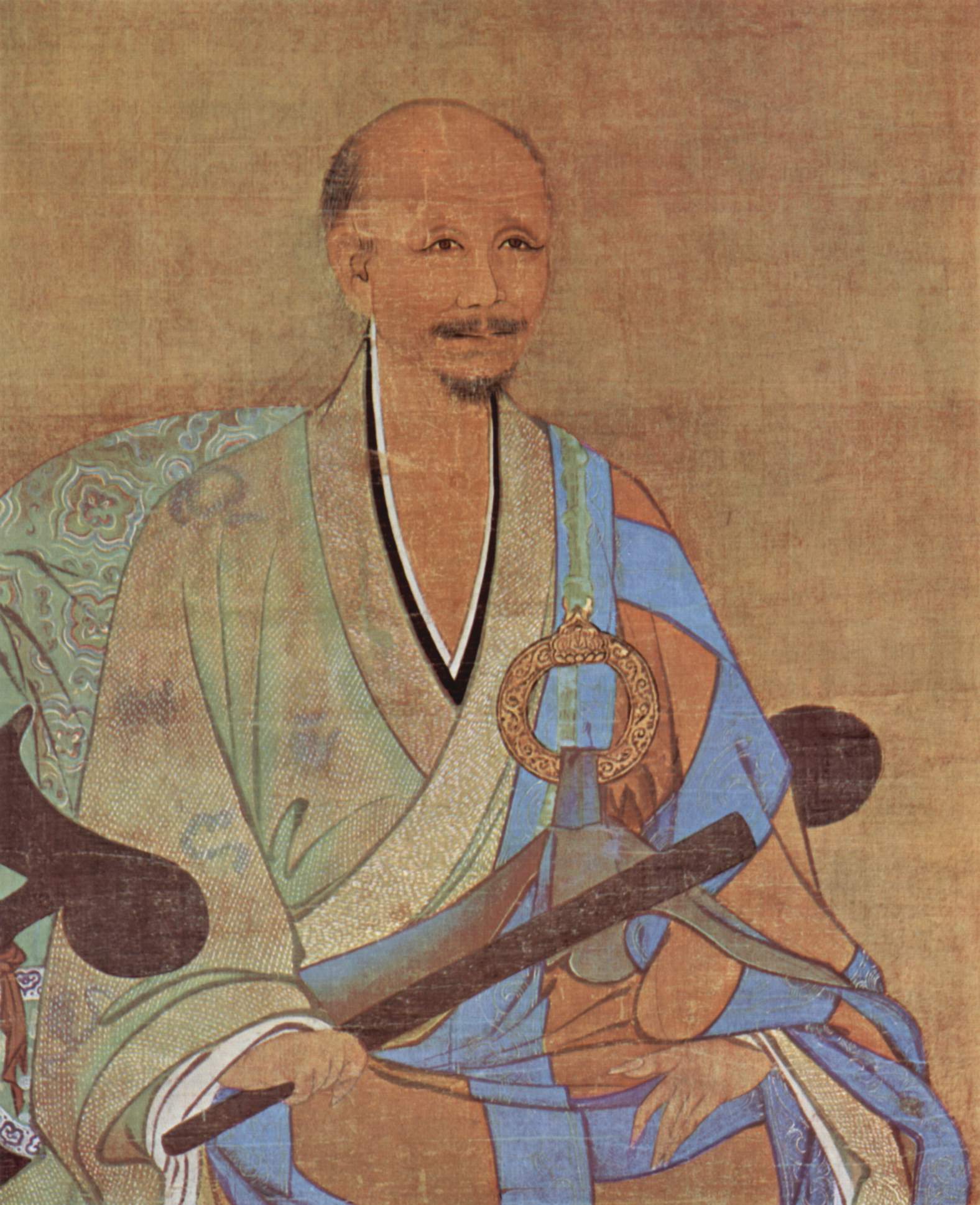
http://en.wikipedia.org/wiki/File:Chinesischer_Maler_von_1238_001.jpg
The Angry Monk
Shozan Jack Haubner
Zen practice stirs up energy and emotion, and it can be downright ugly
A LOT OF PISSED-OFF PEOPLE WIND UP AT OUR MONASTERY. Th is place has a tractor beam like the Death Star in Star Wars that pulls in everyone within a thousand-mile radius with four-letter words on the tips of their tongues. Her marriage tanked, he’s got an itch in his brain he just can’t scratch, she’s 45 and smells of cabbage and lives in a small studio apartment and nobody ever calls her back. Th ey all wind up here, sold on the promise that Buddhism can alleviate suff ering.
I said “they” all wind up here, but I guess I mean “we.” I recently had one of those moments when, upon the muchanticipated departure of an enemy who, as a Buddhist, I could never quite admit was an enemy, I found myself peering around the zendo and thinking, “Wow, there are no assholes living here anymore.” Whereupon came a sinking feeling: “Wait a minute, there’s always at least one. So if I’m looking around the zendo and I can’t fi nd him—guess who the asshole is!”
Zen practice is good for angry people. Th e form is tight. It squeezes that deep red heart-pulp, pushing up emotions from way down inside you. A lot of stuff comes up when you do this practice. Zen gets your juices fl owing. And with these juices come seeds—the seeds of your behavior, your character, your anger, all fl ushed out into the open for you to see.
In Zen we learn that human consciousness is an eminently natural operation. You plant a seed, it grows. Similarly, when something happens to you on the outside, in “the world,” the seeds of this experience take root within you, becoming sensations, thoughts, memories—your inner life. Conversely, when something arises within you, some inner experience, a notion, emotion, or dream, then the seeds of this inner event are disseminated on the outside, in the world, through your words and actions. Buddhists call this codependent origination: all things arise together in a mutually interconnected and interpenetrating web of being. “To see the world in a grain of sand,” William Blake wrote. Or as that great metaphysician Tom “Jerry Maguire” Cruise put it: “You complete me.”
Sounds romantic. But what if the seeds at the root of your behavior are the seeds of hate and anger?
A year ago I was walking down a bustling city street with my mentor, whom I love. We got into a fi ght about something, and I smacked him. It came out of nowhere and was meant to be light. Only it clearly did not come out of nowhere, and it was not light. I can still hear the thwack of my open palm against his belly. Th ere was a long stretch of silence, wherein I should have begged for his forgiveness. But I couldn’t admit to the violence that had just erupted from within me. I couldn’t tell whether I meant it, whether it was real, where it came from, and how it got there.
I have violence in me, unfortunately. Th e seeds were planted long ago by my father, the poor man. How about all the times he didn’t whack me? Th e time he sighed and let it go when I stole one of his antique fi rearms and ran around the house, or when I sat on a sibling and released a cloud of fl atulence? No, I remember only the three or four moments when his anger broke through.
All it takes is one seed. I’ve apologized, and even sent a cute card. But my blow planted a hate seed in my mentor, and something irreconcilable has grown between us. I can’t seem to reclaim the friendship. I feel like I’m losing him.
Zen practice can be a tricky thing, because if it is done right, sooner or later all the issues and energies you’ve been repressing your whole life will ooze, trickle, and burst to the surface through your tight little smile. And I’m afraid that the practice itself doesn’t necessarily equip you to deal skillfully with these issues and energies.
Th is is one of the big misconceptions about spiritual work: that, applied correctly, it will make us “better people” (whatever that means). Zen is not a psychiatric or therapeutic discipline; it’s a spiritual one. It’s supposed to get energy moving on a deep, fundamental, life-changing level. Its purpose is to orient you Toward the truth/reality, whatever this takes. It’s not supposed to boss you around with behavioral or self-help dictates, or to shoehorn you into the slipper of well-adjusted citizenhood.
In other words, spiritual work isn’t always “instructive”—it’s transformative, and this kind of transformation can get messy.Th e Sanskrit term for this is clusterfuck.
Some people, for example, seem to be born angry. Not me.I was born a coward. So when the energy gets moving through Zen practice and I suddenly become angry rather than a quivering eunuch, this can feel like an improvement—or at least a new way to be screwed up rather than the same old patterns of screwed-upness. A sharp word suddenly tastes good in my mouth. Anger takes on the illusion of upward spiritual mobility in comparison with my habitual cravenness. In reality, however, it’s a lateral move—to an adjacent room in the same hell.
None of this happens in a vacuum. Zen is a group practice, but the thing about groups is that they’re made up of people, and we all know what people are like. So not only does Zen practice fl ush your issues out into the open, it does so within a certain context; it fl ushes them into the “container” of your relationships with fellow monks and nuns. Energies and issues that had no discernable dimension within you are externalized and embodied with the “help” of your peers, one of whom, say, unwittingly takes the form of your stepmother who once bullied and humiliated you.
Meanwhile, to this peer you represent the weakness and stupidity within himself that for more than 30 years he has felt the compulsive need to stamp out, as his father once tried to stamp it out of him. (In beating ourselves up, we usually pick up where our parents left off .) Only neither of you realizes (at least initially) that the other represents something within yourself that needs to be dealt with, for it is only in the dramatic playing out of your interactions that these powerful patterns and deep psychological dysfunctions are brought to light.
I defer to Carl Jung, who spent a lot of time in either a nuthouse or a monastery. “Th e psychological rule says that when an inner situation is not made conscious, it happens outside, as fate,” Jung said. “Th at is to say, when the individual remains undivided and does not become conscious of his inner opposite, the world must perforce act out the confl ict and be torn in two opposing halves.”
It’s amazing to watch sometimes. Th ese monastery battles royal can be downright epic. Forget about what happens when an immovable object meets an irresistible force. What happens when a weenie who’s sworn off his cowardice meets a monster who can’t help himself from bullying?
“First law of thermodynamics: Energy can be neither created nor destroyed. It simply changes forms!” So went the mantra of an erstwhile Zen peer, one of those quasi-scientifi c mystic types forever trying to link quantum physics with whacked-out spiritual mumbo-jumbo. It you ever disagreed with him, he trembled, his jowls purpling: “Th at’s . . . Just . . . Your . . . Ego!”
A regular fury farmer, this sower of hate seeds was one of those unfortunate American Zen sangha fi xtures whose respect and admiration for the teacher is in inverse proportion to his resentment and suspicion of his peers. Once, a fed-up nun, ornery and pugnacious in her own right, shot back: “Listen, you! In a universe that wastes nothing, where does the butthead energy go when you lose your temper? What form does it change into?”
In about a week she got her answer. One morning, this troubled monk we’ll call “Tirade-san”—towering over six feet, girthy, garbed in his turquoise stretch pants and a T-shirt with a picture of the cosmos and an arrow indicating You Are Here— exploded at the densu (monastery greeter) when she forgot to fetch a student from the airport. She in turn barfed a curdled remark upon the tenzo (cook) aft er he misplaced her laminated chant sheets. Th e tenzo then went Vesuvius on the shoji (zendo mother) when she innocently swung through the kitchen door to brew some green tea.“
Knock before entering!” the normally mild-mannered Pisces roared.
“Have a fucking cow!” the grandmother of three and parttime caregiver blasted back.
As shika (head monk), I felt like Bill Paxton in Twister, chasing the tornado of devastating emotion as it touched down from one end of camp to the next.
Later, when I pushed through the sutra hall’s great double doors for the monks’ nightly meeting, I could feel T-san’s glare frying the hairs on the back of my neck. Turns out, I had forgotten to give the densu the fl ight details in the fi rst place, the oversight that set off the whole Great Hissy Fit chain reaction that day. T-san bent his body language my way, trying to get my eye, like a boxer intimidating an opponent before the opening bell.Unable to meet his gaze, I studied my toenails—which, to top off the shameful matter, were badly in need of a trimming.
Per meeting protocol, we circled up, bowed, and took turns voicing the various petty and passive-aggressive concerns that arise when a group of people with anger issues decide to engage in a practice that deprives them of sleep, comfort, personal Space, protein, and even their hair. I nodded with great interest and jotted these concerns in my head monk notebook, where they languish unaddressed to this day.
Meanwhile, Evil Monk would soon have the fl oor, and I imagined him with a little toothbrush mustache, howling in German. I would get a chance to rebut him because the head monk speaks last, and believe me, I had every word—every last syllable—planned. You can only take so much shit for so long!I trembled inside, my sphincter clenched about as tight as the hydraulics in those machines that make artifi cial diamonds.
Finally, it was the man-ape’s turn to speak. I turned and bowed to him, and for the fi rst time that day I looked him dead in the eyes—half expecting to see two hollow black holes, brimming with the souls of dead children. And wouldn’t you know it, he was smiling. He laughed lightly and bowed that mammoth wrecking ball atop his shoulders, indicating that he had nothing to say.
In that moment the hate seed fell out of me, dead like a stone—petrifi ed in its own uselessness like an insect fossilized in amber. He put his great meaty hand on my back on the way out of the room. Th at’s all it took for me to break down sobbing in my cabin 20 minutes later, alone but warmhearted.Desperate, gushing, cleansing sobs. It was the kind of moment that buys you another fi ve years of patience with, and passion for, monastic life. It’s one of those breakthroughs of the heart.
People ask what is the hardest thing about living at a monastery.Is it no sex, cardboardy food, zero sleep, 80 bucks a month pay? Is it the isolation from society, the heinous robes, those bone-crushing 19-hour days spent in the zendo or in the blistering sun or piercing cold?
Th e hardest thing about living in a monastery, I tell them, is working with people with whom you have nothing in common save spiritual desperation. We monks shave our heads, I continue, because if we didn’t we would surely tear out all our hair in despair from having to live and work with one another. Anyone who’s ever been married or had kids, or coworkers, for that matter (work and family—those other group practices), probably knows what I’m talking about. It gets real when the illusions drop away, doesn’t it?
Yet nine times out of ten the reason we get so irritated with the people who are closest to us is that they show us that we do not in fact correspond with the ideas we have of ourselves. We are meaner, weaker, dumber, and less interesting, tolerant, and sexy. In short, we are human, which typically comes as extremely disappointing news. You just cannot keep telling yourself how spiritually with it you are when every time you sit down to read that Eckhart Tolle book the monastery cat jumps on your shoulders and claws your bald head and you fl ing it halfway across the room and scream, “Goddammit, I’m trying to read about patience and equanimity here. Can you at least wait till I’ve gotten past the ‘Pain-Body’ chapter?!” Not that I, of course, have ever done that.
I used to imagine that spiritual work was undertaken alone in a cave somewhere with prayer beads and a leather-bound religious tome. Nowadays, that sounds to me more like a vacation from spiritual work. Group monastic living has taught me that the people in your life don’t get in the way of your spiritual practice; these people are your spiritual practice.
Th rough each other we discover that if we have the heart— the willingness, the strength, the courage—we have the capacity to plant the seeds of kindness, compassion, forgiveness; seeds of a laid-back humor, a sense of letting go. But your heart must be quicker than your mind. Trust me, that organ between your ears is always spoiling for a fi ght. Its job is to divide and conquer. But the real fi ght is taking place inside you, within the “dharma organ,” the heart, where the challenge is to unify and understand; where the seeds of love and compassion are struggling to lay roots.
Lend this struggle an ear. Just pause for three seconds. One banana . . . Two banana . . . Three banana . . . . Pause and listen.Pause and breathe. Pause and gather your scattered, wild energies, your shattered soul . . . Before you fl ing that seed of hate into the wind.
Mark my words, times are tough and the ground is fertile.
Th at seed will grow.
Shozan Jack Haubner has been a Zen Buddhist monk for several years. He writes under a pseudonym in hopes of remaining a monk at his monastery. Reprinted from Buddhadharma (Summer 2010), which presents stories and teachings from many diff erent Buddhist traditions.
Www.thebuddhadharma.com

http://en.wikipedia.org/wiki/File:Yama_with_danda.jpg
Thursday, August 19, 2010
Baldwin and Shakespeare
Excerpt: 'The Cross Of Redemption'

The Cross of Redemption: Uncollected Writings
By James Baldwin
Hardcover, 336 pages
Pantheon
List price: $26.95
Why I Stopped Hating Shakespeare
Every writer in the English language, I should imagine, has at some point hated Shakespeare, has turned away from that monstrous achievement with a kind of sick envy. In my most anti-English days I condemned him as a chauvinist ("this England" indeed!) and because I felt it so bitterly anomalous that a black man should be forced to deal with the English language at all — should be forced to assault the English language in order to be able to speak — I condemned him as one of the authors and architects of my oppression.
Again, in the way that some Jews bitterly and mistakenly resent Shylock, I was dubious about Othello (what did he see in Desdemona?) and bitter about Caliban. His great vast gallery of people, whose reality was as contradictory as it was unanswerable, unspeakably oppressed me. I was resenting, of course, the assault on my simplicity; and, in another way, I was a victim of that loveless education which causes so many schoolboys to detest Shakespeare. But I feared him, too, feared him because, in his hands, the English language became the mightiest of instruments. No one would ever write that way again. No one would ever be able to match, much less surpass, him.
Well, I was young and missed the point entirely, was unable to go behind the words and, as it were, the diction, to what the poet was saying. I still remember my shock when I finally heard these lines from the murder scene in Julius Caesar. The assassins are washing their hands in Caesar's blood. Cassius says:
Stoop then, and wash. — How many ages hence
Shall this our lofty scene be acted over,
In states unborn and accents yet unknown!
What I suddenly heard, for the first time, was manifold. It was the voice of lonely, dedicated, deluded Cassius, whose life had never been real for me before — I suddenly seemed to know what this moment meant to him. But beneath and beyond that voice I also heard a note yet more rigorous and impersonal — and contemporary: that "lofty scene," in all its blood and necessary folly, its blind and necessary pain, was thrown into a perspective which has never left my mind. Just so, indeed, is the heedless State over¬thrown by men, who, in order to overthrow it, have had to achieve a desperate single- mindedness. And this single- mindedness, which we think of (why?) as ennobling, also operates, and much more surely, to distort and diminish a man — to distort and diminish us all, even, or perhaps especially, those whose needs and whose energy made the overthrow of the State inevitable, necessary, and just.
And the terrible thing about this play, for me — it is not necessarily my favorite play, whatever that means, but it is the play which I first, so to speak, discovered — is the tension it relentlessly sustains between individual ambition, self- conscious, deluded, idealistic, or corrupt, and the blind, mindless passion which drives the individual no less than it drives the mob. "I am Cinna the poet, I am Cinna the poet...I am not Cinna the conspirator" — that cry rings in my ears. And the mob's response: "Tear him for his bad verses!" And yet — though one howled with Cinna and felt his terrible rise, at the hands of his countrymen, to death, it was impossible to hate the mob. Or, worse than impossible, useless; for here we were, at once howl¬ing and being torn to pieces, the only receptacles of evil and the only receptacles of nobility to be found in all the universe. But the play does not even suggest that we have the perception to know evil from good or that such a distinction can ever be clear: "The evil that men do lives after them; The good is oft interred with their bones . . ."
Once one has begun to suspect this much about the world — once one has begun to suspect, that is, that one is not, and never will be, innocent, for the reason that no one is — some of the self- protective veils between oneself and reality begin to fall away. It is probably of some significance, though we cannot pursue it here, that my first real apprehension of Shakespeare came when I was living in France, and thinking and speaking in French. The necessity of mastering a foreign language forced me into a new relationship to my own. (It was also in France, therefore, that I began to read the Bible again.)
My quarrel with the English language has been that the language reflected none of my experience. But now I began to see the matter in quite another way. If the language was not my own, it might be the fault of the language; but it might also be my fault. Perhaps the language was not my own because I had never attempted to use it, had only learned to imitate it. If this were so, then it might be made to bear the burden of my experience if I could find the stamina to challenge it, and me, to such a test.
In support of this possibility, I had two mighty witnesses: my black ancestors, who evolved the sorrow songs, the blues, and jazz, and created an entirely new idiom in an overwhelmingly hostile place; and Shakespeare, who was the last bawdy writer in the English language. What I began to see — especially since, as I say, I was living and speaking in French — is that it is experience which shapes a language; and it is language which controls an experience. The structure of the French language told me something of the French experience, and also something of the French expectations — which were certainly not the American expectations, since the French daily and hourly said things which the Americans could not say at all. (Not even in French.) Similarly, the language with which I had grown up had certainly not been the King's English. An immense experience had forged this language; it had been (and remains) one of the tools of a people's survival, and it revealed expectations which no white American could easily entertain. The authority of this language was in its candor, its irony, its density, and its beat: this was the authority of the language which produced me, and it was also the authority of Shakespeare.
Again, I was listening very hard to jazz and hoping, one day, to translate it into language, and Shakespeare's bawdiness became very important to me, since bawdiness was one of the elements of jazz and revealed a tremendous, loving, and realistic respect for the body, and that ineffable force which the body contains, which Americans have mostly lost, which I had experienced only among Negroes, and of which I had then been taught to be ashamed.
My relationship, then, to the language of Shakespeare revealed itself as nothing less than my relationship to myself and my past. Under this light, this revelation, both myself and my past began slowly to open, perhaps the way a flower opens at morning, but more probably the way an atrophied muscle begins to function, or frozen fingers to thaw.
The greatest poet in the English language found his poetry where poetry is found: in the lives of the people. He could have done this only through love — by knowing, which is not the same thing as understanding, that whatever was happening to anyone was happening to him. It is said that his time was easier than ours, but I doubt it — no time can be easy if one is living through it. I think it is simply that he walked his streets and saw them, and tried not to lie about what he saw: his public streets and his private streets, which are always so mysteriously and inexorably connected; but he trusted that connection. And, though I, and many of us, have bitterly bewailed (and will again) the lot of an American writer — to be part of a people who have ears to hear and hear not, who have eyes to see and see not — I am sure that Shakespeare did the same. Only, he saw, as I think we must, that the people who produce the poet are not responsible to him: he is responsible to them.
That is why he is called a poet. And his responsibility, which is also his joy and his strength and his life, is to defeat all labels and complicate all battles by insisting on the human riddle, to bear witness, as long as breath is in him, to that mighty, unnameable, transfiguring force which lives in the soul of man, and to aspire to do his work so well that when the breath has left him, the people — all people! — who search in the rubble for a sign or a witness will be able to find him there.
Excerpted from The Cross of Redemption by James Baldwin Copyright 2010 by The Estate of James Baldwin. Excerpted by permission of Pantheon, a division of Random House Inc. All rights reserved.
http://www.npr.org/templates/story/story.php?storyId=129281259&sc=fb&cc=fp
Subscribe to:
Posts (Atom)