Wednesday, May 16, 2007

Falwell Faldead. Tinky Winky say, UH OH!


DAR'S Obit. for Jerry F.

Ding, dong, the witch is dead. Which old witch? Why, Jerry Falwell, of course.


Falwell's sudden death came as a surprise to many, but, honestly, at least 1 in 10 of us should have seen it coming and been singing the score. The signs were all there. I mean, just 2 weeks ago, Kansas was largely flattened by … twisters! And now Falwell. What else do you need to see, Munchkins emerging from the shrubbery to poke him with a stick?

And events are still unfolding according to script. Two weeks from today, a month-long celebration of Gay Pride in this country kicks off with the May 29 opening of Gay Days at Disneyland. The Magic Kingdom should have a little extra glitter this year without Falwell around to get all icky about cartoon characters he found a little too light in the brushstroke, like Tinky Winky, Spongebob, Bert and Ernie, and even those tap-dancing penguins.

The Gay Pride season culminates on the last Sunday in June, when we commemorate the Stonewall Riots of June 29, 1969. In the wee hours of that morning, police raided the small Greenwich Village bar for a little run-of-the-mill gay harassment -- your typical round 'em up, rough 'em up, feel 'em up, and ship 'em off to jail reminder that the police are here to serve and protect … but not if you're queer. They were surprised to find a small but determined core of resisters. Many of them were drag queens, and many of them of color, and they had come together that night to discuss and grieve the tragic death just days before of troubled diva and gay icon Judy Garland.

It turned out to be a really bad time for the NYPD to pick a fight with the Friends of Dorothy. The resultant riot, the documented police brutality, and the subsequent worldwide publicity paved the way, yellow brick by yellow brick, to the rights that gay
Americans enjoy today and are fighting to gain in the future.

What a story! What timing! Yeah, it would have been a nice touch if a house had dropped from the sky on top of Falwell's head, but even the Lord doesn't work in ways that mysterious.

Much as we might wish otherwise, this ain't Oz, and that's not really a flying monkey living in the White House.

And Jerry Falwell was just a mean old man with a dysfunctional heart that defined him in life and led to his death. He was a shameless huckster who made himself rich by founding a group called the Moral Majority, which was neither, and by robbing from the faithful and the poor to feed his own lust for power.

Still, now that he's dead, there's less hate in the world, and maybe that will translate into fewer hate crimes. And I'd bet good money that the next rainbow you see will be rendered in eye-popping Technicolor.

--DAR

Read:

The Nation On Falwell:

Agent of Intolerance

Max Blumenthal


Tinky Winky to Falwell: 'Bye-Bye'
tinky.jpg

"Televangelists no live forever?"


So, Goodbye Jerry F.

You were like a fart in the wind...

Jameson


Sunday, May 13, 2007

All the Nudes, fit to print

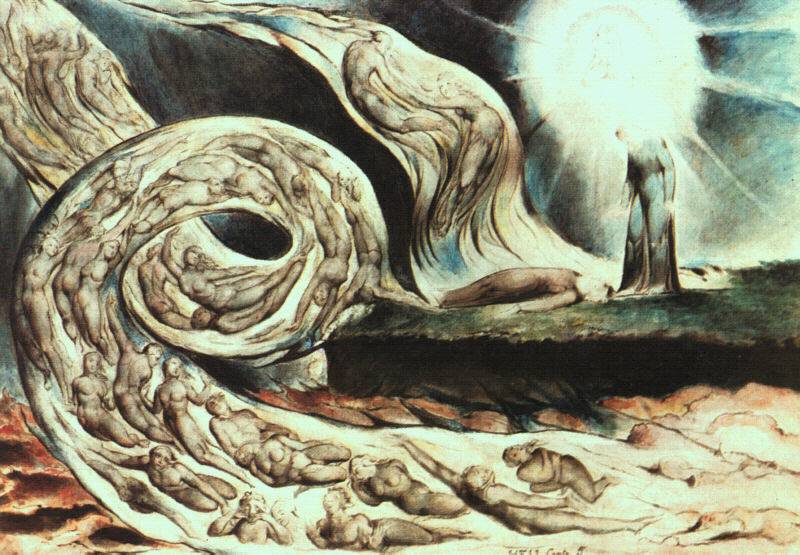
Not since William Blake and Kahil Gibran made illustrations of countless naked humans ascending, descending, and swirling, has there been such a grand portrayal of human nudity. Spencer Tunick's (click) latest study of 20,000 bare souls in the heart of Mexico is a dream, a vision of humanity transcending the barriers and the rules that keep us apart and deny our common being. Tunick gives us pure spirit on a canvas of flesh.

Scroll down past the article for a slideshow from Cleveland.


Spencer Tunick Goes to Iceland


Spencer Tunick, NewcastleGateshead 4 (BALTIC Centre of
Contemporary Art) 2005.

REYKJAVIK.- I8 presents Spencer Tunick, on view through
June 23.
Spencer Tunick comes to Iceland straight from Mexico city where
he conducted one of his biggest installations to date. Spencer will be
exhibiting large group photos and also pictures of individuals from
his stay in Iceland last year.

Spencer Tunick was born in 1967 and currently lives in New York.
He has been documenting the live nude figure in public since 1992
and has created installations around the world in spectacular locations
including Belgium, Australia, Canada, USA and Brazil, gathering thousands
of people at one time. His temporary site-specific installations in the past
have been commissioned by the Vienna Kunsthalle (1999), Institut Cultura, Barcelona (2003), XXV Biennial de Sao Paulo, Brazil (2002); The Saatchi
Gallery 2003); MOCA Cleveland (2004) and BALTIC, Newcastle Gateshead,
UK; UNAM Mexico City (2007), among others.

Creating temporary site-specific landscapes involving many nude figures arranged in public places, Tunick’s installations follow on the tradition of
land art. Working directly in the landscape, the artist uses the nude body
as raw material to intervene and transform a chosen site, documenting
the installations with photography and video which he then exhibits in a
gallery context.

Tunick’s work, poetic and challenging, questions the relationship between
art and urban space. To settle the installations, a large number of bodies
are undressed, set all together, until they form a new common shape. They
take place in an environment as a new material, drawing a totally abstract
form, out of all sexual connotation and sometimes nearly close to mineral. Referring to land art, Tunick’s work also underlines the difficulties one can
find to exhibit everlasting or ephemeral art into public space.

The poetic whole resulting from individual bodies arranged in a sculptural
way in an urban setting, challenges traditionally held views on nudity and
privacy as well as social and political issues surrounding art in the public
sphere.

On first sight Tunick’s work generates a strong feeling of abolishment
of any social, cultural, racial, economical and political difference. By
mixing all backgrounds and origins of the bodies Tunick enhances the
moment of the work, making it unique and collective. Showing bodies
that no longer hide their sexuality raise the questions of how our
ontemporary society can question nudity, and how it receives it from
nowadays medias : Tunick’s work isn’t about pornography nor
voyeurism.

It is universal, out of all the contemporary disguises. Close to ecosophy
it makes men closer to the essential in a relative modesty. The
spontaneous way in which the participants take place in this collective
« here and now » event can be seen as a way back to a certain number
of values or questions such as ethic and its place in our postmodern life.

Making the artist work with a given environment, enhancing our vision on
nudity and intimacy, raising a reflexion on the way art can create a link
between things and human being, social or cultural, here are some of the questions that emerge from Spencer Tunick’s work. Out of any aesthetic
and pictorial sensation, or on confrontation of mankind toward Nature
and social points, out of the gesture of creation and the artist’s role
(being out of the group and its representation), Tunick’s work essentially questions our relationship to the world.

And from Mexico City:

Finalmente, Tunick retrató a 20 mil personas desnudas


Spencer Tunick El Zocalo Mexico


Slide show: Naked Cleveland


Take it all off:

JAMESON


Saturday, May 12, 2007

God is Death


God is Death

Now that I've given the Dalai Lama his due, praised Buddhism, generally, and shown how much I am a Pantheist, let me express how much empathy I have with educated atheists.
Bill Maher (click), my HBO hero, repeatedly lampoons religious fervor, pointing out the madness of the passion for insane religious doctrine. How can anyone believe today that there is a God who cares whether or not we eat shrimp!

So, on that note, I want to share three delightful reviews:


1. In God, Distrust

By MICHAEL KINSLEY

GOD IS NOT GREAT

How Religion Poisons Everything.

By Christopher Hitchens.

http://www.nytimes.com/2007/05/13/books/review/Kinsley-t.html?ref=review

2. Better living without God?

Religion is a dangerously irrational mirage, says Dawkins

Sunday, October 15, 2006


The God Delusion

http://sfgate.com/cgi-bin/article.cgi?f=/c/a/2006/10/15/RVGH2LN2021.DTL&type=books

3. Manufacturing belief

The origin of religion is in our heads, explains developmental biologist Lewis Wolpert. First we figured out how to make tools, then created a supernatural being.

By Steve Paulson

May. 15, 2007 | In Lewis Carroll's "Through the Looking Glass," Alice tells the White Queen that she cannot believe in impossible things. But the Queen says Alice simply hasn't had enough practice. "When I was your age, I always did it for half-an-hour a day. Why, sometimes I've believed as many as six impossible things before breakfast." That human penchant for belief -- or perhaps gullibility -- is what inspired biologist Lewis Wolpert to write a book about the evolutionary origins of belief called "Six Impossible Things Before Breakfast."


http://www.salon.com/books/feature/2007/05/15/lewis_wolpert/print.html


There is also a funny interview with C H in New York Mag:

Are You There, God? It's Me, Hitchens.


AMEN

Jameson


Wednesday, May 09, 2007

Hello Dalai


A message of love, compassion


The Dalai Lama, spiritual mentor to millions of Buddhists, greets a crowd Sunday at Millennium Park.
(Al Podgorski/Sun-Times)

PHOTO GALLERY

Dalai Lama in Chicago


(http://www.suntimes.com/lifestyles/religion/373950,CST-NWS-dalai07.article)

May 7, 2007

The Dalai Lama said he hasn't attained enlightenment. He's only in the beginning stages.

During Sunday's stopover in Chicago, he also criticized China's aggression toward Tibet. He then said President Bush was "very nice" but denounced U.S. violence around the world.

The message was potent but the delivery casual. Dressed in maroon-and-gold robes, the 71-year-old monk wore a headset and sat cross-legged in a cushioned chair to address audiences in Millennium Park.

No strutting across the stage. No high-pitched preacher's crescendo. No script.

Instead, the man Tibetans believe to be the 14th reincarnation of the Buddha of compassion rubbed his head and joked about baldness.

"I am informal," he said, and giggled.

He smiled and giggled a lot throughout his talks, attended by a limited number of ticket holders.

The morning session, in Harris Theater, seated 1,500. The afternoon session in Pritzker Pavilion allowed 11,400 attendees.

The Dalai Lama said he welcomed the curious, but he shot down any notion that he is special or has mystical powers.

"That's absolute nonsense," he said.

He spoke in English but sometimes relied on an interpreter to clarify his message.

'A timely cure'
The Dalai Lama emphasized inner peace, cultivating contentment and nonviolent responses to conflict.

"Love and compassion are the foundation," he said.

His fourth visit to the city was sponsored by the Tibetan Alliance of Chicago, which hopes to build a cultural center soon.

"His message offers a timely cure for the maladies of our time" said the alliance's Sherab Gyatso, noting that 300 Tibetans live in the area.

The Dalai Lama was awarded the Nobel Peace Prize in 1989. In October, he'll receive the Congressional Gold Medal, America's highest civilian honor. Past recipients include Mother Teresa, Martin Luther King Jr. and Pope John Paul II.

"It is fine company for a man of his greatness," said Sen. Richard Durbin, who along with Maggie Daley briefly addressed the afternoon crowd.

'Not true practitioners'
The event drew a range of dignitaries as well as corporate and private sponsors. About 200 security guards, under U.S. State Department control, were on hand because the Dalai Lama is the secular head of Tibet as well as a spiritual leader.

All attendees passed through security gates. Chicago Police said the crowd was peaceful and no arrests were made.

The Dalai Lama extolled the virtues of all religions. He said people shouldn't change their faith but practice what they know. The goal of all religions is basically the same path, he said.

"When people change their faiths, their minds become confused later," he said. "Better to keep one's tradition."

He was critical of self-centered and materialistic religious leaders.

"Some ... acquire a lot of things," he said. "These are not true practitioners."

One of the biggest obstacles to inner peace is that people can't just be still, he said. They listen to iPods or watch TV because "they need constant external stimulation."

At airports, he said, they shout and become angry at delays. He uses the time to think. "That's good," he said. "That's useful."

At the end of the afternoon, the Dalai Lama was asked how to best respond to terrorism.

"Talk," and listen, he said.

He later said terrorism done in the name of religion is the worst kind.


Read Tricycle:


Jameson


Saturday, May 05, 2007

Kara Walker

An A student in the two of my philosophy classes she chose to take at the Atlanta College of Art: Aesthetics and Ideas in Film, Kara wrote a paper and made a presentation on Peter Greenaway. She became a friend and was the best dancer at the Winter Solstice party Dar, Bill Curtis, and I hosted on North Avenue in 1991. She's had art shows all over the world from the Museum of Modern Art to the 2002 São Paulo Biennial to the current show at the Walker Art Center in Minneapolis: Kara Walker: My Complement, My Enemy, My Oppressor, My Love.

Now Time Magazine ranks her #21 among the 100 most influential people in the art and entertainment world:


Wednesday, May. 02, 2007

21 of 100

Kara Walker
Michele Asselin / Corbis Outline
Kara Walker

Kara Walker

Artists are vigilant. But it's not the vigilance of surveillance. They don't dictate what is worn, thought, spoken and dreamed. Instead, theirs is a vigilance fueled by a heady mix of doubt, disbelief and hope. Few have managed to capture the collision between past and present, between histories and horror stories, between sexuality and shame, between skin and meat, as powerfully and provocatively as Kara Walker, 37.

Walker's vigilance has produced a compelling reckoning with the twisted trajectories of race in America. Her installations and films forcefully pluralize our notion of a singular "history." They create a profusion of backstories and revisions that slash and burn through the pieties of patriotism and the glosses of "color blindness." Restarting the engines of seemingly archaic methods, from the graphic affect of silhouette portraits to the machine-age ethos of film, she produces a cast of characters and caricatures with appetites for destruction and reproduction, for power and sex. She raucously engages both the broad sweep of the big picture and the eloquence of the telling detail. She plays with stereotypes, turning them upside down, spread-eagle and inside out. She revels in cruelty and laughter. Platitudes sicken her. She is brave. Her silhouettes throw themselves against the wall and don't blink.

Kruger is an artist who works with pictures and words

http://www.time.com/time/specials/2007/time100/article/0,28804,1595326_1595332_1616818,00.html


Keep dancing, Kara


Jack


Thursday, May 03, 2007

Here comes the Queen


Elizabeth II comes to Jamestown:

The Royal Consigliere

Though much of Elizabeth's role is symbolic, she also subtly wields a personal, but very real, power.

Royal Visit: Queen Elizabeth in America
Though much of Elizabeth's role is symbolic, she also subtly wields a personal, but very real, power.
By Julia Baird
Newsweek

May 7, 2007 issue - On Feb. 6, 1952, British Prime Minister Winston Churchill was distraught when he heard King George VI had died. His secretary, John Colville, tried to console him by assuring him he would get on well with the new queen, Elizabeth II: "But all he could say was that he didn't know her, and that she was only a child." She was 25 at the time. A year later, a royal aide confided that Churchill was so fond of her he could "scarcely speak of her without tears coming into his eyes."

The rapport between Churchill and his queen was remarkable—she a serious young woman, known for her beauty, wit and love of dancing, he a great orator and war leader who delighted in schooling his monarch in the peculiar ways of British politics. Their meetings often lasted long past their customary half-hour appointment. When he notified her of his intention to resign in 1955, Churchill was told, through the queen's secretary, that "she would especially miss the weekly audiences which she had found so instructive and, if one can say so of State matters, so entertaining." Churchill enjoyed himself, too: Colville said by the time of his retirement, at 81, he was "madly in love" with her.

Now it is the queen who is 81, and due to step onto American soil this week for the fifth time. Her six-day tour will include a trip to Virginia to mark the 400th anniversary of the Jamestown settlement, a visit to the Kentucky Derby and dinner at the White House with President George W. Bush—the 10th American president she has met as queen. While more will be curious about her since the success of the Oscar-winning film "The Queen," many Americans will see her simply as a polite woman who wears matching hats and coats, loves horses and waves to crowds with a curling hand. But over the half century of her reign, Queen Elizabeth II has wielded more power—and guarded more secrets—than most of us have imagined. She is certainly a figurehead but has also appointed prime ministers (following the resignation of Churchill and later, Harold Macmillan), and overseen six archbishops as head of the Church of England (George Carey, a former Archbishop of Canterbury, told NEWSWEEK her vision for her role was priestly, "almost sacramental"). As British constitutional scholar Walter Bagehot noted, the monarch has the right to be consulted, to advise and to warn. In public, her political power is largely symbolic. In private, it is personal and mysterious. She may be the ultimate consigliere, deriving power in part because no one knows she possesses it.

At the coronation in 1953, a palace official told NEWSWEEK that Elizabeth II "loves being Queen. It's like champagne to her. The truth is that the Queen likes being boss." Since then, she has reigned alongside 10 British prime ministers. For more than five decades, she has counseled, cajoled and carefully listened to each of them in private weekly meetings. John Major, who was prime minister between 1992 and 1997, said the fact that no notes were taken and that there was a "total block" on discussions preserved the sanctity of the meetings: he spoke to the queen in a way he did to no one else. Harold Wilson, British P.M. between 1964 and 1970, felt the queen was the only one he could confide in without thinking a knife was being sharpened behind his back. According to royal historian Robert Lacey, Tony Blair initially viewed the meetings as "ancient etiquette," but quickly realized their importance: "He actually found that it was a wonderful opportunity to sit and talk to somebody who's very wise in the knowledge that it would not go any further." If he cannot see her in person, he phones her.

It is not just British leaders who have unburdened themselves to the queen. Once, after she gave Russian leader Boris Yeltsin, a keen gardener, a tiny crystal chest of drawers containing seeds from Buckingham Palace, Yeltsin suddenly found himself "talking about the corruption and violence, not being able to trust anybody," and he was "pouring his heart out," said Lacey. Afterward Yeltsin said he had never spoken to someone so frankly before.

Margaret Thatcher is the only prime minister who had a sometimes uncomfortable relationship with the queen, partly due to the social consequences of her policies—particularly the mid-1980s miners' strike—and Thatcher's refusal to apply sanctions to South Africa's apartheid regime. In 1986, The Sunday Times published an article headed QUEEN DISMAYED BY UNCARING THATCHER. Their differences demonstrated that the queen does not just listen—she also expresses opinions. Charles Moore, who is writing a biography of Thatcher, attributes part of the discord to the fact that they were both powerful women who preferred the company of men: "And neither of them had any experience of dealing with another woman of that level of political importance."

Crucially, the queen tells no one of the things she hears—except the diary she keeps locked in her desk. Since she was a child, she has written in it daily. She once told a group of American students it was "far more truthful than anything you'll ever read in the newspapers," but has described her entries as short. Lacey claims a friend of his once asked her over dinner how much she writes each day: "She held up her hand and sort of stretched her thumb to her leading finger and held that up, about five or six inches of text."

Generations of historians have longed to get their hands on these diaries, but no one knows exactly what will happen to them when the queen dies. She may stipulate in her will what she wants done, but a palace spokesman said the diaries would probably be sent to the Royal Archives, released after 30 years, and available only to the royal (or authorized) biographer. Perhaps they will at last reveal the secrets of the queen who, as a young woman, loved power as much as champagne.

With Esther Bintliff in London and Kendall Hill in Australia


URL: http://www.msnbc.msn.com/id/18368220/site/newsweek/


Take a bow,

Jameson


Joke's on us


How many Bushies does it take to screw

a planet?


7:


Cheney

Rummie

Wolfie

Rove

Rice

Gonzo

and Peter Pace


Tuesday, May 01, 2007

Happy Lei Day : From Chicago and the ghost of D. H. Lawrence

Today is May Day,


Lei Day in Hawaii:


A day to be leied

Lei before
the Starr Buddha
photo by Jameson
(click to enlarge)


And, International Workers Day--

A Day of demonstrations:
A Socialist Day for workers of the world to take to the streets:

chicagotribune.com

http://www.chicagotribune.com/news/local/chi-070501mayday-story,1,6794043.story?coll=chi-news-hed

Roots of May Day are in Chicago


By Ron Grossman
Tribune staff reporter

May 1, 2007

Drop into a working-class bar or socialist meeting hall in Italy or France and say you're from Chicago, and rounds of drinks will likely come your way. "Chi-ca-go!" they'll say. "May Day."

Your hosts will be recalling something most Americans don't know: The first May Day parade stepped off down Chicago streets.

On May 1, 1886, 35,000 workers walked off their jobs, demanding the work day be reduced to eight hours from the 10 and even 12 hours then customary.

On that and subsequent days, marches were staged through the city's working-class neighborhoods by battalions of freight handlers, tailors' assistants, lumber shovers, glue workers and Bohemian sausage makers.

Echoes of those demonstrations reverberated widely, and May Day was adopted as labor's holiday around the world.

But not in Chicago, the city of its birth. Here, as in the rest of the country, prosperity robbed workers of a historical sense of their predecessors' struggles.

In other countries, though, the denouement of the story has not been forgotten. Shortly after that original May Day, a bomb went off at a union rally at the Haymarket Square, just west of the Loop, and eight police officers were killed in the explosion and ensuing chaos.

Local radical leaders were rounded up, tried and convicted of inciting the violence. Four were hanged.

Their gravesites in West Suburban Forest Home cemetery remain a pilgrimage site for old and young leftists from around the world.

Their final resting place is marked by an imposing sculpture depicting Justice laying a wreath on a fallen worker.

Its base is inscribed with the parting words of August Spies, one of those executed, to his executioners: "The day will come when our silence will be more powerful than the voices you are throttling today."

Four decades later, the novelist D. H. Lawrence wrote about May Day in a Mexican village where the townspeople were laying their own monument to "The Martyrs of Chicago."

Just give me the English maypole
or the Valborgsmässoafton-- Walpurgis Night of Sweden.
Or Beltane:

Also known as May Eve, May Day, and Walpurgis Night, happens at the beginning of May. It celebrates the height of Spring and the flowering of life. The Goddess manifests as the May Queen and Flora. The God emerges as the May King and Jack in the Green. The danced Maypole represents Their unity, with the pole itself being the God and the ribbons that encompass it, the Goddess. Colors are the Rainbow spectrum. Beltane is a festival of flowers, fertility, sensuality, and delight.

http://www.circlesanctuary.org/pholidays/Beltane.html


May your maypole be merry.


Jameson


Friday, April 27, 2007

Who's your enemy? part 2

Yesterday, Jack Cafferty had this to say on CNN: Watch It!


Click the following to access the link:
Video: Cafferty: The war and the veto*


Transcript:

A new NBC News/"Wall Street Journal" poll shows only 22 percent of Americans think the country is going in the right direction. Sixty-six percent say we're not. And the overriding issue in those poll numbers it the war in Iraq.

Read any sampling of public opinion over the last few years. Americans want this war over. They want our troops home.

Both houses of Congress have now passed the funding bills necessary to continue the war, but with a timetable to begin winding things down.

It's funny, isn't it?

The public and the Congress seem to be in agreement. But none of that matters to President Bush. Remember, he's the decider. And he's decided we're not going to set any timetable for withdrawal.

On the contrary, tours of duty for combat soldiers have just been extended and Bush says he's going to veto the funding bill.

Isolated and almost alone in his determination to continue the insanity that is the war in Iraq, Mr. Bush clings to a 4-year-old failed policy that has cost this country its reputation, more than 3,000 of its finest young people and a half a trillion dollars of your tax money.

Thousands of our soldiers have been crippled for life.

And, of course, finally, it's not working -- not on any level. There is no effective Iraqi government. There's no democracy. There's no political solution. Nothing. Just bloody day after bloody week after bloody month of violence, death, destruction.

from: http://transcripts.cnn.com/TRANSCRIPTS/0704/26/sitroom.03.html


Thursday, April 26, 2007

"We Have Met the Enemy"


On Earth Day 17 years ago, Walt Kelly published the line in his comic POGO (click),

"We have met the enemy, and he is us."

(click for ref.)


We have come full circle:

The Huffington Post said as much 2 years ago

in recounting the horrors of the torture American troops inflicted on Iraqis.

Now we find that an American Colonel (click for story) may have aided prisoner insurgents and apparently engaged in sex with the daughter of a prisoner.

Meanwhile, our soldiers have spent weeks building walls between Iraqis which they now will have to spend weeks tearing down since protests and the Iraqi PM oppose them.

The Okefenokee Swamp, home of Pogo, has nothing on the quagmire in Iraq.


W. Bush claims that if we set a timetable for withdrawing the troops from Iraq, it will give victory to our enemy. But just who is this enemy? Iraq is an artificial confederation of three very different people and areas: Shia, Sunni, and Kurds. All are now engaged in a civil war. Our enemy from 911, Al-Qaida, has infiltrated the country and added to the chaos.
So who is the "enemy" that will win if we leave Iraq?

There is no way to predict who will emerge victorious from this civil war. The only thing certain is that it would not be our enemy per se. All three of the dominant groups could befriend the U.S. What is creating hatred and resentment of the U. S. in Iraq is our continued occupation, our support of ongoing corruption, our greed for Iraqi oil, and our arrogance, our insistence that we know best what is good for Iraq.

Our action and our arrogance are what make Pogo's line as true today as when we tried to bend Viet Nam to our will. We are our own worst enemy, and Bush is enemy commander-in-chief.

Let us hope Congress finds and enforces a new way...


Jameson

Friday, April 20, 2007

Do I Dare to Eat a Peach?


Do I dare to eat a peach? Read Andre Aciman's Call Me By Your Name, and T. S. Eliot's line from "The Love Song of J. Alfred Prufrock" will take on quite a new meaning. Aciman, who is an authority on Marcel Proust, channels the master in the telling of this romance between 24-year-old Oliver, a graduate writer, and the budding 17- year-old Elio-- son of a professor with whom Oliver is working.

The boy tells the story, albeit from the distance of decades later. In a sense, he presents a remembrance of things past, a conjuring much like Proust's of a world of sensation and sensuality, of longing and ecstasy one summer on the coast of Italy. From the sound of cicadas to the intimacy of the odor inside a recently worn bathing suit, it is a world of ultra-awareness. We are filled with this boy's exuberance, anxiety, and joy. Only in the short, final section of the book in which Elio sums up the years since that summer, does the novel lose its rapture.

Elio, as narrator, brings to mind Olivier-- the boy in Andre Gide's the Counterfeiters, who, upon attainment of his desire, wanted to die, knowing that he would never again feel such fulfillment. This magical summer on the Italian Riviera is too intense, too utopian ever to continue into less glowing seasons.
Paradoxically, their exchange is also too deep ever to disappear. To quote a poem by D.H. Lawrence,

Time will dim the moon
Sooner than our full consummation here
In this odd life will tarnish or pass away.
(Moonrise)

Such is the entwining of Elio and Oliver.

Aciman's dazzling word mastery is as powerful in the telling of this love story as it was in his acclaimed Out of Egypt. Here, in his new work, his first novel, the gay romance stands out as sublime in comparison to the heterosexual relations in the story. Aciman makes a sacred rite of this teenager's discovery of self, Eros, and love. The novel likewise provides the reader with an exquisite trip into the human psyche.

Jack Miller

Published in the July 2007 issue of  The Gay and Lesbian Review 


Thursday, April 19, 2007

Bedtime for Gonzo

The testimony of the AG was a disgrace.
Not only did he say "I can't recall." over 70 times; he could not give any reason for the firing of the 7 or 8 U. S. Attorneys. We have either illegal political interference (no doubt originating in the White House) in ongoing investigations, or pure incompetence. The latter was the best defense Gonzales' supporters could come up with. Even conservative Republican senators called for him to resign.


AG A. G. struck me (I watched most of the hearing) much as Bush does when he speaks publicly: as a nincompoop.

The NY Times has an excellent editorial:

April 20, 2007
Editorial

Gonzales v. Gonzales

If Attorney General Alberto Gonzales had gone to the Senate yesterday to convince the world that he ought to be fired, it’s hard to imagine how he could have done a better job, short of simply admitting the obvious: that the firing of eight United States attorneys was a partisan purge.

Mr. Gonzales came across as a dull-witted apparatchik incapable of running one of the most important departments in the executive branch.

He had no trouble remembering complaints from his bosses and Republican lawmakers about federal prosecutors who were not playing ball with the Republican Party’s efforts to drum up election fraud charges against Democratic politicians and Democratic voters. But he had no idea whether any of the 93 United States attorneys working for him — let alone the ones he fired — were doing a good job prosecuting real crimes.

He delegated responsibility for purging their ranks to an inexperienced and incompetent assistant who, if that’s possible, was even more of a plodding apparatchik. Mr. Gonzales failed to create the most rudimentary standards for judging the prosecutors’ work, except for political fealty. And when it came time to explain his inept decision making to the public, he gave a false account that was instantly and repeatedly contradicted by sworn testimony.

Even the most loyal Republicans on the Senate Judiciary Committee found it impossible to throw Mr. Gonzales a lifeline. The best Orrin Hatch of Utah could do was to mutter that “I think that you’ll agree that this was poorly handled” and to suggest that Mr. Gonzales should just be forgiven. Senator Sam Brownback led Mr. Gonzales through the names of the fired attorneys, evidently hoping he would offer cogent reasons for their dismissal.

Some of his answers were merely laughable. Mr. Gonzales said one prosecutor deserved to be fired because he wrote a letter that annoyed the deputy attorney general. Another prosecutor had the gall to ask Mr. Gonzales to reconsider a decision to seek the death penalty. (Mr. Gonzales, of course, is famous for never reconsidering a death penalty case, no matter how powerful the arguments are.)

Mr. Gonzales criticized other fired prosecutors for “poor management,” for losing the confidence of career prosecutors and for “not having total control of the office.” With those criticisms, Mr. Gonzales was really describing his own record: he has been a poor manager who has had no control over his department and has lost the confidence of his professional staff and all Americans.

Mr. Gonzales was even unable to say who compiled the list of federal attorneys slated for firing. The man he appointed to conduct the purge, Kyle Sampson, said he had not created the list. The former head of the office that supervises the federal prosecutors, Michael Battle, said he didn’t do it, as did William Mercer, the acting associate attorney general.

Mr. Gonzales said he did not know why the eight had been on the list when it was given to him, that it had not been accompanied by any written analysis and that he had just assumed it reflected a consensus of the senior leaders of his department. At one point, Mr. Gonzales even claimed that he could not remember how the Justice Department had come to submit an amendment to the Patriot Act that allowed him to fire United States attorneys and replace them without Senate confirmation. The Senate voted to revoke that power after the current scandal broke.

At the end of the day, we were left wondering why the nation’s chief law-enforcement officer would paint himself as a bumbling fool. Perhaps it’s because the alternative is that he is not telling the truth. There is strong evidence that this purge was directed from the White House, and that Karl Rove, Mr. Bush’s top political adviser, and Harriet Miers, the former White House counsel, were deeply involved.

Yesterday, Mr. Gonzales admitted that he had not been surprised by five of the names on the list because he had heard complaints about them — from Republican senators and Mr. Rove.

In another telling moment, Mr. Gonzales was asked when he had lost confidence in David Iglesias, who was fired as federal prosecutor in New Mexico. His answer was an inadvertent slip of truth.

“Mr. Iglesias lost the confidence of Senator Domenici, as I recall, in the fall of 2005,” Mr. Gonzales said. It was Senator Pete Domenici of New Mexico, of course, who made a wildly inappropriate phone call to Mr. Iglesias in 2006, not 2005, to ask whether charges would be filed before the election in a corruption inquiry focused on Democrats. When Mr. Iglesias said he did not think so, Mr. Domenici hung up and complained to the White House. Shortly after, Mr. Iglesias’s name was added to the firing list.

We don’t yet know whether Mr. Gonzales is merely so incompetent that he should be fired immediately, or whether he is covering something up.

But if we believe the testimony that neither he nor any other senior Justice Department official was calling the shots on the purge, then the public needs to know who was. That is why the Judiciary Committee must stick to its insistence that Mr. Rove, Ms. Miers and other White House officials testify in public and under oath and that all documents be turned over to Congress, including e-mail messages by Mr. Rove that the Republican Party has yet to produce.

http://www.nytimes.com/2007/04/20/opinion/20fri1.html?_r=1&oref=slogin

Copyright 2007 The New York Times Company


And here's another version ot the testimony (from Salon)

The attorney general's "tremendous credibility problem"

Republicans and Democrats alike pummeled Alberto Gonzales in a daylong hearing that left the future of his job in doubt.

By Michael Scherer

Apr. 20, 2007 | Here's a piece of advice for those Bush administration officials who have not yet been called to atone before Congress: When you take your seat at the long table in the marble-paneled room, just answer the questions as clearly as you can. Don't get smart. Don't talk back. Admit your mistakes. And whatever you do, don't imitate Thursday's performance by Attorney General Alberto Gonzales.

Just minutes into his appearance before the Senate Judiciary Committee, Gonzales was already pushing the wrong buttons, alternately minimizing his sins and overselling his strengths. Pennsylvania's Arlen Specter, the ranking Republican, was talking about a press conference last month, during which Gonzales said he was not involved in discussions over the firing of eight U.S. attorneys, a false claim for which Gonzales has since apologized. "I know you're familiar with this record," Specter was saying, as he warmed up for a question, "because I know you've been preparing for this hearing."

Gonzales had, in fact, been preparing for weeks. But for some reason, he could not just sit still and listen. Like a fifth-grade student unable to avoid talking back to the teacher, he abruptly interrupted Specter. "I prepare for every hearing, Senator," the attorney general said. Then he took a sip of water.

Specter, who once worked as Philadelphia's district attorney, was stopped cold in his tracks. He glared down at Gonzales, who sat hunched before a microphone in an unremarkable charcoal suit and red tie. He would not let the comment pass. "Do you prepare for all your press conferences?" the senator barked, his tone suddenly combative. "You interjected that you're always prepared."

One of eight children born to two migrant workers in San Antonio, Texas, Gonzales had graduated from Harvard Law School, served as a Texas Supreme Court justice and then as the White House counsel, before taking over the Justice Department. As recently as two years ago, he was considered a candidate for the U.S. Supreme Court. Now he sat in a chilly Senate hearing room, sticking his foot in his mouth, while his entire career hung in the balance. The camera shutters clicked.

"I apologize," he eventually told Specter, after several aborted attempts to explain his preparations. The depths of his mistake had finally sunk in. Gonzales had picked a fight with one of the only Republicans on the panel who still expressed any sympathy for him. He had come to Congress to apologize for messing up in public statements, and here he was messing up again. "I'd like you to win this debate," Specter said, "but you're going to have to win it."

By the day's end, it was hard to see that Gonzales had won anything. The U.S. attorney scandal, which is still unraveling, appeared as likely as ever to significantly stain Gonzales' tenure at Justice, if he doesn't resign in the coming weeks. He was criticized by every Democrat on the committee, as well as most of the Republicans, who often delivered the most stinging rebukes.

"Your ability to lead the Department of Justice is in question," said Alabama's Jeff Sessions, who normally toes the White House line.

"You have a tremendous credibility problem," said South Carolina's Lindsey Graham.

"We just don't have a straight story," said Iowa's Chuck Grassley.

By the time the floor was given to Oklahoma's Tom Coburn, one of the most conservative members of the committee, everything seemed to be headed south for Gonzales. "It was handled incompetently," Coburn said about the group firing of the attorneys. "It's generous to say that there were misstatements. That's a generous statement. And I believe you ought to suffer the consequences."

With that, Coburn joined New Hampshire's John Sununu and Oregon's Gordon Smith to become the third Republican senator to openly call for the resignation of Gonzales. His reasoning had a simple elegance to it. Gonzales had told the committee that several of the eight U.S. attorneys had been fired for management problems. Kevin Ryan was dismissed in California for "poor management in the office," said Gonzales. Michigan's Margaret Chiara had been fired for "poor management issues, loss of confidence by career individuals." By arguing that "management" ability was the rationale for firing, Gonzales effectively laid the planks for his own gallows. "Why would we not use the same standards to judge your performance in handling this event that you applied to these same individuals," Coburn asked. The Democrats were even more direct. As Sen. Chuck Schumer, the New York Democrat, put it during the lunch recess, "The great irony is the U.S. attorneys being fired end up being far more qualified for their job than [Gonzales] is for his."

As it stood, Gonzales did not bring many answers with him to the committee room. He could not identify the specific individuals who had recommended firing the eight attorneys. He offered no significant insight into the role of the White House. He could not remember any details from a meeting he participated in less than five months ago. In fact, he admitted that he did not even know the reasons he fired several of the attorneys, when he signed off on the plan late last year.

Before lunchtime, he said the words "I don't recall" 39 times. Even his written statement appeared to provoke the ire of several senators. After Gonzales described his involvement in the process as "limited," Specter challenged him with the fact that there were at least five documented meetings in which he had discussed the attorneys' performance with his staff. "As we recite these, we have to evaluate whether you are really being forthright," Specter said.

Rather than concede the point, Gonzales attempted to establish that he used the word "limited" in the context of the many things he does every day. "You are talking about a series of events that occurred over approximately 700 days," Gonzales said. "I probably had thousands of conversations during that time." None of the senators seemed impressed.

Such talk has been a trademark of the Bush administration, which has always resisted admitting mistakes. But in this new era of Democratic control, there appears to be a bipartisan consensus forming that the old tactics of evasion and deflection have run their course. Since the beginning of the year, Republicans have resisted directly signing on to Democratic investigations into the White House's handling of everything from the Iraq war to global warming. But Republicans have joined with Democrats in demanding full and honest answers to their questions. As Specter explained at the end of the hearing, "Your credibility has been significantly impaired because of the panorama of responses you have made."

Gonzales' struggles on Thursday will fade soon enough from the headlines. But whatever his fate, he will not be the last Bush official to face a grilling under oath. And those who come next may find the U.S. attorneys debacle instructive: Tell the story straight, or suffer the consequences.

-- By Michael Scherer


Photo: Reuters/Jason Reed

U.S. Attorney General Alberto Gonzales reacts during closing remarks by senators at a Senate Judiciary Committee hearing on Thursday.

http://www.salon.com/news/feature/2007/04/20/gonzales/


On the Net:

Senate Judiciary Committee: http://judiciary.senate.gov


Good night, Gonzo.

Jameson


Wednesday, April 18, 2007

Kitty Carlisle Hart: We'll miss you!

We are so glad and privileged to have seen and heard this aristocrat of performers in the intimacy of the 14th Street Playhouse. She was an inspiration.

Lawrence Lucier/Getty Images
April 18, 2007


Kitty Carlisle Hart, Actress and Arts Advocate, Dies at 96

Kitty Carlisle Hart, who began her career in the theater in a 1932 musical comedy revue on Broadway, acted in films and opera and was still singing on the stage, into her 10th decade, as recently as last fall, died Tuesday at her home in Manhattan. She was 96.The cause was heart failure, her daughter, Catherine Hart, said. Outgoing and energetic, Miss Carlisle became in her middle years a visible advocate of the arts, lobbying the New York State Legislature and the United States Congress for funding. For 20 years, first as a member and later as chairman of the New York Council on the Arts, she crisscrossed the state to support rural string quartets, small theater groups and inner-city dance troupes.

At another moment, she could be found performing on a cruise ship plying the Greek islands, as she was during her 90th year. Just last November, she sang George Gershwin’s “The Man I Love” at the annual gala fund-raiser for Jazz at Lincoln Center. That followed a series of engagements in New York and other cities celebrating her 96th birthday. Miss Carlisle, as she was know professionally, also became a favorite of the first television generation as a regular on the game shows “To Tell the Truth” and “What’s My Line?”

As a young girl, she was taken around the capitals of Europe by her mother, whose ambition was to establish her daughter in a “brilliant” marriage, preferably to a prince. There were piano lessons, voice lessons and a grounding in the dramatic arts.

When a royal husband did not materialize, Miss Carlisle remembered, her mother would tell her, “You’re not the prettiest girl I ever saw, and you’re not the best singer I ever heard, and you’re certainly not the best actress I ever hoped to see, but if we put them all together, we’ll find the husband we’re looking for on the stage.”

She found that husband in the dramatist Moss Hart. They were married in 1946. In the years before he died, in 1961, they were at the center of New York’s glittering theatrical life.

The revue in which she broke into show business, “Rio Rita,” played the Capitol Theater on Broadway four or five times a day as the stage show between movies. She also played the “subway circuit” for one-week stands in Brooklyn and the Bronx. The show then went on the road for eight months.

Her next role, as the prince in a musical based on Strauss’s “Fledermaus,” won her a screen test and a Hollywood contract. In 1934, Miss Carlisle made her first movie, “Murder at the Vanities.” That same year she appeared in a movie called “She Loves Me Not,” in which she sang “Love in Bloom” with an up-and-coming crooner, Bing Crosby. She was paired with Crosby again that year in “Here Is My Heart.” In its review, The New York Times called her “a charming and gifted young woman who promises to make her mark in the cinema.”

The same was not said of her opera ambitions. Asked to sing “Alone” in the Marx Brothers spoof of the genre, “A Night at the Opera,” she was horrified to learn that she was expected to move her lips to the sound of someone else’s recording. She refused. For the next three days, her agent argued for her right to perform with her own voice. She won. For years, the song became something of a signature for her.

The collaboration with the Marx Brothers was as close as she came to opera until 31 years later, when, at the age of 56, she made her Metropolitan Opera debut as Prince Orlofsky in “Die Fledermaus.”

When Paramount found no more roles for her — “I was a meteoric bust,” she wrote in “Kitty: An Autobiography” (Doubleday, 1988) — Miss Carlisle returned to Broadway as the lead in “White Horse Inn” in 1936 and in “Three Waltzes” the next year. Brooks Atkinson, the drama critic for The Times, wrote that the show was “distinguished chiefly for the admirable singing and acting of Kitty Carlisle and Michael Bartlett.”

Miss Carlisle accepted jobs wherever they were offered, often in summer stock. She sang “The Star Spangled Banner” at many World War II bond rallies and appeared in the 1944 film “Hollywood Canteen.” In her later years, Miss Carlisle was seen around town with her latest beau, Roy R. Neuberger, the financier.

Until the end of her life, Miss Carlisle remained a svelte, attractive woman with dark, neatly coiffed hair that she said she colored herself. With a full mouth outlined in bright red lipstick, she burst easily into warm laughter. She was known for her grace and charm, but by her own account she was slightly eccentric, a trait she treasured because she believed it gave her a lot of leeway.

She practiced singing every day, exercised every morning (and was the first to tell anyone that she had beautiful legs, which she did) and believed that discipline was the key to life. In her last decades, she became a popular lecturer. She often told her audiences, “With a soupçon of courage and a dash of self-discipline, one can make a small talent go a long way.” In recent years, Encore Productions re-released her Decca operetta recordings from the 1940s and ’50s.

In her later years she performed occasionally in a one-woman show, “My Life on the Wicked Stage.” It was full of anecdotes about her friends Richard Rodgers, Oscar Hammerstein, Cole Porter, Irving Berlin, Jerome Robbins and George and Ira Gershwin. She also appeared on stage in a Broadway revival of “On Your Toes” and made film appearances in “Six Degrees of Separation” and Woody Allen’s “Radio Days.”

“I’m more optimistic, more enthusiastic and I have more energy than ever before,” she said just after her 79th birthday. Energy, she said, came from doing the things she wanted to do.

“You get so tired when you do what other people want you to do,” she said. When she was 90, she started work on a second book.

She was indeed an optimist. As a girl, she once said, she would try to lift her mother out of her frequent dark and angry moods. “Oh, mummy,” she imitated herself saying, “it won’t rain and there will be a picnic and everybody will have a wonderful time.” She wrote in her autobiography that she started each morning by smiling at herself in the mirror.

She also wrote that she had captivated men. The playwright Norman Krasna wanted to marry her, George Gershwin proposed to her, and the financier Bernard Baruch wanted to leave his wife for her, she said.

She refused everyone, however, until she met Mr. Hart, the Pulitzer Prize-winning playwright who, with George S. Kaufman, wrote “The Man Who Came to Dinner” and “You Can’t Take It With You” and who directed “My Fair Lady.”

Mr. Hart, a man of sparkle and wit, largely directed their lives as well, organizing their homes and their dinner parties, even choosing his wife’s wardrobe.

When Mr. Hart died of a heart attack in 1961, Miss Carlisle was devastated, she wrote, but she went on to live by his precept that “you can’t escape from life, you escape into it.” They had two children, Christopher, a producer, who lives in Hollywood, and Catherine Hart , a physician in New York. They and three grandchildren survive her. In her later years, working for the arts council, saw herself as a “Johnny Appleseed for culture,” especially in rural parts of New York State. “Wherever we go, the arts flourish,” she said. “It’s a cliché now that people say they want to make a difference, but I’d like to think that I somehow made a difference.”

In 1998, she was named a ”living landmark” by the New York Landmarks Conservancy. The next year, she was inducted into the Theater Hall of Fame.

Miss Carlisle was born Catherine Conn in New Orleans on Sept. 3, 1910. Her father, Joseph Conn, a doctor, died when she was 10 years old. Afterward, her mother, the former Hortense Holtzman, sold their house and took her daughter to New York and then to Europe, where the young Catherine was enrolled in Mont Choisi, a school overlooking Lac Léman in Switzerland. She ended her education at the Royal Academy of Dramatic Arts in London, where she won a certificate.

She wrote that her mother, as critical as ever, saw her first performance, looked her straight in the eye and said, “My dear, we’ve made a ghastly mistake.”

She delighted in proving her mother wrong. “A career takes more than talent,” Miss Carlisle was fond of saying. “It takes character.” And perhaps stamina. Still working as a nonagenarian, she took her stage show on the road last fall, appearing in Atlanta, St. Louis and other cities.

“I’m 96,” she told The St. Louis Post Dispatch in October, “and I’m loving it.”

Kitty Carlisle Hart in 2003. The actress and arts advocate died on April 17 at the age of 96. More Photos »

Friday, April 13, 2007

Another W (or Fart Proudly)

W. As in Paul Wolfowitz.

Wolfowitz is the man who, as Deputy Defense Secretary, as architect of the Iraq war, promised our nation that Iraqis would welcome us with roses, that Iraqi oil would pay for the war.
His reward for such Wisdom, the presidency of the World Bank, arranged by President W. himself.

How has this Wolf managed the W. Bank, the mission of which is to end world poverty? Debatable. He did end one person's poverty, his mistriss of many years and tears, Shaha Ali Riza, an Arab feminist. He arranged for her to move to the State Department, to get a tax free salary of almost 200 thousand dollars, more than Secretary Rice.
Riza. Rice. Hmmm.

In this new job Riza got to work with Cheney's non-gay daughter and help that icon of America, Karen Hughes, project to the world a brave new image of the U.S.
Ah, Republican values: family, economy, liberating Iraq. Wolfie has mastered it all. And Ms. Riza surely puts Ms. Lewinsky to shame. How's that for feminism? And as for her Islamic roots, Riza shows the world how best to love what is Jewish.

It is just one more success story from the fairy-tale book of George II: "My Old Pet Goat."

Thanks to the Village Voice for the following:

He gets to play soldier one last time. We'll never forget him.

wolfowitz-saluting-4-29-05.jpg

Cherie A. Thurlby/Defense Dept.

Pompous circumstance: Paul Wolfowitz, who never served in the military, salutes real soldiers honoring him Friday with a ridiculous ceremony at the Pentagon. Below are his daughter Rachel and ex-wife, Clare, sandwiched between Don Rumsfeld's wife, Joyce (right) and General Peter Pace's wife, Lynne. Not pictured is Wolfowitz's girlfriend, Shaha Ali Riza.

wolfowitz-gals-4-29-05.jpg

http://villagevoice.com/blogs/bushbeat/archive/2005/05/wolfowitz_leave.php

See also Richard Cohen:

Wolfowitz: Mission Accomplished?


To quote Ben Franklin,

Fart Proudly!

Jameson